Taiwan, Japan, and the Philippines Move to Contain China, Expanding First Island Chain Security Cooperation

Oliver Griffin is a policy and tech reporter at The Economy, focusing on the intersection of artificial intelligence, government regulation, and macroeconomic strategy. Based in Dublin, Oliver has reported extensively on European Union policy shifts and their ripple effects across global markets. Prior to joining The Economy, he covered technology policy for an international think tank, producing research cited by major institutions, including the OECD and IMF. Oliver studied political economy at Trinity College Dublin and later completed a master’s in data journalism at Columbia University. His reporting blends field interviews with rigorous statistical analysis, offering readers a nuanced understanding of how policy decisions shape industries and everyday lives. Beyond his newsroom work, Oliver contributes op-eds on ethics in AI and has been a guest commentator on BBC World and CNBC Europe.
Authored On
Modified
Taiwan Allocates $40 Billion in Defense Spending to Counter China and Reinforce Military Capabilities
Taiwan, Japan, and the Philippines Bolster Institutional Security Cooperation and Joint Drills
Fears Mount Over Paralysis of Sea Lanes and Global Supply Chains in the Event of Armed Conflict
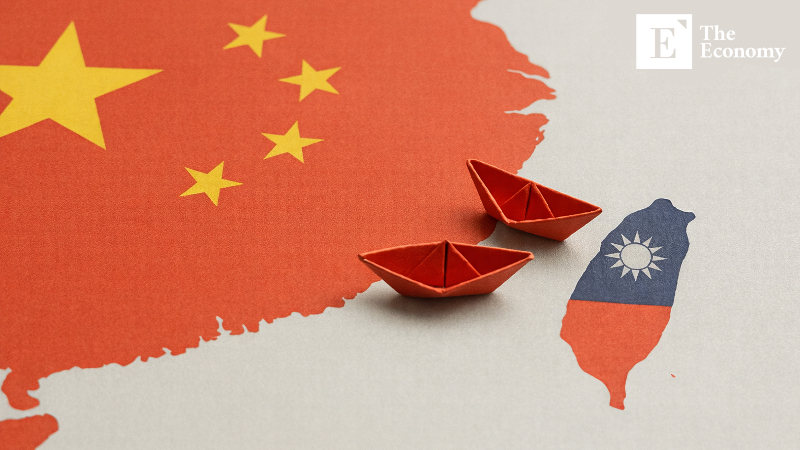
President Lai Ching-te has characterized Beijing’s attempt to annex Taiwan as the opening act of a broader collapse in Asian security and is concentrating on strengthening the island’s defensive posture. At the same time, Japan and the Philippines are deepening institutional agreements, expanding operational training and technological coordination, and tightening their security linkages with Taipei. Should armed conflict erupt in the Taiwan Strait, key maritime corridors and critical supply chains would face disruption, with sweeping repercussions for the global economy, including South Korea and Japan.
Lai Ching-te Warns of “Security Domino,” Signals Risk of First Island Chain Breakdown
According to Agence France-Presse on the 12th local time, Lai warned in a recent interview that China’s attempt to absorb Taiwan would constitute the “first domino” to unsettle Asia’s security architecture. If Beijing were to seize Taiwan, the threat would immediately extend to neighboring Japan and the Philippines, effectively fracturing the First Island Chain—stretching from Okinawa through Taiwan to the Philippines—which serves both as Washington’s forward line of military containment against China and as Beijing’s defensive perimeter against the United States. Control of Taiwan would grant the Chinese navy direct access to the Pacific, posing an existential maritime challenge to Japan’s Okinawa archipelago and to Philippine sea defenses. Lai made clear that the security fallout could radiate beyond the Western Pacific to the Americas and Europe.
Lai also referenced the recent purges within the upper ranks of the People’s Liberation Army, including Vice Chairman Zhang Youxia of the Central Military Commission, noting that Taipei is closely monitoring how internal shifts within the PLA may affect combat readiness. He assessed that credible deterrence against Beijing ultimately hinges on Taiwan’s own defense preparedness and the reliability of international coordination.
Accordingly, Taiwan is consolidating military cooperation with the United States under a framework of mutual confidence that security commitments will endure irrespective of political transitions in Washington, while simultaneously undertaking substantial fiscal outlays to maximize indigenous defense capacity. As part of this effort, Taipei is advancing a special defense budget of $40 billion this year to accelerate force modernization. The measure aligns with a medium-term strategy to maintain defense spending above 3% of GDP and raise the ratio to 5% by 2030. Allocated funds will prioritize asymmetric capabilities, including domestic submarine production, drone deployment, and cybersecurity enhancement.
These efforts, however, face procedural headwinds in budget negotiations with the opposition, with adjustments to procurement timelines for advanced weapons systems under discussion. The Financial Times reported on the 7th that the United States is preparing arms sales of up to $20 billion, following approval by the Trump administration last December of $11.1 billion in transactions. Taiwan’s main opposition Kuomintang has voiced support for strengthening defense capabilities while calling for prudent scrutiny of budget execution, resulting in legislative delays. Reuters subsequently reported that Taiwan’s Ministry of National Defense intends to request an extension from Washington on weapons contract signing deadlines, raising concerns in some quarters that failure to reach agreement within the stipulated timeframe could jeopardize the deals. Lai has underscored that Taiwan possesses the economic capacity to sustain higher defense expenditures and stressed that swift domestic political consensus on force enhancement remains pivotal to preserving the strategic bastion of the First Island Chain.
China’s Foreign Ministry reacted sharply, escalating criticism of Lai’s stance. Spokesperson Lin Jian labeled Lai a “war agitator” and reiterated that Taiwan constitutes an inalienable part of Chinese territory. Lin dismissed claims of regional aggression as fabrications by pro-independence forces, framed the Taiwan issue as an internal matter, and formally denied any hegemonic or expansionist intent. He further warned that efforts to pursue independence with foreign backing and to resist unification by force would fail, reaffirming the “One China” principle. Analysts, however, contend that as Beijing continues routine military exercises around Taiwan while preserving the option of forceful unification, such peace overtures risk remaining rhetorical.
Taiwan, Japan, and the Philippines Reinforce Security Through Operational Coordination and Technological Alignment
Japan and the Philippines are similarly intensifying institutional coordination on the premise that stability in the Taiwan Strait bears directly on their national security. Taiwan Foreign Minister Lin Chia-lung has proposed an integrated security cooperation framework and comprehensive partnership among Japan, Taiwan, and the Philippines, reflecting the strategic significance of the First Island Chain. Taipei has also sought Japan’s support for accession to the Comprehensive and Progressive Agreement for Trans-Pacific Partnership while broadening diplomatic engagement with senior Japanese figures, including Prime Minister Sanae Takaichi. These cooperative initiatives are taking tangible institutional form, notably through the Japan-Philippines Reciprocal Access Agreement, which entered into force last September and formalizes mutual troop deployments and joint exercises, thereby strengthening the military infrastructure to respond to shifting regional dynamics.
Operational coordination on the ground has also intensified. Philippine President Ferdinand Marcos Jr. has eased restrictions on exchanges with Taiwanese officials and granted visa-free entry to Taiwanese citizens, laying diplomatic groundwork for enhanced security ties. The two sides have conducted joint coast guard patrols in the Bashi Channel, a critical geographic nexus, and a Taiwanese military official observed the multinational KAMANDAG exercises held in the Philippines in May and June of last year. Led by the United States and the Philippines with participation from South Korea and Japan, the drills emphasized coastal defense and anti-ship operations. Exercises conducted on Batan Island near Taiwan were widely interpreted by experts as aligned with contingency planning for a potential Chinese invasion scenario.
Modernization of defensive capabilities and equipment coordination across the region are also advancing. During last year’s Han Kuang exercises, Taiwan conducted mobility drills utilizing Taipei’s metro system for troop transport and urban defense operations, and tested an upgraded version of the Hsiung Feng-3 anti-ship missile with a reported range of approximately 400 kilometers, demonstrating indigenous deterrent capacity. Japan, through its Official Security Assistance framework, delivered five coastal surveillance radars to the Philippine navy, completing the transfer in February this year. Ongoing discussions over Japan’s potential export of the Type 03 surface-to-air missile system to the Philippines, alongside eased arms export regulations, are viewed as a significant technical variable in constructing a more cohesive regional air defense network.
Conflict Scenario in the Taiwan Strait Raises Alarm Over Global Economic and Supply Chain Disruption
The strategic alignment among these countries reflects mounting concern that military conflict in the Taiwan Strait would exert profound economic consequences across the region. The Economist Intelligence Unit projects that a Taiwan-China confrontation would expose South Korea, Japan, and the Philippines to the most acute economic risks, while also generating severe supply chain vulnerabilities in Australia and Hong Kong. Closure of maritime and air logistics routes would constrain overall economic activity, and rerouting traffic to avoid the Taiwan Strait would drive up costs and insurance premiums, compounding sustained macroeconomic downside pressures.
South Korea and Japan’s reliance on the Taiwan Strait represents a critical determinant of industrial stability. According to the Center for Strategic and International Studies, a substantial share of Japan’s trade flows transits the strait, while South Korea depends on it for 30% of imports and 23% of exports. Disruption of this corridor would immediately impede supplies of crude oil, liquefied natural gas, and essential semiconductor manufacturing inputs, undermining the operational continuity of national systems. Associate Professor Tien I-fan of Tamkang University and Liang Kuo-yuan, founder of the Yuanta-Polaris Research Institute in Taiwan, emphasized the tight integration of South Korean components and Japanese chemicals within Taiwan’s manufacturing processes, underscoring the severity of potential supply chain fractures.
Security instability in the Bashi Channel, a maritime choke point linking the First Island Chain to the Pacific, presents a multidimensional threat extending beyond logistics to communications infrastructure. The channel hosts numerous undersea fiber-optic cables, making it a critical communications hub whose disruption could paralyze international connectivity. The U.S. Naval Institute notes that approximately 44% of the global container fleet passes through the Taiwan Strait, warning that a security vacuum in the area would heighten uncertainty over control of regional shipping lanes and could be leveraged as a tool of coercion against neighboring states. Corporations may seek to diversify risk exposure within Asia, yet the foundational shock resulting from the closure of logistics and communications networks would prove difficult to fully offset.
Oliver Griffin is a policy and tech reporter at The Economy, focusing on the intersection of artificial intelligence, government regulation, and macroeconomic strategy. Based in Dublin, Oliver has reported extensively on European Union policy shifts and their ripple effects across global markets. Prior to joining The Economy, he covered technology policy for an international think tank, producing research cited by major institutions, including the OECD and IMF. Oliver studied political economy at Trinity College Dublin and later completed a master’s in data journalism at Columbia University. His reporting blends field interviews with rigorous statistical analysis, offering readers a nuanced understanding of how policy decisions shape industries and everyday lives. Beyond his newsroom work, Oliver contributes op-eds on ethics in AI and has been a guest commentator on BBC World and CNBC Europe.
Similar Post
















