Russia Floats ‘Comprehensive Economic Alliance’ With U.S., Signaling Intent to Rejoin Dollar System

Niamh O’Sullivan is an Irish editor at The Economy, covering global policy and institutional reform. She studied sociology and European studies at Trinity College Dublin, and brings experience in translating academic and policy content for wider audiences. Her editorial work supports multilingual accessibility and contextual reporting.
Authored On
Modified
Proposal centers on an “energy + currency + policy” economic alliance
War costs, sanctions pressure, and frozen assets add complexity
Shifting interests surrounding the future of dollar dominance
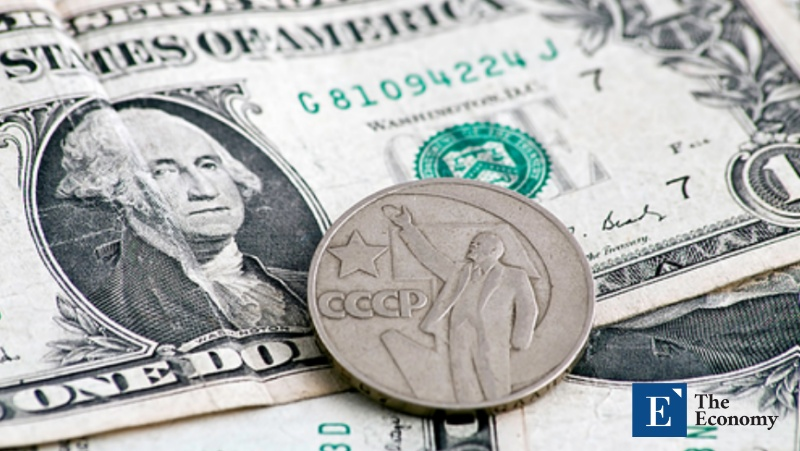
Russia has drawn international attention by signaling a possible return to the U.S. dollar settlement system. Moscow, which has strengthened its de-dollarization drive since the outbreak of the war in Ukraine, is now seen as introducing its currency strategy as a bargaining chip in potential ceasefire negotiations. The proposal, linked to broader plans for cooperation in energy and raw materials, is widely interpreted as an effort to ease the mounting costs of a prolonged war and relieve Western sanctions pressure. For the United States, which faces the parallel challenge of reinforcing dollar dominance amid global diversification trends, the strategic calculus appears increasingly intricate.
Signals of a Currency Regime Shift
According to internal documents obtained by Bloomberg on the 12th (local time), senior Russian officials are weighing the abandonment of the de-dollarization policy pursued over the past several years and exploring a return to the U.S. dollar payment system. In this context, Moscow has reportedly proposed a comprehensive economic partnership with Washington. The linkage of currency regime choices to the endgame of the Ukraine war positions the initiative not as a narrow financial policy shift but as a broader diplomatic and economic framework.
The documents reportedly outline seven key areas in which U.S. and Russian economic interests could converge following the end of hostilities in Ukraine. These include joint advocacy of fossil fuels; cooperation in liquefied natural gas (LNG) and offshore oil field development; collaboration on critical minerals such as lithium, copper, and nickel; nuclear energy cooperation tied to artificial intelligence (AI); long-term contracts for modernizing Russian aircraft; participation by U.S. firms in Russian manufacturing; and compensation mechanisms and preferential reentry terms for companies that previously withdrew. Observers note that the structure of the proposal appears calibrated to appeal to segments of the U.S. political landscape skeptical of aggressive climate policy.
Should Washington accept Moscow’s overture, Russia would effectively rejoin the dollar settlement system for the first time in four years. According to data from the Russian central bank, as of January 2022—just before the outbreak of the Ukraine war—the combined share of the dollar (52 percent) and the euro (35 percent) in Russia’s export settlement currencies stood at 87 percent. By September of the same year, that share had fallen to 53 percent, while the ruble and yuan rose to 47 percent. Although some oil transactions continued to be settled in dollars and euros even after Russia’s removal from the SWIFT financial messaging system, the contraction of energy exports to the West accelerated the shift in currency composition.
Energy trade patterns evolved alongside this currency realignment. Russia supplied 38 billion cubic meters (bcm) of natural gas annually to China via the Power of Siberia-1 (POS-1) pipeline and outlined plans to provide an additional 10 bcm per year through a Far Eastern pipeline connecting Sakhalin to northern China. As exports once directed to Europe were redirected to China, settlements in rubles and yuan expanded, reinforcing the decline in dollar and euro shares. In this context, Russia’s apparent recalibration reflects a dual adjustment of both its energy export architecture and currency strategy.
Whether the United States will entertain the proposal remains uncertain. Analysts argue that Russia is unlikely to sever or significantly downgrade ties with China, which has become a crucial supplier of components essential to Russia’s war effort, in the near term. An unnamed diplomatic source told Bloomberg that the proposal appears designed to sow discord within U.S.-European alliances and may represent an attempt to entice President Donald Trump with sweeping but impractical commitments. The feasibility of implementation, the source suggested, remains low.
Broad Industrial Impact and Risk of Additional Sanctions
Despite skepticism, Russia’s outreach reflects the cumulative strain of prolonged conflict and sanctions. Since the invasion of Ukraine, financial, energy, and trade sanctions have narrowed Russia’s foreign currency earnings base. Energy exports remain a cornerstone of Russia’s fiscal capacity, directly tied to its ability to sustain wartime spending. In the context of potential ceasefire talks, Moscow’s proactive economic overtures suggest concern that continued hostilities could exponentially increase economic losses.
Sanctions pressure has continued to broaden. Earlier this month, the European Union began reviewing a proposal to ban all cryptocurrency transactions with Russia, citing concerns that digital assets are being used to circumvent sanctions. The measures under consideration would encompass Russia-based virtual asset service providers, foreign entities spun off from Russian platforms or linked to Russia, and transactions involving the digital ruble issued by the Russian central bank.
In the energy sector, both physical and price pressures are intensifying. The Wall Street Journal reported on the 11th that 143 million barrels of Russian crude oil were stranded at sea without buyers, with discount levels widening to those seen at the start of the war. The benchmark Urals crude traded at $45 per barrel earlier this month, roughly $27 below Brent. Meanwhile, seizures of vessels in the so-called “shadow fleet” have driven up transaction costs and risk premiums in the transport chain.
Frozen assets further complicate the landscape. Late last year, the United States incorporated into ceasefire documentation a plan to directly manage $200 billion in frozen Russian assets for Ukraine’s reconstruction. The European Union formalized a compensation-loan mechanism backed by frozen assets and agreed to ban Russian gas imports entirely by 2027. If Western plans regarding asset management and energy supply restructuring proceed as envisioned, Russia faces significant losses in both asset control and fiscal capacity.
Strains in the Dollar-Led Monetary Order
The United States faces its own strategic dilemmas. Historically, U.S. global primacy has rested on two pillars: military power and the dollar. Following sanctions on Russia in 2022, however, efforts by various countries to reduce dollar dependence intensified. In 2024, Brazil and China agreed to conduct trade in real and yuan, further challenging the dollar-centered order. Russia, which held approximately $150 billion in U.S. Treasury securities in 2012, had divested its entire holdings by 2018. China reduced its Treasury holdings from roughly $1.3 trillion in 2013 to $1.1 trillion by January 2022.
Saudi Arabia also trimmed its U.S. Treasury holdings from $185 billion in February 2020 to $119 billion in January 2022. Given Saudi Arabia’s central role in the petrodollar system, the shift drew considerable attention. Under a 1974 agreement with the United States, Saudi Arabia settled oil trade in dollars and recycled oil revenues into U.S. Treasuries. In the 2020s, however, reports emerged that Saudi Arabia was exploring yuan-based settlements in transactions with China National Offshore Oil Corporation, signaling efforts to diversify currency exposure and raising questions about the durability of dollar dominance.
Adjustments in asset allocation are also visible within the United States. In a survey conducted earlier this year by Morningstar of 500 global institutional investors, 40 percent indicated they had reduced or planned to reduce exposure to U.S. assets. Respondents cited U.S. tariff policy and trade frictions (76 percent), broader administrative policies (73 percent), and currency volatility and dollar weakness (62 percent) as key reasons. The dollar index, which measures the currency against six major peers, has fallen more than 10 percent since January of last year, in contrast to the Swiss franc’s nearly 20 percent gain over the same period.
Experts caution against interpreting these developments as an imminent collapse of dollar hegemony. The dollar still accounts for 60 percent of global central bank foreign exchange reserves, maintaining its core reserve status. Nonetheless, with diversification across payment currencies, reserve assets, and investment portfolios unfolding simultaneously worldwide, some analysts argue that the United States may need to recalibrate its dollar payment networks in closer alignment with diplomatic and security strategy. In that light, Russia’s overture can be seen as an attempt to engage both the expansion of U.S. dollar networks and the preservation of sanctions leverage in a single strategic maneuver.
Niamh O’Sullivan is an Irish editor at The Economy, covering global policy and institutional reform. She studied sociology and European studies at Trinity College Dublin, and brings experience in translating academic and policy content for wider audiences. Her editorial work supports multilingual accessibility and contextual reporting.
Similar Post
















