First Brands Bankruptcy Rattles U.S. Private Credit Market, Exposing Tariff-Driven Financial Fragility

Authored On
Modified
Creditors fail to contain losses → Broader financial instability feared
ABS defaults spill into systemic risk
Tariff fallout threatens chain reaction across auto sector
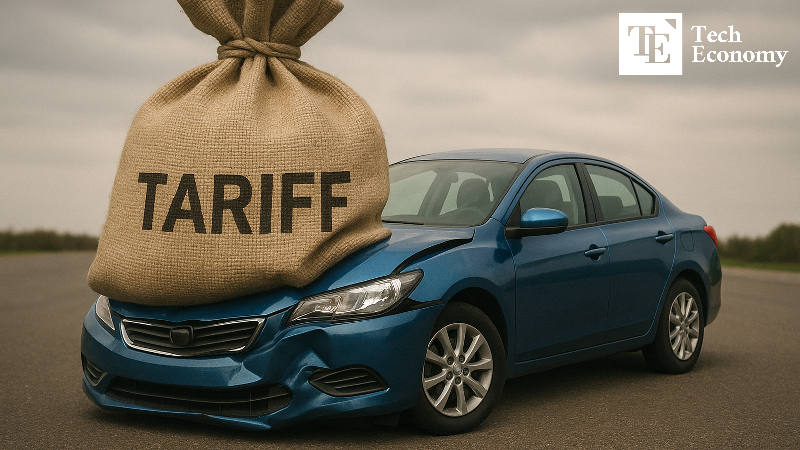
The bankruptcy of U.S. auto parts manufacturer First Brands Group (FBG) is rippling through global financial markets, amplifying concerns over instability in the private credit sector. Despite an emergency rescue attempt by creditors, the company’s cash flow froze, and its complex asset-backed securities (ABS) structure has exposed investors to real losses. Analysts say the Trump administration’s tariff policy inflated manufacturing costs and deepened the industry’s debt burden. For that reason, the case is viewed as an early warning of a policy risk where private credit vulnerabilities and protectionism intersect.
Liabilities estimated at up to $50 billion
FBG’s bankruptcy filing at the end of last month has raised questions about the risk-management capabilities of several financial institutions, including JA Mitsui Leasing, a joint venture majority-owned by Japanese trading conglomerate Mitsui & Co. FBG had filed for Chapter 11 bankruptcy protection in U.S. federal court in late September. The company supplied consumable parts such as wipers to auto retailers but repeatedly borrowed funds using unpaid receivables as collateral, causing its debt load to snowball.
As its credit ratings fell and funding channels dried up, FBG could no longer withstand the liquidity crunch. The company’s total liabilities are estimated at up to $50 billion. JA Mitsui Leasing is believed to hold about $1.4 billion in FBG debt through its U.S. subsidiary. The firm acknowledged that exposure on October 10, saying it was “awaiting the court’s review,” though anxiety is spreading through Japan’s financial sector as risk assets come under scrutiny.
Investment bank Jefferies Financial Group is also understood to hold significant FBG-related debt. According to Investing.com, Jefferies’ exposure totals $715 million, and some of those loans may have breached certain credit-agreement terms. On October 8, Jefferies shares fell 3.4 percent in pre-market trading to $59.10. As the impact spread to multiple global lenders, attempts to stabilize the creditor consortium effectively collapsed.
Dual-collateral structure heightens investor-loss risk
To raise capital for its business, FBG avoided direct borrowing and instead set up special-purpose entities (SPEs) under Kanavy Capital Holdings, using those entities to obtain funding. The proceeds were effectively used for headquarters operations but recorded as off-balance-sheet debt. The problem was that those SPEs then converted their loan and trade receivables into ABS products and sold them through investment banks. The multilayered structure became a kind of “debt-securitization pyramid,” where the accumulation of bad debt magnified contagion exponentially.
Even so, ABS products tied to FBG were sold to investors as stable, income-generating instruments. Alongside Wall Street institutions, numerous retail investors participated, even though FBG’s total debt had already reached about $6 billion earlier this year. The company’s overuse of “factoring”—borrowing cash upfront against accounts receivable—resulted in a mountain of uncollectible debt. As a result, the collateral value of those ABS products plunged and investor-loss concerns soared.
Major U.S. banks such as JPMorgan Chase and Fifth Third Bank were also reportedly exposed, though they downplayed the impact, citing its small share of total assets. Markets were not convinced. Jefferies, which had underwritten the ABS, was still marketing an additional $6 billion loan just weeks earlier to reassure investors, even as off-balance-sheet debt was piling up. The crisis has sparked talk of a potential “Lehman Brothers 2025,” underscoring mounting tension across financial markets.
Rising production costs and export strain
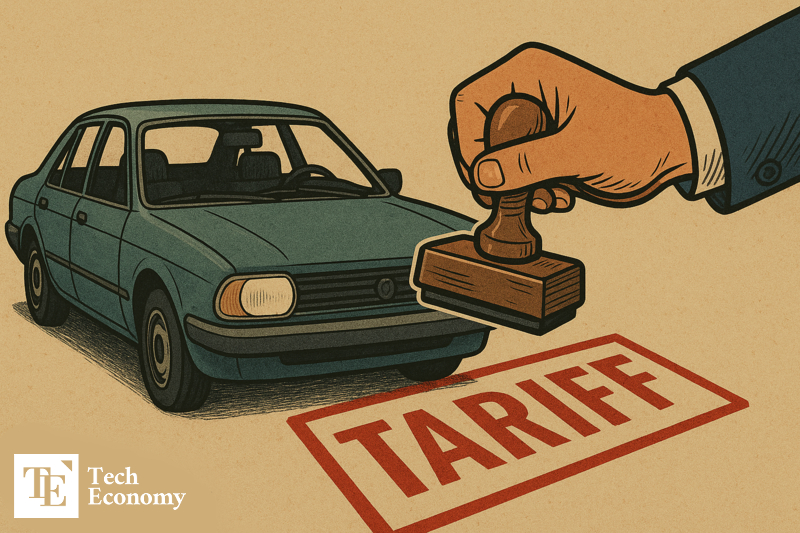
FBG’s collapse is seen as exposing the darker side of U.S. industrial policy. Observers argue that the Trump administration’s tariffs raised production costs and squeezed margins across the auto-parts sector. In court filings, FBG claimed that “import tariffs on components sharply increased costs and severely eroded profitability.” Over the past decade, the company had expanded aggressively, acquiring fifteen competitors, but the accumulated borrowings became unmanageable. Excessive leverage, compounded by tariff-driven cost pressures, led directly to the liquidity crisis.
A creditor’s attorney called FBG’s accounting a “black box,” accusing management of ignoring a structural debt problem. About $2.3 billion in assets has effectively vanished, while tangible collateral reportedly totals less than $30 million. UBS had lent roughly $500 million that may not be recoverable, and BlackRock was also found to have arranged portions of the lending. The episode highlights the structural fragility of the private-credit market.
Industry experts note that tariff-induced cost pressures and tightening capital conditions are jointly constraining corporate borrowing. Before FBG’s downfall, auto-parts supplier Marelli and retailer At Home Group had already sought court protection in June, while subprime auto lender Tricolor suddenly declared bankruptcy in early September, shocking investors. Importers who had long absorbed rising costs through inventory buffers have begun passing them on to consumers, and the broader impact is surfacing one layer at a time.
The ongoing crisis across the auto and parts industries is expected to hit the Trump administration’s industrial agenda directly. Tariffs intended to shield U.S. manufacturing are instead accelerating its decline. If shrinking investment and financial instability continue to spread, the administration could face growing criticism for triggering a recession. Conversely, easing tariffs could provide justification for a policy pivot toward recovery. For that reason, FBG’s bankruptcy is seen not merely as a corporate failure but as a real-world warning of the policy risk created by Trump-style protectionism.
Similar Post