“China’s Rare Earths Ambition Backfires” — Europe and the U.S. Accelerate Self-Sufficiency Drive

Authored On
Modified
Monopolistic dominance unbalanced by weaponization of rare earths
Western countermeasures accelerate diversification of supply chains
EU Trade Commission and G7 finance ministers set to discuss coordinated response
China has strengthened its control over the global rare earths market, leveraging it as a diplomatic tool. Yet the ripple effects are now beginning to turn against Beijing. A 56% price surge over the past two years, combined with expanded export restrictions, has instead acted as a catalyst for the United States and Europe to accelerate supply chain realignment. Experts note that because entry barriers to rare earth refining technologies are not particularly high, diversification of supply sources by the West could weaken China’s monopoly.
Solvay: “Capable of Meeting 30% of Europe’s Demand”
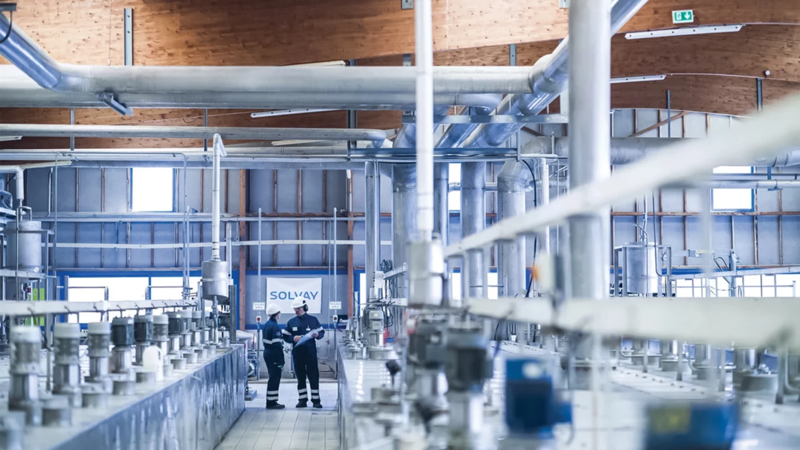
According to the South China Morning Post (SCMP) on October 14 (local time), Belgian chemical company Solvay began producing neodymium (Nd) and praseodymium (Pr)—core materials for permanent magnets—at its rare earth refinery in the French port city of La Rochelle last April. That same month, China had initiated rare earth export restrictions in response to the United States’ tariff escalation.
Once the world’s largest rare earth refining facility, Solvay’s La Rochelle plant possesses the capability to refine all 17 rare earth elements. Solvay, a global chemical group with over 160 years of history, is considered to possess superior refining expertise compared to China. The company also operates a research laboratory in Shanghai dedicated to advancing rare earth technologies.
Solvay projects that by increasing its current investment—worth several million dollars—to $110 million, it will be able to supply up to 30% of Europe’s refined rare earth demand by 2030. By importing rare earth ores from outside China and recycling permanent magnets and other end products containing rare earths, Solvay aims to free Europe from Beijing’s coercive grip.
U.S. rare earth company MP Materials has also seen its market value soar. Its share price, which stood around $24 at the end of April—when China announced its export restrictions—hit an all-time high of $84.92 on October 10 after Beijing unveiled further control measures. The stock’s 250% surge reflects expectations of a windfall from China’s tightening export curbs. MP Materials owns the Mountain Pass mine in California—the only rare earth mine in the U.S.—and also operates its own refining plant.
In July, the U.S. Department of Defense invested $400 million to acquire a 15% stake in MP Materials, enabling the company to expand its domestic refining capacity. The Pentagon also provided an additional $150 million in low-interest loans. Apple, seeking to secure stable rare earth supplies for its smartphones and audio devices, signed a long-term purchase agreement worth $500 million with MP Materials. J.P. Morgan and Goldman Sachs have pledged a combined $1 billion in financing.
China Raises Rare Earth Prices by 56% in Two Years
Experts say Beijing’s strategy to weaponize rare earths has backfired, with its monopoly position now eroding under the pressure of self-inflicted price hikes. According to Taiwan’s DigiTimes, China Northern Rare Earth Group and Inner Mongolia Baotou Steel Union raised the pretax transaction price of rare earth concentrates to $3,600 per ton in the fourth quarter of last year—the fifth consecutive quarterly increase and a 56% rise from the end of 2023.
Amid escalating U.S.-China tensions, China’s aggressive export restrictions—intended as leverage in the geopolitical contest—now risk turning into a self-defeating move. On October 9, China’s Ministry of Commerce issued notices No. 61 and 62, expanding export controls to cover not only raw rare earth materials and concentrates but also equipment, technologies, and assemblies containing rare earths. A new extraterritorial clause mandates export licenses for products manufactured overseas that use a certain percentage of Chinese rare earths or technologies. The system is designed to extend regulatory reach beyond raw materials to intermediate and finished goods. The updated rules also encompass semiconductors and devices used in 14-nanometer processes, high-density memory, and artificial intelligence (AI) applications.
The effects are expected to be immediate. When China announced a similar set of rare earth restrictions this past April, global automakers experienced component shortages within two months, forcing some to halt production lines. The move also drew President Donald Trump back to the negotiating table. However, the policy has become a major headache for Chinese producers amid weak domestic demand. Data from China’s Ministry of Commerce show that, as of 2024, exports accounted for 18% to 50% of total sales among the country’s 11 listed magnet manufacturers. Yet within two months of the new restrictions, magnet exports plummeted 75%. Small and mid-sized producers consequently cut output by more than 15% between April and May.
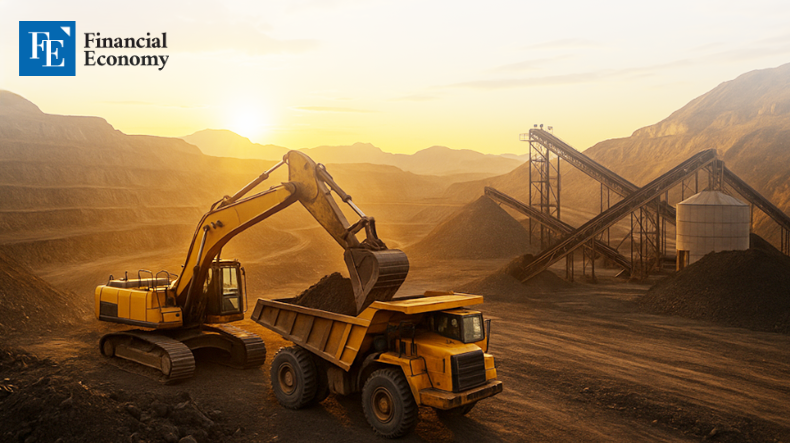
EU Seeks Joint Response with U.S. and G7 to China’s Rare Earth Controls
While restricting supply may yield short-term gains, markets tend to correct themselves. In essence, Beijing’s price hikes have provided the West with a clear incentive to develop alternative supply networks. A precedent exists: in 2010, during the Senkaku Islands (Diaoyu Dao) dispute, China’s use of rare earths as a bargaining chip spurred Japan to diversify imports. Japan subsequently secured mining stakes in Australia and Vietnam, expanded recycling programs, and developed substitutes—reducing its dependency on Chinese rare earths from 90% to 60%, with the figure expected to fall below 50% by year-end.
The U.S. and Europe have already launched full-scale “de-Sinicization” resource strategies. According to Reuters, the European Union is working with the U.S. and other G7 partners to coordinate a response to China’s tightening control over rare earth exports. EU Trade Commissioner Maroš Šefčovič said, “China’s measures are unfair,” noting that EU ministers meeting in Denmark identified the issue as a key concern. He added that coordination with G7 allies could lead to joint projects for mining and refining critical minerals to diversify supply.
Although Beijing’s export curbs last April initially disrupted many global manufacturers, subsequent cooperation between Europe and the U.S. helped ease supply constraints—demonstrating tangible progress in reducing Western dependence on China. Diversification is now viewed as the long-term solution. The EU is supporting new rare earth mining and refining projects in Australia, Canada, and Africa. As The Economist observed, “Refining rare earths is environmentally challenging but far less technically complex than advanced semiconductor fabrication, and deposits are abundant worldwide. If the West reorganizes its supply chains, China’s dominance in the sector will inevitably weaken.”
Similar Post