Japan’s First Female Prime Minister All but Certain — Takaiichi Cabinet’s Fate Hinges on the Economy

Anne-Marie Nicholson is a fearless reporter covering international markets and global economic shifts. With a background in international relations, she provides a nuanced perspective on trade policies, foreign investments, and macroeconomic developments. Quick-witted and always on the move, she delivers hard-hitting stories that connect the dots in an ever-changing global economy.
Authored On
Modified
Innovation Party’s Participation through External Cooperation
Reduction of Parliamentary Seats
Adoption of Osaka Sub-Capital Plan
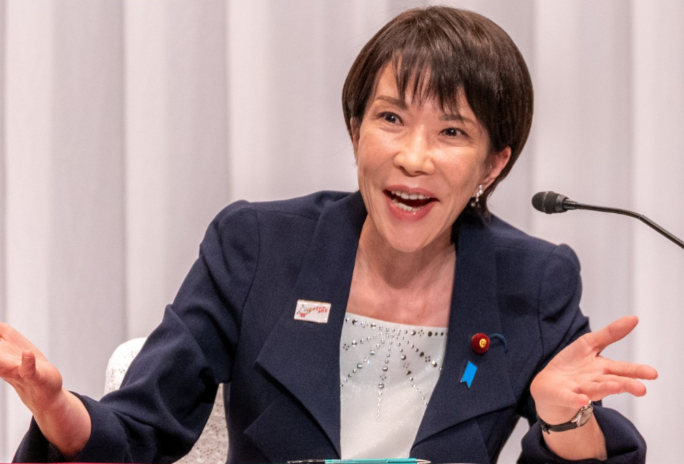
Sanae Takaichi, President of Japan’s ruling Liberal Democratic Party (LDP), is set to become the country’s first female prime minister. The LDP and the Japan Innovation Party (Ishin), the second-largest opposition party, have effectively agreed to form a coalition government, while divisions among other opposition forces have cleared her path to power. Although the LDP has managed to overcome the formidable obstacle of failing to secure sufficient parliamentary support for her appointment, the party now faces the heavy burden of fulfilling Ishin’s major policy demands — including the reduction of parliamentary seats and the creation of a sub-capital in Osaka. On top of that, Takaichi must also contend with a triple challenge of diplomatic frictions, economic stagnation, and fiscal deterioration.
From LDP–Komeito Era to LDP–Ishin Coalition Government
According to the Nikkei Asia on October 20, LDP President Sanae Takaichi and Japan Innovation Party Co-Representative Hirofumi Yoshimura are set to sign a coalition agreement today. Although Takaichi became the LDP leader on October 4, she struggled to secure a stable majority necessary for her nomination as prime minister. With the long-standing coalition partner Komeito having broken away, the LDP was left vulnerable as the Constitutional Democratic Party, the Japan Innovation Party, and the Democratic Party for the People began cooperating, threatening to block her path to the premiership.
In an attempt to overcome this stalemate, the LDP sought to expand its coalition by reaching out to the three opposition parties. Negotiations with the Democratic Party for the People broke down early, as the party’s major supporter, the Japanese Trade Union Confederation (Rengo), opposed the idea of a coalition with the LDP due to ideological differences. However, talks with the Japan Innovation Party progressed considerably, culminating in a coalition agreement centered around twelve key policy clauses.
With the LDP–Ishin coalition now established, the two parties together will hold 231 seats in the upcoming prime ministerial nomination vote scheduled for October 21 — just two short of an absolute majority of 233. Given the disarray among opposition parties, the support of six independent lawmakers or three members from the conservative Sanseito Party would allow Takaichi to secure the premiership in the first round without a runoff. Even if the vote proceeds to a runoff, her victory is still considered all but certain, as former Prime Minister Shigeru Ishiba had also won in a runoff during last year’s divided parliament.
A Major Hurdle Cleared, but Clouds Ahead
Nevertheless, Takaichi’s path forward remains far from smooth. She now faces the challenge of implementing the policy promises made to forge the coalition. Ishin’s leader Hirofumi Yoshimura set a “10% reduction in parliamentary seats” as a non-negotiable condition of the alliance. Specifically, he has demanded cutting around 50 seats in the House of Representatives and 20 seats in the House of Councillors.
By bringing Ishin into the coalition, the LDP has also assumed responsibility for advancing other key policy items demanded by the party. These include abolishing corporate and organizational political donations, as well as pursuing the so-called “sub-capital concept.” The plan seeks to decentralize power away from Tokyo by establishing a secondary administrative hub, requiring the relocation of certain central government ministries. It also envisions creating a distinct economic zone outside the Tokyo metropolitan area to enhance Japan’s growth potential. Osaka — Ishin’s birthplace — is widely expected to be the primary candidate for this project.
Diplomatic challenges also loom large. Takaichi has drawn controversy for visiting the Yasukuni Shrine on Japan’s World War II surrender anniversary, August 15, in both 2023 and 2024. She has stated that the visits were meant to express gratitude and remembrance. However, as the shrine enshrines Class-A war criminals from the Pacific War, such gestures are widely seen as honoring them as well. During her LDP leadership campaign last year, Takaichi even pledged to visit Yasukuni Shrine as prime minister. Domestic media have described her as viewing the visit as a “rightful act for Japanese citizens.”
This stance has raised concerns both at home and abroad, with critics warning it could strain Tokyo’s relations with Seoul and Beijing and further fuel Japan’s rightward shift. Sensing the backlash, Takaichi has recently softened her tone, saying she would “make an appropriate judgment” on the matter. According to Kyodo News, “Until now, Takaichi, mindful of her conservative base, had continued visiting Yasukuni even as a cabinet minister,” adding that “as her premiership now appears imminent, she seems to be weighing the diplomatic repercussions, including possible backlash from South Korea and China.”
Inflation, Bond Yields Among Mounting Economic Risks
The greater challenge, however, lies in reviving Japan’s sluggish economy. Analysts widely believe that the success or failure of the Takaichi administration will be determined by its economic policies. Nicknamed the “female Abe,” Takaichi emphasizes structural reform, drawing on her experience as minister in charge of economic security. Like the late Prime Minister Shinzo Abe, she intends to pursue expansionary fiscal and monetary policies.
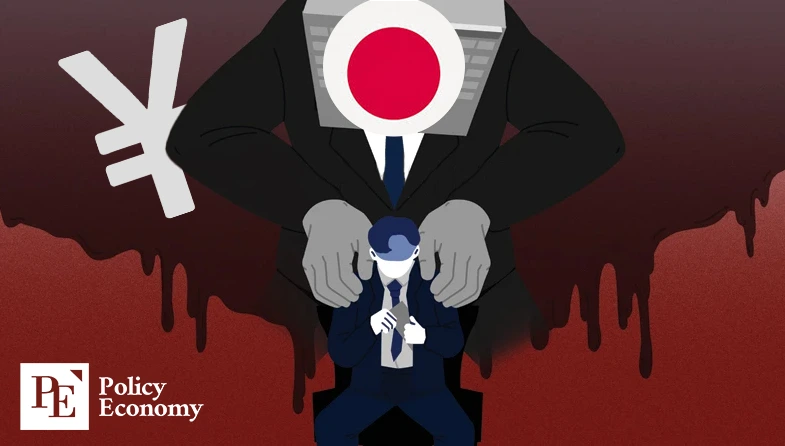
Yet skepticism abounds. Japan’s fiscal and economic conditions are far more fragile than during Abe’s tenure. Critics warn that monetary easing could clash with anti-inflation measures in the current environment of persistent price pressures. Moreover, Takaichi has suggested that issuing deficit-financing bonds might be unavoidable to fund inflation relief measures — a move that could further worsen fiscal health and push bond yields higher. Sayuri Kawamura, senior research fellow at the Japan Research Institute, cautioned, “If the next administration adopts an expansionary fiscal stance, Japan could face a bond market turmoil similar to what occurred under Liz Truss’s government in the U.K.”
Even within the Japanese government, unease is growing. Following Takaichi’s remarks on tolerating deficit bond issuance, a Finance Ministry official expressed concern, saying, “It’s doubtful whether she fully grasps the realities of public finance.” According to the International Monetary Fund (IMF), Japan’s national debt stood at 250% of GDP in 2023 — by far the highest among advanced economies and nearly double Greece’s 127% debt ratio when it plunged into crisis in 2009. Under the 2026 budget, Japan’s annual debt-servicing cost is projected to reach about $120 billion, exceeding 10% of total government spending. Additional bond issuance under Takaichi’s government could trigger surging interest rates and potential credit downgrades.
Meanwhile, domestic consumption is deteriorating. Personal bankruptcy filings in Japan reached 76,000 last year, the highest since 2012 (83,000). Although still just one-third of the 240,000 peak recorded in 2003 during the country’s multiple-debt crisis, the return to an upward trend after more than a decade has raised alarms. From January through June this year, cumulative bankruptcy filings (preliminary figures) rose by roughly 8% year-on-year.
Japan’s bankruptcy cases began to decline around 2010, when the revised Money Lending Business Act took effect, introducing a total lending cap that limited loans to one-third of a borrower’s annual income. This sharply curbed reckless lending. However, inflation has recently outpaced wage growth, fueling a surge in small consumer loans. According to the Ministry of Health, Labour and Welfare’s Monthly Labour Statistics Survey (covering firms with five or more employees), Japan’s real wages fell for three consecutive fiscal years through 2024. As essential living costs such as food have soared, households have increasingly turned to revolving credit and consumer loans to cover short-term expenses — a troubling sign of deepening financial stress.
Anne-Marie Nicholson is a fearless reporter covering international markets and global economic shifts. With a background in international relations, she provides a nuanced perspective on trade policies, foreign investments, and macroeconomic developments. Quick-witted and always on the move, she delivers hard-hitting stories that connect the dots in an ever-changing global economy.
Similar Post