Samsung’s Smartphone Market Share Hits 10-Year Low as Chinese Rivals Surge

Authored On
Modified
Vivo Regains No.1 Position in China
Samsung and Xiaomi Overtaken in India
Inflection Point for Samsung’s Business Model
The global smartphone market’s center of gravity is shifting toward China. Although Samsung Electronics still leads in shipments, analysts warn that the company’s dominance is increasingly illusory as Chinese manufacturers close the quality gap and mount aggressive volume offensives. Having already ceded leadership in the foldable segment to Chinese rivals, Samsung now faces additional pressure from Washington’s high-tariff policies — accelerating the market’s pivot toward a China-centric structure.
Xiaomi, Oppo, and Vivo Tighten Grip on Emerging Markets
According to India-based research firm IDC on October 19 (local time), Samsung shipped approximately 60.5 million smartphones in the first quarter of 2025, accounting for about 20% of global market share. While total smartphone shipments worldwide grew a mere 0.2% year-on-year, Samsung’s volume gains failed to translate into higher share.
By contrast, Chinese brands collectively captured 56% of global shipments. Major players such as Xiaomi, Oppo, and Vivo have rapidly consolidated their presence across emerging markets including India and Southeast Asia, leveraging aggressive pricing and fast product cycles. Samsung may retain its global shipment crown, but its regional dominance continues to erode.
Vivo, in particular, ranked first in India in the most recent second-quarter survey with a 21% market share. A year earlier, it had been tied with Samsung behind Xiaomi; now it has overtaken both. Vivo’s success stems from its strategy of leveraging local partnerships to expand distribution networks alongside frequent new model launches.
Across Southeast Asia — Thailand, Malaysia, Indonesia, Vietnam, and the Philippines — Vivo ranks between third and fifth, recently surpassing Samsung in the Philippines and Apple in Thailand. In China, the company reclaimed the top position in the third quarter, shipping 11.8 million units to outpace Huawei’s 10.5 million and retake the lead.
Samsung Foldables Slump to Third as Chinese Brands Dominate
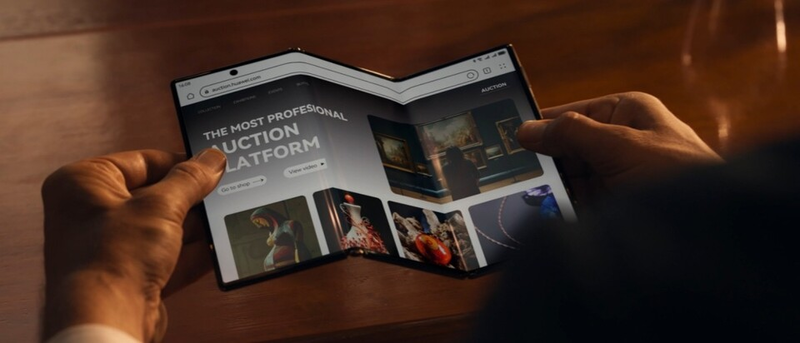
Even in foldables — once Samsung’s pride — China has seized control. According to Counterpoint Research, Huawei led the global foldable market in the second quarter with a 45% share, followed by Motorola at 28%, placing Chinese manufacturers firmly in first and second. Samsung, once the pioneer of the category, saw its share collapse from 21% to just 9%, slipping to third.
Huawei has expanded its influence through a steady cadence of new releases such as the Pocket 2 and Nova Flip, while achieving a technological leap with the world’s first tri-fold smartphone, the Mate XT — ahead of Samsung. Motorola, too, has achieved remarkable momentum in North America with its Razr 60 series, doubling its market share from 14% to over 28% year-on-year.
As Huawei and Motorola surge globally, the Chinese domestic foldable market has also exploded. Counterpoint data show China’s foldable market grew 34% year-on-year in the first half of 2025, now accounting for 57% of global foldable sales. China has effectively become the category’s main battleground.
This poses a formidable challenge for Samsung, whose footprint in China has shrunk to nearly zero. While the company leads the global smartphone market, its negligible presence in China severely limits its growth potential. To regain momentum in foldables, Samsung must strengthen its positions in both China and North America — an increasingly difficult task amid intensifying competition.
Chinese Brands Bypass Tariffs, Expand in Southeast Asia and India
Market observers expect these trends to become entrenched. Under President Donald Trump’s tariff regime on smartphones, Samsung faces unavoidable headwinds while Chinese firms capitalize on the disruption to expand their reach. Bolstered by Beijing’s “replace old devices with new” subsidy program, Chinese manufacturers are scaling their domestic operations before launching aggressive export campaigns across emerging economies. Their key targets — Southeast Asia, India, and Africa — are less exposed to U.S. tariffs than Samsung’s core markets in North America and Europe, giving Chinese firms room to grow their global share.
Huawei, for instance, held the global launch of its Mate XT — previously a China-only model — in Kuala Lumpur this March, signaling a shift to synchronized domestic and international rollouts across all price segments. Vivo, too, is accelerating its overseas push. “More than half of our revenue already comes from abroad,” said COO Hu Baishan in an interview with Bloomberg, adding that the company aims to lift its overseas share to 60% this year and 70% by 2027.
Samsung’s calculus, meanwhile, has grown increasingly complex. The Trump administration is reportedly weighing a 100% tariff on imported semiconductors exceeding domestic output, alongside a 15–25% tariff on finished electronics depending on chip content. Given that smartphones incorporate dozens of semiconductors — from system-on-chips (SoCs) to DRAM, NAND flash, Wi-Fi, and RF modules — such measures would heighten export uncertainty.
“Tariffs would raise capital and operating costs, leading to higher device prices and weaker demand,” said one industry analyst. “Samsung must pivot quickly toward next-generation form factors, wearables, and extended-reality (XR) devices to secure future growth.”
Similar Post