Trump Warns China Ahead of Gyeongju APEC Meeting: “If There’s No Deal, They’ll Be in Trouble”

Authored On
Modified
‘Chip War’ Ends, Rare Earth Battle Begins
China Tightens Grip on Rare Earths, U.S. Hits Back With 100% Tariffs
Showdown Looms Ahead of APEC Summit in Gyeongju
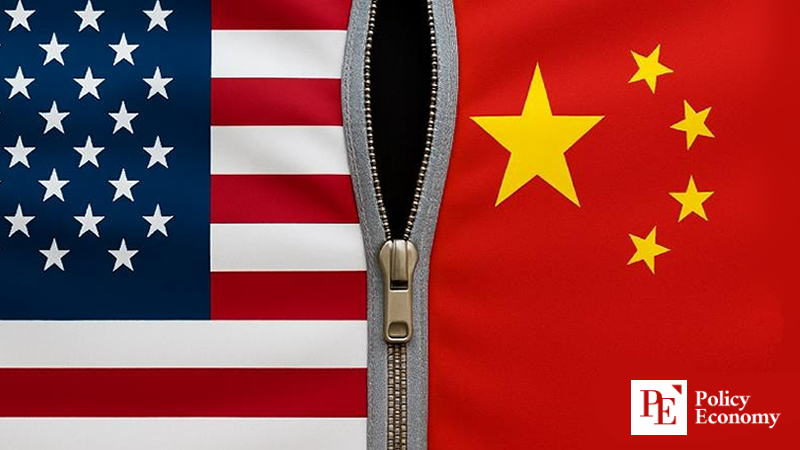
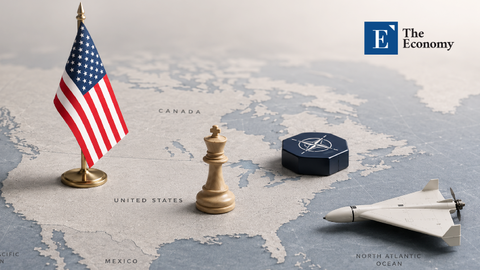
U.S. President Donald Trump has announced plans to meet Chinese President Xi Jinping in South Korea later this month, expressing optimism over a “fantastic trade agreement.” At the same time, he warned that if no deal is reached, tariffs on Chinese imports could soar to 155%. With the upcoming Asia-Pacific Economic Cooperation (APEC) summit in Gyeongju approaching, Trump appears to be deploying a calculated mix of pressure and persuasion to secure leverage ahead of the talks.
Trump: “A Mutually Beneficial Outcome, Fantastic for the World”
Speaking at the White House on the 20th (local time), President Trump said, “China is paying a 55% tariff now, and if we don’t make a deal, it will temporarily rise to 155% on November 1. We’ll meet in South Korea in a few weeks and discuss what can be done.” He added, “We have a very good relationship with China, but like everyone else, they try to take advantage. We’ve already signed fair trade agreements with South Korea, the European Union, and Japan.”
Trump emphasized, “The EU used to benefit from us, but not anymore. We’ve reached a fair trade deal with Japan, and South Korea—where I’ll meet President Xi—also signed a fair agreement.” Although differences remain over the composition of South Korea’s $350 billion investment package in the United States, Trump reiterated his long-standing position that the deal is essentially complete. “I expect a very fair agreement with China,” he continued. “It’ll be something very exciting, and it will benefit both countries.”
In response to a follow-up question, Trump added, “I want to treat China well, and I have a good relationship with President Xi. We’re going to South Korea together—it’s a great place to meet. When we finish, there will be a ‘big deal.’ When President Xi and I conclude the talks in South Korea, we’ll sign a very fair and excellent trade agreement.” He also noted that China hopes to resume purchases of American soybeans, halted amid tariff tensions, declaring, “It’ll be a fantastic deal—not just for both countries, but for the entire world.”
China Brings U.S. to a Standstill With Rare Earths
After months of escalating tariffs reaching triple digits, Washington and Beijing had appeared to reach a truce following two rounds of negotiations—in Geneva in May and London in June. Both sides agreed in Geneva to temporarily ease tariff rates (a reduction of 115 percentage points). At the London meeting, the U.S. consented to allow exports of Nvidia’s China-specific AI chip H20 and to reverse visa cancellations for Chinese students, in exchange for Beijing lifting its rare earth export curbs.
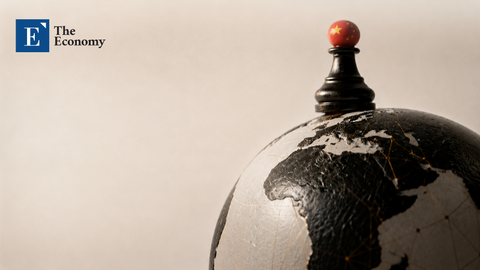
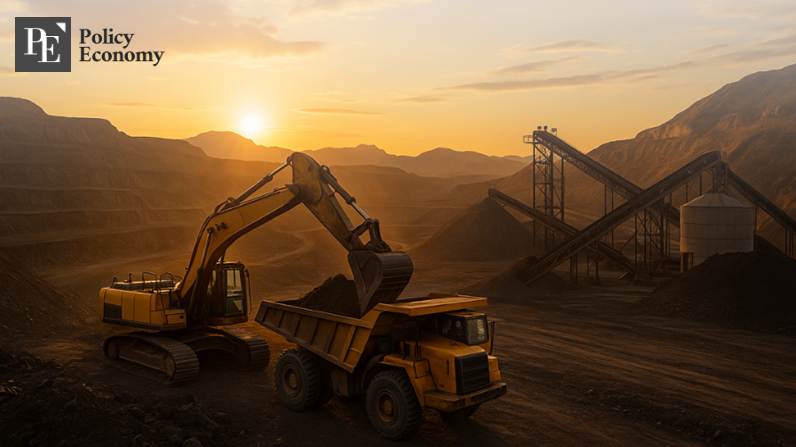
However, China reignited tensions on October 9 by announcing renewed restrictions on rare earth exports. Effective December 1, Beijing will tighten control over rare earth materials produced with domestic resources or technology, and will ban their use in foreign defense and advanced semiconductor industries.
According to the Ministry of Commerce’s Decision on the Export Control of Overseas Rare Earth Materials released on October 9, any strategic mineral product produced abroad that contains more than 0.1% Chinese-origin rare earths—or uses Chinese technology—will require a dual-use export license. Without government approval, such exports will be prohibited. China also plans to individually review rare earth exports used in advanced semiconductors of 14 nanometers or below, memory chips of 256 layers or more, as well as AI manufacturing and related equipment.
Trump Counters Beijing’s Export Clampdown
Infuriated by Beijing’s move, President Trump ordered a 100% tariff on Chinese products and new export controls on key U.S. software, effective November 1. When asked which exports might be restricted, Trump said, “We have many things, including big ones like aircraft. They have a lot of Boeing planes, and they need our parts,” hinting that aircraft components could be targeted.
Earlier, on his social media platform Truth Social, Trump accused China of “holding the world captive,” writing, “China is sending letters to countries, signaling its intent to impose export restrictions on nearly everything related to rare earth production—even items not manufactured there.” Diplomats interpreted Beijing’s decision as a de facto withdrawal from the trade truce, which both sides had hoped to finalize during the upcoming summit.
China’s confidence appears rooted in strong trade performance. According to the General Administration of Customs, exports in September reached $328.57 billion, up 8.3% year-on-year—surpassing both market forecasts (6.0%) and August’s 4.4% growth. Imports rose 7.4% to $238.12 billion, resulting in a trade surplus of $90.45 billion. For the first nine months of the year, exports rose 6.1% while imports fell 1.1%, expanding total trade volume by 3.1% compared to last year.
Still, a complete breakdown in negotiations remains unlikely, as renewed tariff escalation would hurt China’s fragile economy. With youth unemployment high and domestic consumption weak, Beijing cannot afford a prolonged standoff. Likewise, Washington would suffer severe disruption if China were to block rare earth exports. To mitigate such risks, the Trump administration is accelerating diversification of rare earth supply chains.
On the 20th, Trump and Australian Prime Minister Anthony Albanese signed the U.S.-Australia Framework for Secure Supply of Critical Minerals and Rare Earths at the White House. The two governments pledged to co-invest more than $3 billion over the next six months in key mineral projects.
The joint statement read, “We will strengthen cooperation to accelerate stable supplies of critical minerals and rare earths essential to defense and advanced technology manufacturing.” The agreement includes financing, equity investment, loan guarantees, and regulatory easing to support extraction and processing projects. The White House estimated the framework could unlock $53 billion in resource value. The U.S. Export-Import Bank has issued seven letters of intent for over $2.2 billion in financing, expected to spur total investments of $5 billion. The Pentagon also plans to fund a gallium refinery in Western Australia.
Similar Post