US and Australia Boost Rare-Earth Cooperation as BHP Urges Working with Both Sides

Aoife Brennan is a contributing writer for The Economy, with a focus on education, youth, and societal change. Based in Limerick, she holds a degree in political communication from Queen’s University Belfast. Aoife’s work draws connections between cultural narratives and public discourse in Europe and Asia.
Authored On
Modified
BHP Takes Neutral Stance Amid US–China Rare-Earth Tensions
US Turns to Australia to Cut Reliance on Chinese Supply
“Technology Matters More Than Resources,” Says China with Confidence
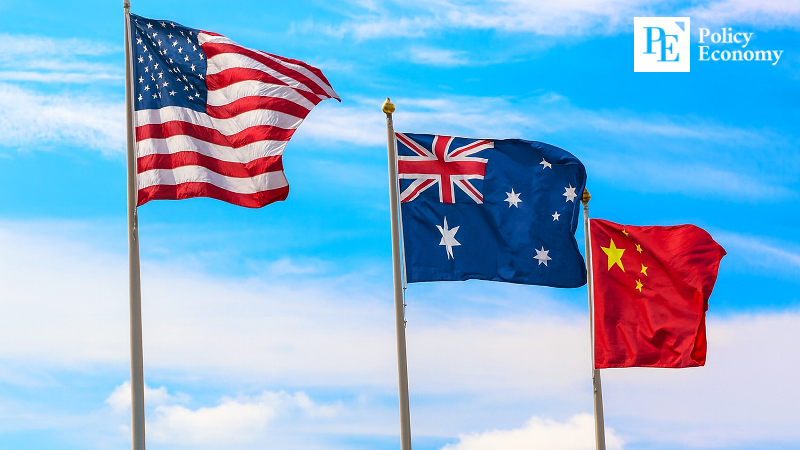
The new chairman of Australia’s BHP, the world’s largest mining company, has taken a neutral stance on the ongoing rare-earth dispute between the United States and China. Despite Australia’s deepening cooperation with Washington on rare-earth supply chains, BHP appears to be pursuing a balanced approach, extending ties to both of its key customers.
BHP Declares Neutral Stance on US–China Tensions
According to a Reuters report on October 23, BHP Chairman Ross McEwan told reporters after the company’s annual general meeting in Melbourne, “Two very powerful nations are flexing their muscles — and this isn’t the first time we’ve seen that.” He added, “Critical minerals are becoming increasingly important, and companies and countries like ours should work with all parties.”
McEwan’s remarks come as tensions over rare-earth resources between the United States and China continue to escalate. Recently, China announced that products manufactured overseas containing Chinese rare earths would require export approval from Beijing. In response, U.S. President Donald Trump warned that beginning in November, his administration would impose an additional 100% tariff on Chinese goods and implement new export controls on key technologies.
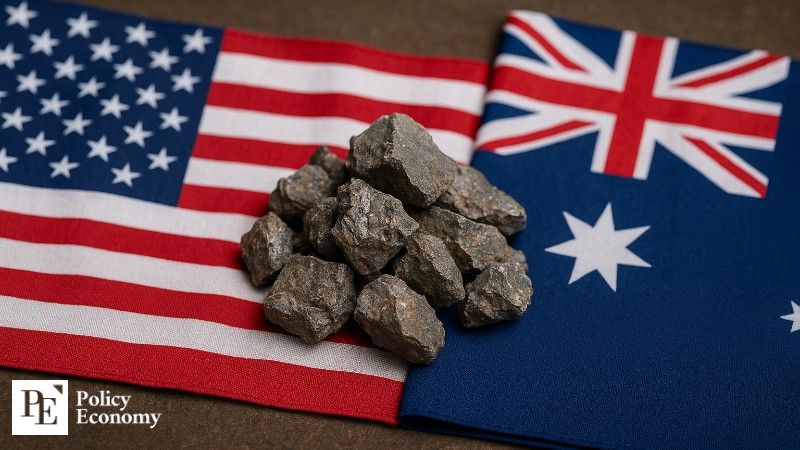
On October 20, Trump met with Australian Prime Minister Anthony Albanese at the White House, where the two leaders signed a joint “US–Australia Framework for the Stable Supply of Critical Minerals and Rare Earths.” The agreement pledged stronger cooperation to secure key resources essential for defense and advanced manufacturing industries. It also outlined plans to mobilize public and private funds — through guarantees, loans, equity investments, and regulatory easing — to finance mining and processing projects critical to rare-earth and mineral supply chains.
Why the US Chose Australia as Its Partner
Washington’s decision to team up with Canberra in countering China stems from the United States’ still-fragile rare-earth supply chain. The US has long sought to reduce its dependence on China by establishing an independent rare-earth network. In July, the US government acquired a 15% preferred equity stake worth 400 million dollars in Nevada-based MP Materials — an effort aimed at expanding the production capacity of the company’s Mountain Pass mine in California and achieving self-sufficiency in the domestic supply of defense and industrial-grade rare-earth magnets.
Founded in 2017, MP Materials operates Mountain Pass, the only rare-earth mine in the United States, and runs facilities in Fort Worth, Texas, for refining rare-earth metals and manufacturing magnets — establishing a vertically integrated supply chain from raw ore to finished products. However, analysts widely agree that the US and MP still lack significant competitiveness. According to the US Geological Survey, the country’s 2024 rare-earth output is estimated at 45,000 tons, ranking second globally but far behind China’s 270,000 tons. Mountain Pass’s annual target for permanent magnet production is only 1,000 tons — less than 1% of China’s output.
Australia, on the other hand, is a traditional resource powerhouse with strong regulatory stability and a well-developed production infrastructure, giving it growing influence in critical mineral production. As of 2024, it holds the world’s second-largest lithium reserves and ranks second in nickel and cobalt and fourth in rare earths. To maximize the value of its resources, Canberra announced its Critical Minerals Strategy 2023–2030 last year, outlining plans to move beyond raw material exports by expanding domestic refining, processing, and advanced manufacturing capabilities.
Australia also plays an active role in global mineral cooperation. A key example is its participation in the US-led Minerals Security Partnership (MSP) launched in 2022. The MSP strengthens collaboration across all stages of mineral production — exploration, extraction, processing, and recycling — and includes major partners such as the US, Australia, Canada, Japan, South Korea, and the European Union. Within the MSP, Australia serves as a vital supplier, leveraging its abundant natural resources to support global supply chain resilience.
China’s “Rare-Earth Confidence”
In response to the US–Australia partnership, China expressed confidence that its dominance in the global rare-earth supply chain would remain unshaken. On October 21, the state-run Global Times, an English-language outlet under the People’s Daily, quoted multiple experts as saying that “the core issue in rare-earth supply lies not in resource deposits, but in advanced refining technology.”
Wei Lei, a professor of international political economy at Shandong University, told the Global Times, “China is among the most technologically advanced countries in high-precision refining. Cooperation between the US and Australia will not undermine China’s dominant position in the rare-earth supply chain in the short term.” He added that the development served as a reminder for China to accelerate its global stockpiling and allocation of key metal resources.
The Global Times also criticized Australia for what it called a “diplomatic dilemma,” arguing that Canberra faces potential setbacks. Chen Hong, director of the Australian Studies Center at East China Normal University, said, “The scale of rare-earth trade with the US is negligible compared with the benefits of maintaining a healthy relationship with China. Australia should not sacrifice stability in the Asia-Pacific region for the sake of its alliance with Washington.”
Aoife Brennan is a contributing writer for The Economy, with a focus on education, youth, and societal change. Based in Limerick, she holds a degree in political communication from Queen’s University Belfast. Aoife’s work draws connections between cultural narratives and public discourse in Europe and Asia.
Similar Post