US Seeks New AUKUS Partners to Boost Shipbuilding Capacity, Eyes South Korea and Norway

As one of the youngest members of the team, Tyler Hansbrough is a rising star in financial journalism. His fresh perspective and analytical approach bring a modern edge to business reporting. Whether he’s covering stock market trends or dissecting corporate earnings, his sharp insights resonate with the new generation of investors.
Authored On
Modified
US Congress Seeks to Expand AUKUS Partnership with a Capable Shipbuilding Nation
South Korea, with World-Class Shipbuilding Expertise, Emerges as a Leading Candidate
Another Contender, Norway, Strengthens Its Case with Strong Maritime Ties to the UK
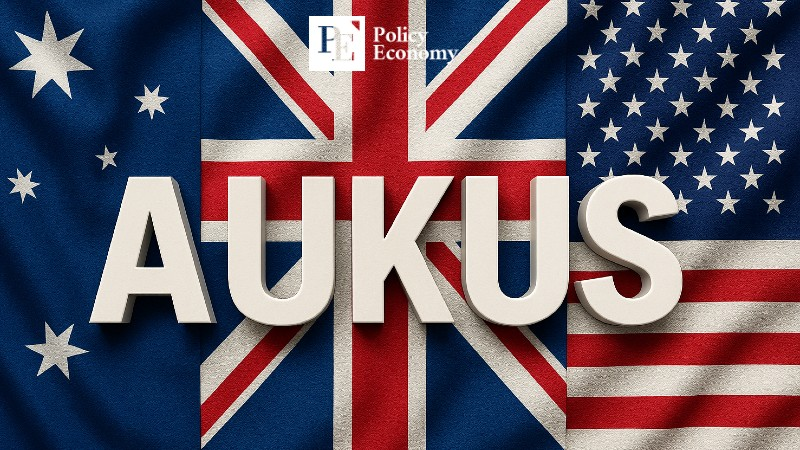
The US Congress has proposed expanding AUKUS — the trilateral security partnership among the United States, the United Kingdom, and Australia in the Indo-Pacific region. Facing limitations in its own shipbuilding capacity to supply Australia with nuclear-powered submarines, Washington is seeking additional partners with strong shipbuilding industries. South Korea, Norway, and Japan have been cited as potential candidates.
US Signals Possible Expansion of AUKUS Partnership
On October 23, Representative Adam Smith, the ranking Democrat on the US House Armed Services Committee, said in an interview with The Guardian that “AUKUS is crucial to meeting America’s growing national security needs, but we need to build more submarines,” adding, “I would like to see partnerships expanded with South Korea, Japan, and Norway.” He emphasized, “All three are capable shipbuilding nations, and we hope to broaden the AUKUS partnership with that goal in mind.”
Washington’s consideration of new AUKUS partners stems from the US shipbuilding industry’s lack of capacity. Launched in September 2021, AUKUS consists of two pillars: “Pillar I,” which involves the provision of US and UK nuclear-powered submarines to Australia, and “Pillar II,” a joint effort to develop advanced defense technologies across eight areas, including artificial intelligence, quantum computing, cybersecurity, and undersea systems. Under the agreement, Australia plans to acquire three Virginia-class submarines from the US by 2032 to operate within its own naval forces. These submarines are among the most advanced in the world, designed for intelligence gathering, anti-submarine warfare, land strikes, and special operations.
The problem, however, is that the US currently lacks the production capacity to meet AUKUS commitments. The US Navy estimates it would need to produce 2.33 Virginia-class submarines annually to supply Australia, but as of July 2023, congressional data shows the actual rate was only about 1.13 per year. Labor shortages, material delays, supply chain bottlenecks, and limited shipyard infrastructure have all contributed to escalating costs and schedule setbacks.
South Korea’s Strong Shipbuilding Advantage
The other AUKUS members face similar challenges to the United States. While the United Kingdom has the necessary technological expertise, its shipbuilding capacity is limited. Australia, meanwhile, has no prior experience building nuclear-powered submarines, and its infrastructure and workforce are still in the early stages of development. This has fueled calls for AUKUS to expand beyond its current three-member framework and bring in a capable partner with proven strengths in shipbuilding, technology, and defense.
South Korea, mentioned as a potential candidate, presents a compelling strategic option. The country possesses world-class shipbuilding capabilities, producing more than seven million compensated gross tons (CGT) of vessels annually. Beyond commercial shipping, Korea also leads in naval and submarine construction. Major shipbuilders — HD Hyundai Heavy Industries, Hanwha Ocean, and Samsung Heavy Industries — boast top-tier productivity and skilled labor across every stage of construction, from modular assembly and block fabrication to hull welding and outfitting. Korea also has extensive experience developing and operating core technologies essential for nuclear-powered submarines, including lithium-battery propulsion systems, vertical launch systems (VLS), sonar and combat networks, and digital ship design.
South Korea’s defense ties with Australia further strengthen its position. The two nations have long cooperated on defense projects such as the K9 self-propelled howitzer, the Redback infantry fighting vehicle, and munitions supply. More recently, Hanwha Ocean acquired a 19.9% stake in Australian shipbuilder Austal. This partnership could allow Australia to outsource module and block fabrication to Korea, reducing construction time and improving quality. The South Korean government is also closely monitoring the opportunity: at last year’s Korea–Australia 2+2 Foreign and Defense Ministers’ Meeting, Seoul was invited to participate in AUKUS Pillar II and is now considering partial involvement in Pillar I and full participation in Pillar II through its industry and defense agencies.
Norway’s High-Value, Technology-Driven Shipbuilding Strategy
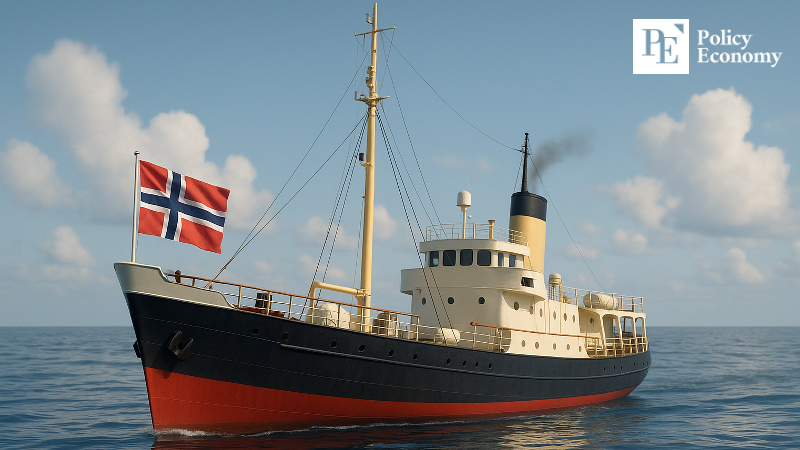
Norway, another potential AUKUS partner candidate, is widely regarded as a major force in the global maritime industry. The country ranks fourth worldwide in total vessel ownership and possesses some of the most advanced ship equipment and maritime engineering capabilities. Norwegian shipbuilding extends well beyond vessel manufacturing—it operates as part of an integrated maritime cluster that combines shipping, design, equipment, and finance. However, due to high labor costs and strict labor regulations, Norway faces limitations in price competitiveness. As a result, its industrial focus lies in precision engineering, high-value-added vessels, and environmentally sustainable technologies.
Norway also maintains a robust maritime partnership with the United Kingdom, one of the core AUKUS members. In August, Oslo finalized a deal to acquire Type 26 anti-submarine frigates being built in Glasgow, Scotland, with an estimated value of 10 billion pounds (about 17 trillion won). The contract is expected to sustain around 2,000 jobs at BAE Systems’ shipyards in Scotland through the late 2030s, along with an additional 2,000 jobs across the UK’s broader maritime supply chain.
Once construction is complete, a total of 13 Type 26 frigates—eight for the Royal Navy and at least five for the Royal Norwegian Navy—will be deployed across Northern Europe. The two nations will jointly strengthen NATO’s northern deterrence posture by establishing a shared defense network against Russian submarine operations in the North Atlantic and Arctic seas. Norway’s choice of the UK over Germany, France, and the United States underscores not just the ship’s performance but also the strategic value of reinforcing its alliance with Britain.
As one of the youngest members of the team, Tyler Hansbrough is a rising star in financial journalism. His fresh perspective and analytical approach bring a modern edge to business reporting. Whether he’s covering stock market trends or dissecting corporate earnings, his sharp insights resonate with the new generation of investors.
Similar Post