Japan Bets $70 Billion on ‘Shipbuilding Renaissance,’ but Aging Facilities and High Costs Pose Major Risks

Authored On
Modified
Revival Drive for Japan’s Once-Collapsed Shipbuilding Industry
2035 Shipbuilding Target Set at 18 Million Tons
‘Shipbuilding Revival Plan’ Accelerates: LNG Carriers and Workforce Development
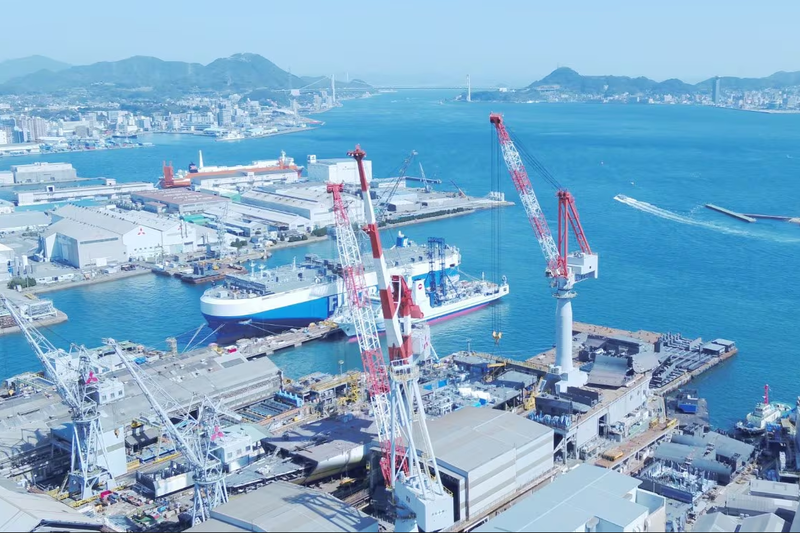
Japan seeks to reclaim its former status as a shipbuilding powerhouse through massive state-led investment. With the United States tightening its grip on China’s shipbuilding industry while signaling stronger cooperation with allied shipyards, Tokyo views this as a critical window to rebuild competitiveness. Once the world’s dominant shipbuilder, Japan—after losing its edge to Korea and China during its “lost decades”—is now attempting a comeback amid shifting global dynamics. Yet, deep-seated issues such as outdated facilities, high construction costs, steel price gaps, and fragmented production sites continue to cloud prospects for revival.
$70 Billion State Fund Under Review, Private Sector Consolidation Also Underway
According to the Nihon Keizai Shimbun (Nikkei) on the 29th, Japan’s ruling Liberal Democratic Party (LDP) has drafted an emergency proposal centered on creating a state-led fund exceeding $70 billion. The plan envisions establishing a national shipyard to be leased to private firms, aiming to enhance both production efficiency and R&D competitiveness. The proposal also includes antitrust law relaxation and financial and tax support measures to systematically back the industry.
This follows the Japanese government’s announcement last month that it aims to double the nation’s annual shipbuilding volume to 18 million tons by 2035. Achieving this target requires substantial investment, and the LDP intends to stimulate private-sector participation through a strong demonstration of government commitment—injecting momentum into Japan’s stagnant shipbuilding ecosystem.
If realized, Tokyo projects Japan’s global shipbuilding market share will rise to 20%, up from the current 13%. Moreover, the plan seeks to establish a domestic self-sufficiency framework allowing Japanese shipowners to source vessels entirely from within the country. A particular focus is the resumption of liquefied natural gas (LNG) carrier construction—a technologically intensive, high-value-added segment in which Japan once excelled.
Industry restructuring is also accelerating under government guidance. Imabari Shipbuilding, Japan’s largest shipbuilder, is moving to acquire Japan Marine United (JMU), the nation’s second largest, by securing a 60% stake and making it a subsidiary. Upon completion, Imabari would command over half of Japan’s domestic market and climb from sixth to fourth globally in shipbuilding volume.
In line with the national roadmap, Japan’s shipbuilders are also ramping up investment. Yukito Higaki, chairman of the Shipbuilders’ Association of Japan (SAJ) and chairman of Imabari Shipbuilding, announced on the 23rd a $23 billion facility investment plan, including consideration of restarting LNG carrier production. Higaki emphasized, “Most Japanese shipyards have lost competitiveness due to aging infrastructure,” adding that “long-term investments in large-scale cranes, automation systems, and robotics are essential.”
Investment initiatives include introducing additional goliath cranes, reorganizing aging docks and fleets, and automating block assembly, welding, and coating processes to improve productivity. The strategy aims not only at expanding output but also at addressing Japan’s chronic labor shortage. With an aging workforce and declining numbers of skilled shipbuilders, automation and robotics are increasingly viewed as vital substitutes.
Arctic Route Commercialization and Green Vessel Demand Fuel Revival Momentum
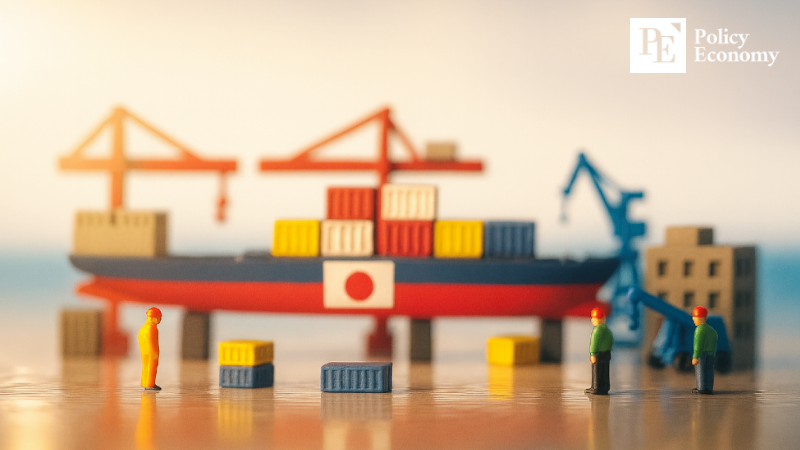
Japan, which relies on maritime transport for 99% of its trade volume, once dominated more than half of the global newbuild market during the 1980s. The government’s “Planned Shipbuilding” policy—introduced to resolve ship shortages and financing constraints—propelled Japan to the top of the global rankings in 1956 with a 26.2% share of new ship launches, surpassing the U.K. (20.7%) and Germany (15.0%). By developing large-scale shipyards and specialized component industries, Japan led global shipbuilding through the 1980s.
However, the 1974 oil shock and the 1985 Plaza Accord triggered two major downturns, eroding Japan’s cost competitiveness through currency appreciation and excess capacity. Compounded by aging demographics and delayed adaptation to environmental regulations, Japanese yards steadily lost ground to overseas rivals. Following the 2008 Lehman Brothers collapse, large-scale restructuring ensued, with several shipyards shuttering or merging.
Meanwhile, Korea solidified its global leadership in high-value sectors such as LNG carriers and ultra-large container ships, while China consolidated its state-owned shipbuilding giants to secure vast production capacity. China’s global market share surged from 6% in 2001 to 50% in 2023, driven by heavy government subsidies. Japan, by contrast, now holds only around 8%, a sharp decline from its 1980s peak.
This erosion of industrial capability has sparked a sense of national urgency, prompting direct government intervention. Shifts in global demand have further catalyzed Tokyo’s response. Notably, discussions on the commercialization of the Arctic shipping route are gaining traction in the maritime sector. China’s recent test voyage of the Arctic Express to Europe was widely reported in Japan, highlighting the growing importance of ice-class and icebreaking vessels—a category where Japan has long held technological advantages. Although Korea also has experience building icebreaking LNG carriers, industry experts caution against underestimating Japan’s legacy expertise.
Another key driver is the global transition toward eco-friendly ships. Stricter regulations by the International Maritime Organization (IMO) have fueled demand for ammonia-, methanol-, and LNG-powered vessels. While Korean shipbuilders have already achieved global success in this area, Japan could rapidly narrow the technological gap if its government channels large-scale capital through GX (Green Transformation) transition bonds to finance facility upgrades. Viewing shipbuilding not merely as a manufacturing sector but as a “strategic industry for achieving carbon neutrality,” Japan is applying strong policy pressure to accelerate reform.
Can Japan’s Shipbuilding Industry Truly Stage a Comeback?
Skepticism remains, however, over Japan’s ability to regain its footing. Domestic media highlight escalating construction costs as a structural challenge. With energy and labor expenses rising, doubling production capacity could further erode price competitiveness against low-cost Chinese rivals. Additionally, supply chain lead times for cranes and automation equipment—as well as environmental permitting delays—pose logistical bottlenecks. Given that Korea and China already possess extensive dock and crane infrastructure, Japan faces an uphill climb to catch up quickly.
Steel price disparities also weigh heavily. Industry data indicate that Japanese ship prices are roughly 20% higher than China’s, largely due to differences in steel costs, which account for about 30% of total shipbuilding expenses. The resulting price disadvantage underscores the need for decisive government action and execution to drive meaningful change.
Moreover, doubts persist about the tangible benefits of the Imabari–JMU merger. As one industry insider noted, “Unlike Korea’s major shipbuilders, which have clustered shipyards in areas like Ulsan and Geoje, Japan’s production bases are widely dispersed.” Building large modern vessels requires assembling hundreds of massive blocks, and Japan’s fragmented production network makes this process inefficient. Thus, while the Imabari–JMU merger may raise market share on paper, whether it translates into real capacity gains remains uncertain.
Similar Post