EV Industry Enters “Dark Age” Beyond the Chasm, Battery Makers Hit by Collapsing Demand

Authored On
Modified
Global EV Market Enters a Phase of Structural Realignment
U.S. and China’s Subsidy Cuts Sap EV Demand
Battery Sector Faces Severe Oversupply, Investment Retrenchment Inevitable
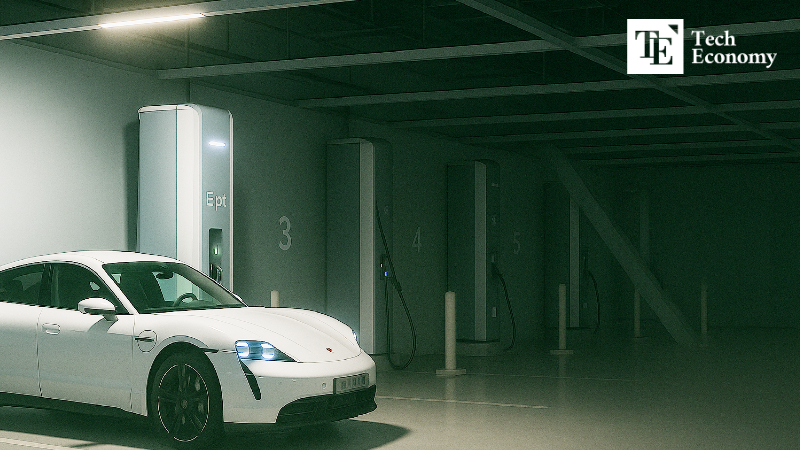
After years of unprecedented boom, the global electric vehicle (EV) market has entered a period of paralysis. The simultaneous removal of tax credits in the United States and the reduction of purchase subsidies in China have pushed the industry beyond a temporary demand lull—the so-called “chasm”—into what many now call a full-blown dark age. The downturn has dealt a heavy blow to battery manufacturers that had aggressively expanded production capacity in anticipation of continued high growth. As EV sales plunge and oversupply in the battery market deepens, the entire EV ecosystem is rapidly transitioning from an expansionary phase to one of contraction and adjustment.
U.S. Subsidy Withdrawal Takes Toll, Sales Cut in Half
According to Bloomberg on the 3rd (local time), the effects of the Trump administration’s sweeping tax reform law, known as the OBBBA (“One Big Beautiful Bill”), are now becoming visible following the abolition of EV tax credits. Data from S&P Global Mobility show that EV sales in the U.S. plunged to 64,000 units in October, down more than half from 150,000 units in the previous month.
Hyundai and Kia, which had posted record monthly and quarterly sales in August and September through expanded eco-friendly model lineups, saw a sharp slowdown in October. Analysts attribute the drop to a “last-minute rush” of consumers purchasing vehicles before subsidies expired, coupled with aggressive discount campaigns by automakers to clear inventories.
Ford’s EV sales also declined 25% year-on-year during the same period. By model, Mustang Mach-E crossover sales fell 12%, and the electric pickup F-150 Lightning dropped 17%. Toyota’s all-electric “BZ” series fared even worse, selling just 18 units in October—plunging from 1,401 units a year earlier and 61 units the previous month.
Tesla, which has yet to release quarterly results, is also believed to have been hit hard. Between January and September, Tesla sold 179,525 EVs in the U.S., up 8% year-on-year, but analysts expect a steep decline in the fourth quarter. Jessica Caldwell, head of insights at auto research firm Edmunds, said, “The removal of subsidies is pushing the market toward a more natural equilibrium,” adding, “October marks the start of a market correction driven not by incentives, but by genuine consumer interest in EVs.”
China Pulls the Plug on EV Subsidies, Growth Momentum Stalls
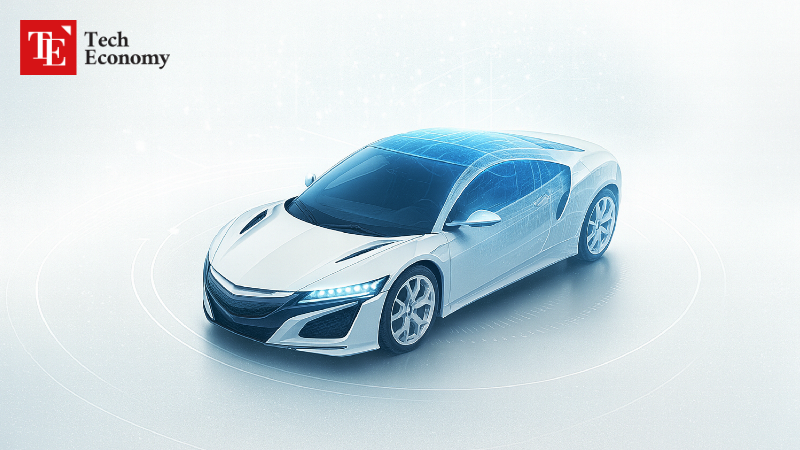
Signs of recalibration are equally evident in China. Recently, Beijing excluded electric vehicles from the list of strategic industries in its upcoming 2026–2030 five-year plan—the first such move in over a decade. Analysts interpret this as a de facto signal marking the end of the EV boom in China.
For years, China had poured generous fiscal and tax incentives into its domestic EV industry, anticipating an electric future. According to the Center for Strategic and International Studies (CSIS), cumulative state subsidies for EVs between 2009 and 2024 amounted to $231 billion. Long-term policy targets, such as achieving carbon neutrality by 2060, further reinforced the sector’s rapid expansion. Beijing had set ambitious penetration targets—20% by 2025, 40% by 2030, and 50% by 2035—and backed them with aggressive incentives.
Consumer subsidies also surged. Under the “old-for-new” replacement program (以舊換新), the government offered $2,700 for EV purchases and $2,000 for internal combustion vehicles, along with broad tax exemptions on new-energy cars. These measures triggered explosive domestic demand over the past few years.
However, the result was a massive oversupply: more than 500 EV manufacturers emerged, producing far beyond domestic demand capacity. Although the number has since dropped to 169, 93 of them still hold less than 0.1% market share. Starting next January, China will cut its EV purchase tax exemption in half—from a full waiver to a 50% reduction—and lower the maximum benefit per vehicle from $2,700 to $1,300. The Chinese financial outlet Yicai warned, “As subsidies fade, companies failing to establish an advantage this year will face a far more brutal competitive landscape next year.”
Battery Capacity Now Twice the Demand, Urgent Need for New Markets
For battery makers, the subsidy rollback in the U.S. and China is nothing short of catastrophic. Industry projections show that if Korean, Chinese, and Japanese companies complete their planned factory expansions, global battery production capacity next year will exceed actual demand by more than twofold. Battery producers had forecast average annual EV market growth of 30–40%, but the real figure now appears likely to linger in the low teens.
With EV sales stagnating and battery output surging, the sector faces a supply glut of unprecedented scale. The only way to survive in such a market is to seize competitors’ contracts. Chinese suppliers are already doing so—gradually displacing Korean battery makers from their long-held customer bases in Europe, the world’s key EV market. LG Energy Solution, Samsung SDI, and SK On are reportedly losing accounts to Chinese rivals.
To counter this, Korean firms that entered Europe earlier than their Chinese counterparts are diversifying battery form factors and increasing the share of lithium iron phosphate (LFP) products in an effort to regain clients. They are also accelerating commercialization of next-generation technologies such as high-efficiency 46 mm cylindrical cells and solid-state batteries. Yet even these measures are proving inadequate in the face of a broad EV demand slump.
With few immediate alternatives, Korean battery producers are shifting focus to energy storage systems (ESS) for solar power, viewing them as the next growth engine amid a stagnating EV market. In the U.S., a surge in electricity consumption driven by the artificial intelligence (AI) boom has triggered explosive growth in solar generation, which in turn requires large-scale storage capacity to offset fluctuations in sunlight. Only a handful of companies—Korea’s top three battery firms and Japan’s Panasonic—are capable of supplying batteries for large ESS installations in the U.S.
According to the Solar Energy Industries Association (SEIA), cumulative ESS installations in the U.S. are expected to reach up to 700 gigawatt-hours (GWh) by 2030, compared with just 83 GWh last year—implying annual additions exceeding 100 GWh over the next five years. In contrast, EVs are projected to account for less than 5% of new car sales in the U.S. next year, translating to only 100–200 GWh in annual battery demand. As Korean battery makers expand their combined U.S. capacity from 250 GWh to about 600 GWh by next year, more than half of that capacity risks lying idle. The EV-driven expansion era of the battery industry has effectively ended, ushering in a period of painful consolidation and restructuring.
Similar Post