The Truth Behind the YouTube TV–Disney “Blackout”: The Opening Battle of a New Media Power War

Niamh O’Sullivan is an Irish editor at The Economy, covering global policy and institutional reform. She studied sociology and European studies at Trinity College Dublin, and brings experience in translating academic and policy content for wider audiences. Her editorial work supports multilingual accessibility and contextual reporting.
Authored On
Modified
Disney Moves to Defend the Value of Its Content
YouTube TV Appeals to Users Over “Unfair Pricing”
A Sign of the Coming Clash Between Media and Platforms
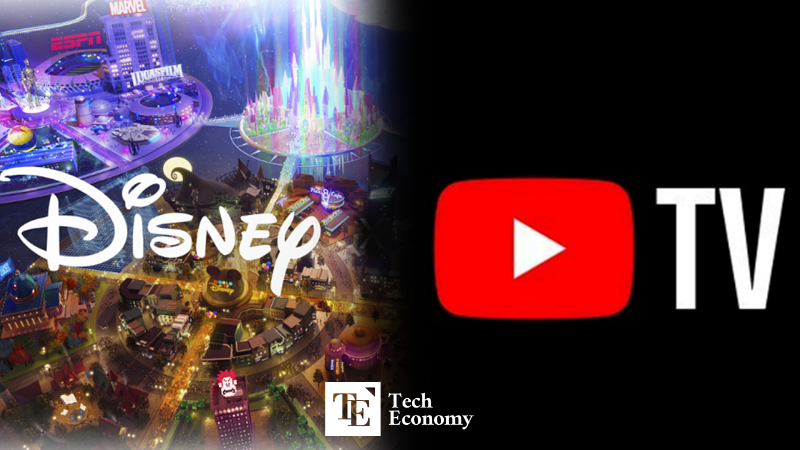
YouTube TV, which has more than 10 million subscribers, halted the transmission of key Walt Disney channels, marking a new phase in the power struggle between digital platforms and traditional broadcasters. Industry observers say media power has shifted from “programming rights,” once monopolized by networks, to “distribution rights,” now defined by search and recommendation algorithms. The balance of influence, they note, is tilting decisively toward YouTube. Yet the platform’s open structure—lacking rigorous verification systems—raises fresh concerns over misinformation, exposing the tension between freedom and trust in the digital era.
End of the Cable TV Era
According to CNN Business on the 4th (local time), as of midnight on the 30th of last month, YouTube TV stopped streaming all Disney-owned channels after both sides failed to reach an agreement on licensing fees before the negotiation deadline. YouTube TV announced that “Disney programs will no longer be available,” adding that live and recorded content from major channels such as ABC and ESPN would be inaccessible. In total, 18 channels—including ABC, ESPN, FX, and National Geographic—were affected, interrupting broadcasts of popular sports like the NFL and NBA and triggering a flood of viewer complaints.
Although both sides stated they would continue talks, neither disclosed a timeline for restoration. The core issue now centers on how much and under what terms YouTube TV should pay for access to Disney content. YouTube TV accused Disney of using the blackout as leverage to push price hikes, arguing that “the burden will ultimately fall on users.” Disney countered that its channels deserved fair valuation, with its spokesperson stating that “YouTube TV insisted on rates far below industry standards.”
Many analysts believe YouTube TV has been overly aggressive. Despite being far smaller than legacy cable giants like Comcast or Charter, YouTube TV reportedly demanded comparable fee terms. The Wall Street Journal noted that large platforms often use their market clout to negotiate lower licensing rates than smaller distributors—and YouTube TV appeared to be doing just that. The service had faced similar disputes last August with Fox and NBCUniversal over content fees, prompting Fox to publicly criticize Google for “proposing unrealistic terms.”
Beyond pricing, insiders suggest that deeper issues—such as bundle composition, channel placement authority, and app integration—lie at the heart of the dispute. According to CNBC, Disney proposed adding a bundle of Disney+, Hulu, and ESPN+ at no extra cost, while YouTube TV countered by demanding seamless integration of these services directly within its app—allowing viewers to access them without switching platforms. At stake is control over user access, subscriptions, payments, and viewing data, revealing the true nature of the standoff: who owns and governs the audience relationship.
Media Power Shifts Toward Decentralized Distribution
YouTube TV currently has about 10 million subscribers, roughly one-third the size of Comcast, the largest U.S. cable operator with 29.8 million. Despite its smaller scale, YouTube TV maintains strong bargaining leverage thanks to YouTube’s broader “distribution power.” This influence was evident when YouTube TV promised a 20-dollar monthly credit to all users if the blackout persisted—demonstrating that the platform’s pricing flexibility and user interface design give it a unique asymmetry over traditional operators.
That imbalance stems from how audiences now consume media. Viewing has shifted from “scheduled programming” to “search and on-demand.” Traditional television, once defined by fixed times and locations, has waned, while YouTube has evolved into a vast, personalized video library. This shift has democratized communication—transforming content flow from “one-to-many” to “many-to-many” and transferring agenda-setting power from broadcasters to individuals and communities. As viewing habits move from the TV schedule to searchable archives, the ecosystem that controls those archives—YouTube—and its bundle service, YouTube TV, wield influence far beyond their subscriber base.
Technologically, YouTube operates in a fundamentally different environment. It is not a programming broadcaster but a video-hosting platform. This identity has normalized video-on-demand and short-form viewing, reinforcing personalized and contextual consumption. As traditional broadcasters lose the power of programming and channel branding, platforms that control discovery and distribution interfaces gain value faster than the sum of individual content pieces.
Industry consensus now suggests that the standoff will likely drag on but eventually force Disney to compromise. Power in the media market no longer depends on “who owns more channels” but on “who organizes and directs viewing time.” As legacy broadcasting declines and the power chain—spanning independent creators, platforms, and live-service bundles—solidifies, YouTube’s leverage grows beyond mere subscriber numbers.
The Crisis of Trust: A Painful Transition
Still, YouTube’s open ecosystem has a glaring weakness: the absence of a robust fact-checking system. While its openness has democratized media creation and extended freedom of expression, it also serves as a conduit for misinformation. As subscriptions and view counts define influence, sensational content floods the platform, and unverified claims often circulate as if factual. Comment sections and community tools further amplify false narratives, accelerating the spread of so-called “fake news.”
This has spawned a more cynical assessment—a “dark side of information democratization.” Professor Kim Hong-yeol of Duksung Women’s University in Seoul observed that “YouTube freed media from elite control but replaced it with a structure dominated by capital,” adding, “It’s time to ask who creates information and who bears responsibility for it.” With roughly 3.8 billion monthly users worldwide, YouTube has become the first gateway to information for much of the planet. Yet its algorithm-driven filtering system, which tailors content to user preferences, often results in news consumption shaped more by taste than by fact. As openness expands, so does the potential for misinformation.
Even so, experts agree that such turmoil is an inevitable growing pain in the redistribution of information power. As the flow once controlled by television and newspapers disperses to individuals, new filtering systems must emerge. Professor Kim emphasized that “digital literacy is the core qualification for modern democracy,” arguing that “freedom of information must be accompanied by citizens’ ability to critically evaluate it.” In that sense, the challenge facing YouTube’s media ecosystem narrows down to one central task: finding balance between freedom of expression and the credibility of information.
Niamh O’Sullivan is an Irish editor at The Economy, covering global policy and institutional reform. She studied sociology and European studies at Trinity College Dublin, and brings experience in translating academic and policy content for wider audiences. Her editorial work supports multilingual accessibility and contextual reporting.
- Previous China Establishes ‘Debt Management Bureau’ to Oversee Local Government Liabilities: Fiscal Capacity Secured, but Recovery Momentum Lacking
- Next [Diagnosing the Collapse of Universities] Palantir’s “Post-University” Experiment Raises a Fundamental Question: What Is the Purpose of Higher Education in the Age of AI?
Similar Post