China Pauses Rare Earth Export Curbs for a Year — U.S. Races to Build Its Own Supply Chain After Setback

As one of the youngest members of the team, Tyler Hansbrough is a rising star in financial journalism. His fresh perspective and analytical approach bring a modern edge to business reporting. Whether he’s covering stock market trends or dissecting corporate earnings, his sharp insights resonate with the new generation of investors.
Authored On
Modified
China Temporarily Suspends Rare Earth Export Controls to Fulfill Summit Agreement
U.S. Relaxes Advanced Tech Export Restrictions After Failing to Counter China’s Grip on Rare Earth Supply Chains
Trump Administration Pushes for Aggressive Investment and Partnerships to Build Independent Supply Lines
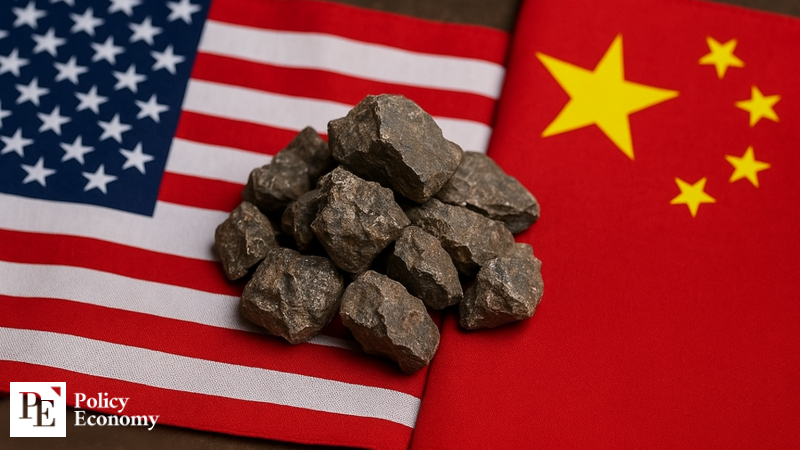
China has decided to suspend its export controls on strategic metals — including gallium, germanium, and graphite — to the United States for one year. The move follows last month’s summit between the two nations, during which Beijing, leveraging its dominant grip on the rare earth supply chain, effectively secured a “points victory.” With bilateral relations now in a fragile truce, Washington is accelerating efforts to build an independent supply network to reduce its reliance on Chinese rare earth materials.
China Puts Its ‘Rare Earth Weaponization’ on Hold
According to Reuters on the 9th, China’s Ministry of Commerce announced that it would suspend until November 27 next year the implementation of Article 2 from its December 2023 notice titled “Strengthening Export Controls on Dual-Use Materials to the U.S.” The provision had effectively banned exports of gallium, germanium, and antimony, as well as other dual-use superhard materials, to the United States, while imposing stricter end-user and end-use reviews on graphite exports.
Beijing’s decision to pause enforcement follows the summit between President Donald Trump and President Xi Jinping, held on November 30 in Busan. According to a White House briefing released on December 1, China agreed to resume imports of U.S. soybeans, temporarily suspend rare earth export controls, strengthen restrictions on fentanyl precursor exports, and ease retaliatory tariffs and sanctions on U.S. firms. In return, the U.S. agreed to cut tariffs on Chinese goods by 10%, delay port fees on Chinese cargo ships, and temporarily halt additional export restrictions on U.S. advanced technologies to Chinese companies.
Major media outlets described the summit as a “points victory” for Xi, saying President Trump effectively suffered a strategic loss. For the first time since his first term, Washington agreed to ease its export controls on advanced technologies to China. In a November 30 editorial, The Wall Street Journal wrote, “Trade wars — especially with an equal competitor — are not easy to win. China chose to strike back, and Trump underestimated Beijing’s rare earth leverage,” adding, “This year’s trade dispute has achieved little; at best, the U.S. has only bought some time.”
China Exploits U.S. Vulnerability in Rare Earth Supply Chains
China’s leverage in recent trade negotiations stemmed from its near-total dominance of the global rare earth supply chain. According to the International Energy Agency (IEA), roughly 70% of the world’s rare earth mining output currently comes from China — effectively giving Beijing control over more than half of the global supply of these critical materials. The U.S. Geological Survey (USGS) estimates that the United States produced about 45,000 tons of rare earths in 2024, ranking second globally but still far behind China’s 270,000 tons.
Another major challenge for Washington is that most U.S.-mined rare earths are refined in China. The separation and purification of rare earth elements release large amounts of toxic chemicals, heavy metals, and radioactive waste, a process most Western nations have avoided for environmental reasons. As a result, China now controls around 90% of global refining capacity and roughly 93% of permanent magnet production, the final stage in the rare earth value chain.
Rare earth elements are essential to high-tech industries, powering everything from smartphones and semiconductors to electric vehicles and fighter jets. A mere 10% disruption in the rare earth supply chain could cut global economic output by an estimated $150 billion. The implications of China tightening control over these materials are severe — not only for the U.S., but for advanced economies worldwide. When Beijing imposed export restrictions on seven rare earth elements and related products last April, it triggered shutdowns at U.S. automotive production lines and auto parts plants in Germany and Austria that rely heavily on rare earth magnets.
U.S. Steps Up Efforts to Build an Independent Rare Earth Supply Chain
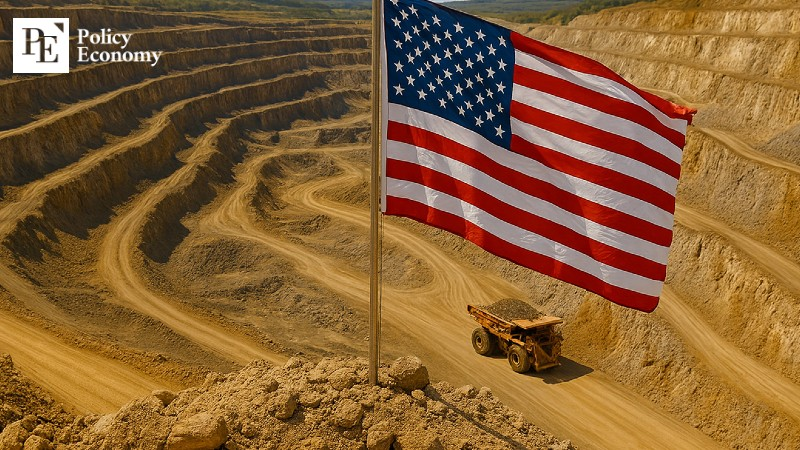
The United States is intensifying efforts to reduce its dependence on China by developing an independent rare earth supply network — backed by substantial government and private investment. On the 3rd, U.S. rare earth startups Vulcan Elements and ReElement Technologies announced a $1.4 billion partnership with the federal government. Vulcan will receive a $620 million loan from the Defense Department’s Office of Strategic Capital (DIBC), $50 million in equity funding from the Commerce Department, and $550 million in private investment to build a domestic facility capable of producing 10,000 tons of rare earth magnets annually. ReElement will focus on refining and recycling used magnets to reproduce raw materials, supported by $80 million from the DIBC and $80 million in private capital, for a total of $160 million.
In July, the Trump administration also acquired a 15% preferred equity stake in Nevada-based MP Materials for $400 million. The move is aimed at expanding production at the company’s Mountain Pass mine in California — the only rare earth mine in the United States — and establishing a self-sufficient supply chain for defense and industrial applications. Founded in 2017, MP Materials mines and processes rare earths domestically and operates a metal and magnet manufacturing facility in Fort Worth, Texas. The company plans to increase magnet production capacity tenfold through the new investment, while the U.S. government has indicated it may inject several billion dollars more to support the project.
Washington is also accelerating global partnerships to diversify supply sources. On October 20, President Donald Trump met with Australian Prime Minister Anthony Albanese at the White House to sign the U.S.–Australia Framework on Critical Minerals and Rare Earth Supply Chain Security. The two countries pledged to strengthen cooperation to ensure a stable supply of critical minerals essential for defense and advanced manufacturing, mobilizing both public and private capital through guarantees, loans, equity investments, and regulatory easing.
Further diversification followed on October 26, when the U.S. signed a strategic partnership with Malaysia to secure additional critical mineral supplies. According to Nikkei Asia, Malaysia agreed not to restrict exports of rare earth magnets while accelerating joint development with U.S. firms. Two days later, on October 28, Trump and Japanese Prime Minister Sanae Takaichi met in Tokyo and adopted a bilateral framework on mining and processing cooperation for rare earths and critical minerals. A White House statement said the agreement aims to “accelerate stable supply through coordinated investment and joint development.”
As one of the youngest members of the team, Tyler Hansbrough is a rising star in financial journalism. His fresh perspective and analytical approach bring a modern edge to business reporting. Whether he’s covering stock market trends or dissecting corporate earnings, his sharp insights resonate with the new generation of investors.
Similar Post