China Confronts a Prospective ‘Lost Decades,’ Races to Contain a Cascade of Distress

Authored On
Modified
China’s Post-Bubble Property Market Still Adrift After Five Years
Banks Expand Direct Sales of Collateral Assets to Flush Out Bad Loans
Beijing Shifts Toward Policies That Accept Short-Term Shock
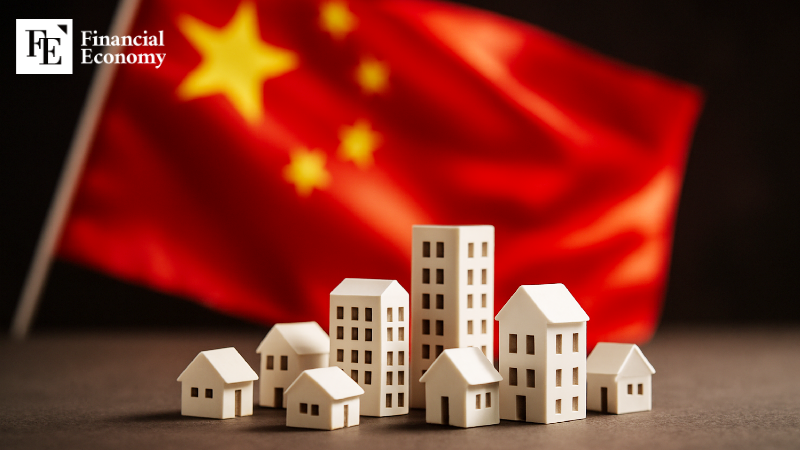
With the collapse of its property bubble triggering an explosion in non-performing loans, Chinese banks are moving to directly liquidate collateral assets. The country’s property market is now trapped in a protracted workout cycle reminiscent of Japan’s 1990s stagnation. Years of delaying loss recognition—by banks and authorities seeking to avert a full-scale price capitulation—have left the market unable to normalize even after the bubble burst. Beijing has therefore begun pivoting toward faster impairment recognition, accepting the inevitable shock of price normalization. Analysts view the shift as driven by a growing conviction that failure to absorb distressed assets swiftly will render a Japan-style prolonged slump unavoidable.
Banks Turn to Direct Sales of Collateral Properties
According to the Hong Kong Economic Times on the 26th, at least 23 financial institutions have sold or listed roughly 70,000 collateral properties—residential units and office buildings—via online platforms so far this year. Leveraging asset-sale platforms operated by JD.com and Alibaba, banks are releasing listings branded as “bank-direct supply,” with national banks and local credit cooperatives alike accelerating disposals. Sichuan Rural Commercial United Bank has sold about 25,000 such assets, while Jilin Bank in northeastern China has listed 2,000 units and Lanzhou Bank in the northwest around 1,780. The volume already exceeds the 59,000 newly launched housing units in Shanghai in all of 2024.
The assets being offloaded are properties seized as collateral after borrowers became unable to service their loans. Although banks now hold vast inventories of “abandoned repayment” properties, standard judicial auctions require at least a year. Banks typically resolve bad loans in two ways: selling the claims at a discount to asset-management companies, or acquiring collateral directly—either through negotiation or litigation—and reselling it. The surge in direct bank listings consists largely of the latter category.
Official data place China’s banking-sector NPL ratio at a stable 1.5%, yet global analysts estimate potential bad loans at 7.8% based on listed-company financials. In 2025 alone, banks processed approximately USD 540 billion in distressed assets—a roughly 30% increase from a year earlier—marking the fifth consecutive year in which annual disposals have exceeded USD 426 billion. A recent report by the Bank of China’s research institute notes that, as of late October, the nationwide mortgage delinquency rate reached 3.7%, more than double the 1.6% recorded in 2022, with several smaller cities exceeding 5%.
A defining feature of these bank-listed properties is the deep discounting—up to 50% below market prices. One small financial institution in Heilongjiang reportedly offered a 105-square-meter office in Harbin at half the prevailing market rate. Lanzhou Rural Commercial Bank priced a 140-square-meter home in Beijing’s Chaoyang District at USD 1.056 million, a reduction of USD 355,000 from comparable market levels. Other lenders are also cutting prices aggressively to attract buyers.
Following the Path Toward Japan’s ‘Lost 30 Years’
The wave of direct property disposals mirrors the behavior of Japanese banks in the 1990s. Following the collapse of Japan’s asset bubble, land and housing prices fell more than 70%, triggering a credit freeze and a descent into a liquidity trap—the origins of the “lost decades.” The downturn was prolonged by the reluctance of banks and authorities to crystallize losses. Banks delayed recovery actions to avoid forced write-downs as collateral values evaporated, while the government intervened to curb price declines to protect land-linked fiscal revenues. These decisions entrenched both a transaction freeze and a glut of unsold inventory, effectively disabling the market’s price-discovery mechanism.
China’s situation today is strikingly similar. At the peak of its boom, the price-to-income ratio (PIR) in major Chinese cities exceeded 50—implying that households would need 50 years of income to purchase a home. Before Japan’s bubble burst in 1990, Tokyo’s PIR stood at 18, underscoring the scale of China’s excesses. Property prices had risen for more than two decades, and the top ranks of China’s wealthy lists were consistently dominated by real estate developers.
The root cause lies in China’s policy design. By structuring local-government finances around land-sale revenues, Beijing effectively converted property development into a fiscal extraction mechanism. With debt issuance constrained, local governments relied heavily on transferring land-use rights to raise funds, creating a structure in which rising land prices directly expanded fiscal capacity. Higher land prices inflated government revenue, and that price signal in turn reinforced speculative demand for housing.
China’s weak property-tax regime further exacerbated speculation. Because private ownership lacks robust statutory recognition, China imposes virtually no annual property taxes. Investors could accumulate unlimited units without significant tax burdens, fueling speculative buying and unconstrained development. The market detached from end-user demand and entered a cycle driven solely by asset-price appreciation.
A Prolonged and Painful Unwinding
The bubble began deflating sharply after Beijing launched a property deleveraging campaign in 2020. Even before then, signs of stress had been mounting, and major developers faced cash shortages severe enough to halt construction on presold units. Instead of intervening to stabilize the market—as it had during past downturns—Beijing allowed the correction to unfold, expecting weaker firms to resolve their own liabilities. The downturn, however, proved deeper than anticipated, dragging former giants such as Evergrande and Country Garden into collapse despite their previous perception as “too big to fail.”
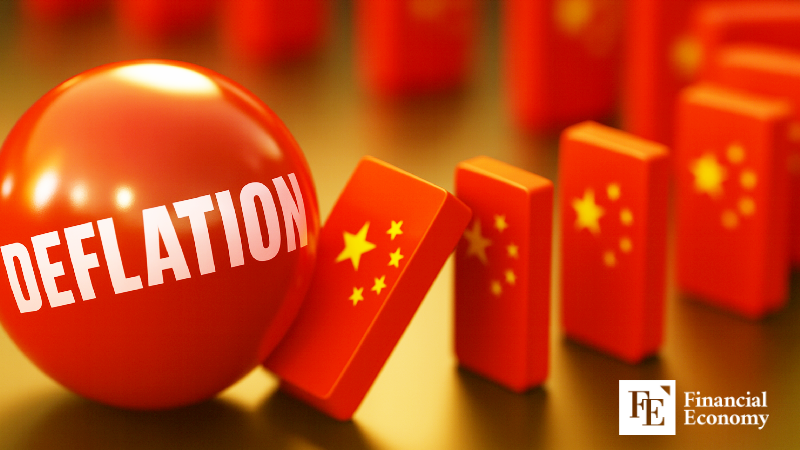
The correction has pushed China into deflation, even as most major economies struggle to exit high inflation. Real estate accounts for one-quarter of China’s GDP. When it falters, related industries—steel, cement, home appliances—fall in sequence. Moreover, property-linked liabilities span households, central and local governments, developers, and state-owned banks, ensuring that distress propagates across the economy.
Beijing unveiled a series of demand- and supply-side measures only in late 2022, but the slump persisted. Local-government infrastructure spending continued, yet became increasingly inefficient as it concentrated in lower-tier cities. The result was a surge in national debt. According to the IMF, China’s government-debt ratio soared from 33% in 2010 to 82% in 2023. Compounding matters, the liabilities of local-government financing vehicles (LGFVs)—a core funding channel—have grown precarious. BBVA estimates outstanding LGFV debt at USD 11.08 trillion, exceeding half of China’s GDP.
Although major developers have recently completed debt-restructuring programs under government guidance, this represents only the initial stage of resolving the property crisis. The unfinished-housing backlog remains enormous. Millions of buyers have already paid for pre-sold units that remain incomplete. Experts argue that households must first secure these assets and resume normal consumption before China can revive desperately needed domestic demand. The vast inventory of unsold homes also requires resolution. While Beijing has begun converting some unsold units into low-cost rental housing through direct government purchases, the fundamental solution lies in developers offloading excess stock through the market—a process expected to take considerable time.
Similar Post