U.S. Raises National Park Fees for Foreign Visitors — Dual Pricing Spreads Across Global Tourism

Authored On
Modified
U.S. Raises National Park Fees for Foreign Tourists
Japan, Struggling With Overtourism, Also Moves to Tighten Tourist Access
Dual Pricing and Price Discrimination Becoming Common in Major Tourism Destinations Worldwide
The United States is sharply raising entry fees for foreign visitors to its national parks. The Trump administration’s strong “America First” stance is now spilling beyond trade and immigration into tourism policy. Similar measures—charging tourists more to protect domestic residents—are increasingly appearing in destinations around the world.
U.S. Moves to Differentiate Between Citizens and Foreign Visitors
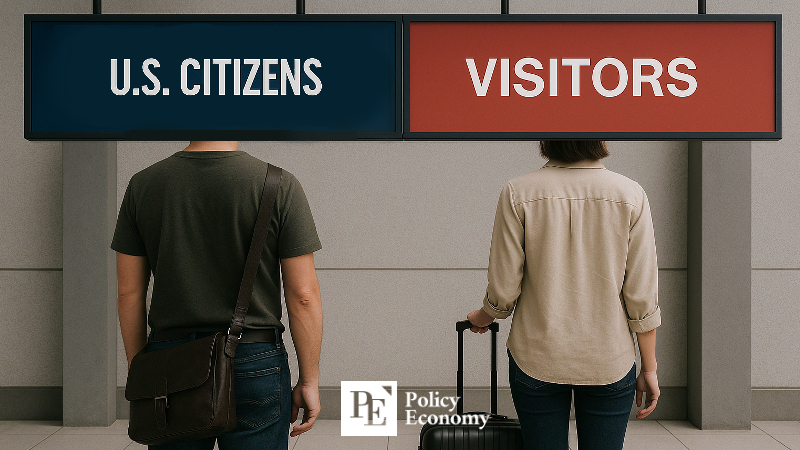
On the 25th, the U.S. Department of the Interior announced a plan to modernize national-park access and overhaul its fee structure, with full implementation scheduled for January 1, 2026. The plan introduces a strict dual-pricing system separating U.S. residents from foreign tourists.
Under the changes, the price of the America the Beautiful annual pass—which grants access to national parks nationwide—will differ based on nationality. U.S. citizens and permanent residents will continue to pay $80, but foreign visitors who do not reside in the United States will be charged $250, a 212% increase overnight.
Entry to popular parks—especially those frequented by Korean tourists, such as Grand Canyon and Yellowstone—will become even more costly. Non-resident visitors without an annual pass must pay an additional $100 per person on top of the regular entrance fee when visiting the 11 highest-traffic national parks (Grand Canyon, Yosemite, Yellowstone, Zion, Bryce Canyon, Acadia, Everglades, Glacier, Grand Teton, Rocky Mountain, and Sequoia & Kings Canyon). For a foreign family of four, the extra charge alone approaches $400.
The Interior Department said the policy is part of President Trump’s executive order, Making America Beautiful Again by Improving Our National Parks. Interior Secretary Doug Burgum stated that “President Trump’s leadership always puts American families first,” adding that the policy ensures low-cost access for U.S. taxpayers who support the park system, while international visitors “pay their fair share” toward maintenance and improvements. All additional revenue from foreign-visitor fees will be reinvested directly into park repairs and service enhancements.
Japan Also Expands Tourist Charges
Many countries are raising fees and taxes aimed at foreign tourists, and Japan—struggling with overtourism—is doing the same. Through September, Japan recorded 31.65 million inbound visitors, reaching the 30-million mark faster than ever. Tourism boosts local economies, but the surge is straining local infrastructure and public services.
Tokyo is preparing to replace its flat lodging tax with a rate-based system of 3% of the room price. Under the current rules, guests pay a small fixed tax only when the nightly rate exceeds certain thresholds, and cheaper rooms are exempt. The new structure will sharply raise costs: a room priced at about $100 would incur a $3 tax, and a $67 room would see its tax triple from roughly $0.70 to about $2. Kyoto is moving even more aggressively. For hotel rooms priced above about $670, the nightly surcharge will jump from roughly $7 to $67 starting next March.
Japan is also tightening policy at the border. The government is considering raising the International Tourist Tax from roughly $7 to over $20, using the additional revenue to lower passport-issuance fees for Japanese citizens. In addition, Japan has decided to raise visa-application fees for foreign visitors beginning next April—the first such increase since 1978.
“Foreigners Pay More” — A Widespread Practice in Global Tourism
Dual pricing—charging tourists more than locals—is now common across major travel destinations. Countries with large tourism industries, including Singapore, Italy, and Spain, are notable examples. In Venice, Italy, public transport fares differ for residents and non-residents, ensuring that tourists shoulder more of the infrastructure cost. Singapore’s National Gallery and France’s Louvre Museum also apply different admission fees to locals and foreign visitors.
In parts of Southeast Asia—such as Thailand and Vietnam—price discrimination often appears in informal ways. Because local purchasing power is far lower than that of foreign visitors, many tourist sites implicitly operate under dual pricing. Locals pay lower prices, while foreign tourists, who may face language barriers, are frequently charged far more. Over time, this practice has become a de facto form of dual pricing.
Such differential pricing is intended to protect residents, even if it means sacrificing some tourism revenue. But some analysts warn that the long-term risks outweigh the short-term benefits. Regiondo, a German tourism-industry analytics firm, reviewed Europe’s dual-pricing cases and concluded that while sustainable tourism supports local economies, price discrimination undermines sustainability and lacks evidence that the additional costs charged to tourists meaningfully flow back into local communities. In short, widespread adoption of dual pricing can ultimately harm not only tourism but local economies as well.
Similar Post