EU’s shift on illegal migration spans expanded return hubs and the rollback of trade privileges for developing countries

Niamh O’Sullivan is an Irish editor at The Economy, covering global policy and institutional reform. She studied sociology and European studies at Trinity College Dublin, and brings experience in translating academic and policy content for wider audiences. Her editorial work supports multilingual accessibility and contextual reporting.
Authored On
Modified
Restructuring of return hubs and introduction of an “immigration refusal tax”
Reduced trade benefits for non-cooperative states, mounting pressure
Long-term repercussions for fiscal burdens, social integration, and public safety
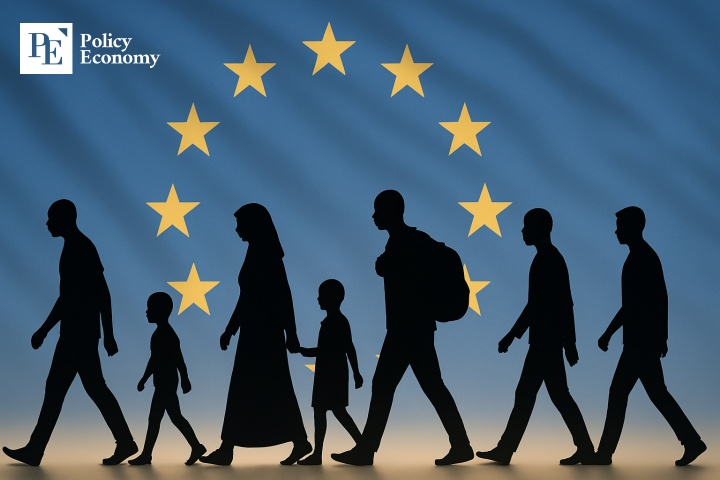
The European Union (EU) has formally clarified the legal procedure for sending undocumented migrants to third-country “return hubs,” and has announced the introduction of an immigration refusal tax that requires member states to bear the financial cost directly. By giving legal grounds for the detention of migrants whose asylum claims have been rejected or who lack legal status, this move signals that the bloc is accelerating a major internal policy shift to curb irregular migration flows. It comes exactly ten years after former German Chancellor Angela Merkel declared “We can do this” and accepted a large influx of Syrian refugees in 2015.
Processing and reception outsourced to third countries
According to Reuters on the 9th (local time), interior ministers of the EU’s 27 member states reached final agreement the previous day in Brussels on introducing an amended regulation governing the return of illegal residents. The amendment seeks to establish a legal basis for sending migrants whose asylum applications have been denied, or who lack valid residency status, to third-country reception facilities that function as return hubs under agreements signed with the EU. These hubs, which operate as holding sites for migrants, are designed to house individuals either before they step onto European soil or after a deportation order has been issued, until they are repatriated.
Earlier, in 2023, Italy signed an agreement with Albania and built two migrant reception facilities near the northwestern port of Shëngjin and the nearby Gjadër region, launching operations last year. Undocumented migrants rescued by the Italian coast guard while crossing the Mediterranean are transferred to these sites. Each migrant may apply for asylum, and within 28 days authorities determine whether to allow entry into Italy or repatriate the individual. Migrants whose asylum claims are rejected can be detained for up to 18 months. The EU plans to expand this model across the continent by broadening agreements with nearby third countries, including Tunisia.
The amendment also alters the procedural framework significantly. Under the 2008 Return Directive, undocumented migrants were granted up to four weeks to voluntarily leave the EU, during which time no additional penalties were imposed if they complied. Under the new agreement, however, individuals classified as illegal migrants may be detained immediately, and the detention period may be extended if authorities determine there is a risk of absconding. Denmark’s immigration minister, Rasmus Stoklund, noted, “The reality is that three out of four undocumented residents do not return to their home countries but settle in Europe,” stressing that “this regulation sends a message that they do not have the right to remain in Europe.”
A burden-sharing system equivalent to an immigration refusal tax will also be introduced. Starting next year, EU member states must each accept their allotted share of up to 21,000 refugees and migrants annually. Countries unwilling to receive their assigned migrants must pay a contribution of 21,400 USD per person. The pooled funds, estimated at roughly 449 million USD per year, will be used as a public fund to support frontline states bearing heavy refugee-reception burdens, expanding infrastructure, livelihood support, health services, and education programs.
This shift reflects a broader political transformation. During the 2015 Syrian refugee crisis, Europe received about 1.3 million refugees, emphasizing human rights and asylum protections. But after the pandemic, economic downturns, terror threats, and rising living costs, public sentiment toward migrants changed dramatically. Support rose sharply for anti-immigration parties such as Germany’s Alternative for Germany (AfD) and France’s National Rally (RN). In the European Parliament elections in June, right-wing coalitions secured a majority. For this reason, many view the amendment as the institutional crystallization of a strong political consensus that illegal migrants must be returned without exception.
Hard-line views warning of “European civilizational decline”
The EU has also made clear its intention to impose economic consequences on developing countries that refuse to readmit deported nationals by withdrawing their trade preferences. The draft revision agreed by the EU Council, the European Commission, and the European Parliament states that if a country exhibits serious or systemic failures in fulfilling its obligation to readmit its citizens, or if its cooperation is deemed insufficient, its eligibility for the Generalised Scheme of Preferences (GSP) may be temporarily suspended. This links what was once a trade regime based largely on labor and environmental standards to immigration enforcement, officially designating failure to cooperate on returns as grounds for sanction.
The EU has discussed similar measures since 2022, when the European Commission first proposed legislation to strip GSP benefits and impose punitive tariffs on countries refusing to accept deported nationals. Of the 396,000 migrants expelled from the EU in 2020, only 70,000 were actually readmitted by their home countries; even before the pandemic, in 2019, the readmission rate stood at around 29 percent. Countries such as Mali, Senegal, and Guinea were cited as major low-readmission states, and proposals at the time even mentioned potential tariffs of 12 to 24 percent. Opposition rooted in concerns over the economic shock to developing economies delayed the move.
Internationally, many view Europe’s push as overdue. The United States, in its recently released National Security Strategy (NSS), described Europe as “a region facing civilizational extinction,” arguing that mass immigration and low birth rates have weakened Europe’s identity and security foundation. The statement is interpreted as suggesting that migration issues now destabilize Europe’s social and political architecture. Washington further warned that if current trends persist, certain NATO member states could become majority non-European within decades, raising questions about whether such populations would share the same values.
This assessment starkly contrasts with Washington’s depiction of China as both an economic competitor and a potential partner. While the United States continues to confront China across trade and technology while leaving room for negotiation, its strategy explicitly calls for encouraging political realignment in Europe. The Pentagon and the White House argue that Europe’s internal migration conflicts “drive transformation and discord across the continent,” signalling support for the rise of “patriotic parties.” Combined with the EU’s strengthened return policies, the divide between the transatlantic partners over goals and standards on migration is widening.
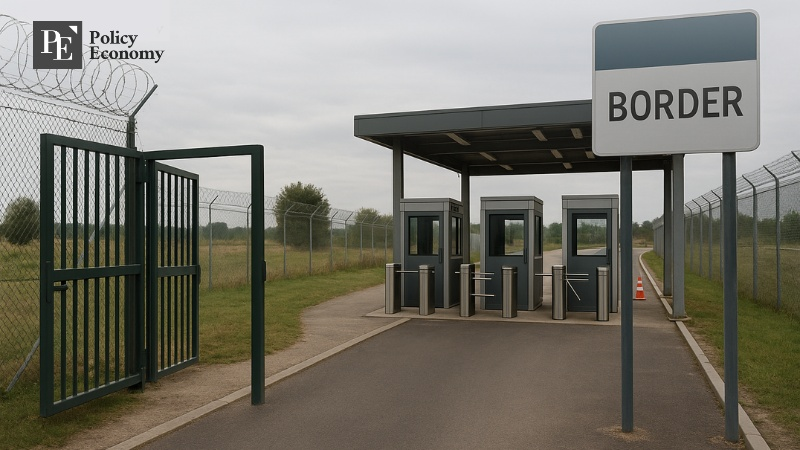
A retreat from immigration acceptance as Europe’s failures draw attention
These international perspectives stand in contrast to earlier assessments that Germany successfully used immigration policy to address its low birth rate. Confronted with severe labor shortages due to low fertility and an aging population in the early 2000s, Germany enacted the Residence and Settlement Act to pursue a settlement-oriented immigration policy. Additional measures followed, including the Skilled Workers Recognition Act (2012) and the Skilled Immigration Act (2020), maintaining a consistent focus on attracting skilled workers and long-term residents.
A report titled “Policy Implications from Germany’s Immigration Model,” published in July last year by the Korea Chamber of Commerce and Industry, noted that Germany had expanded work visa eligibility (from university graduates to vocational graduates and experienced professionals), opened pathways for unskilled non-EU workers (by offering vocational training), and encouraged integration through German language instruction, civic education, and unemployment benefits. The report argued that these policies helped rejuvenate German society: while 61.2 percent of German nationals were aged 18 to 65, the proportion among immigrants reached 83.6 percent.
Over time, however, perspectives on Germany have shifted sharply. Columns and books critical of European immigration policy argue that Germany’s large-scale acceptance of refugees and migrants, driven by economic considerations and humanitarianism, has produced serious consequences across social cohesion, public safety, and fiscal burden. As one former civic leader observed, policies pursued in the name of multiculturalism resulted not in absorption of immigrant populations into wider society but in concentrated enclaves with distinct identities where concerns over violence, terrorism, and slum formation intensified.
As these long-term side effects have become more pronounced, anti-immigration sentiment has spread beyond Europe. In South Korea, discussions have emerged about creating an immigration agency or introducing group migration programs to counter population decline, falling school-age numbers, and the disappearance of rural regions. Yet public support has remained limited. Concerns persist over cultural conflict, crime, slumification, job displacement, and security threats. Europe’s failure to reverse policies even after acknowledging the shortcomings of multiculturalism has reinforced these anxieties.
Niamh O’Sullivan is an Irish editor at The Economy, covering global policy and institutional reform. She studied sociology and European studies at Trinity College Dublin, and brings experience in translating academic and policy content for wider audiences. Her editorial work supports multilingual accessibility and contextual reporting.
Similar Post