“From spending to manpower,” Europe ramps up defense—Germany leads the charge

Aoife Brennan is a contributing writer for The Economy, with a focus on education, youth, and societal change. Based in Limerick, she holds a degree in political communication from Queen’s University Belfast. Aoife’s work draws connections between cultural narratives and public discourse in Europe and Asia.
Authored On
Modified
Germany widens defense buildup, pours funds into space security
“If the ranks fall short, conscription is an option”—selective draft model planned
Across Europe, the race to secure troops and weapons intensifies
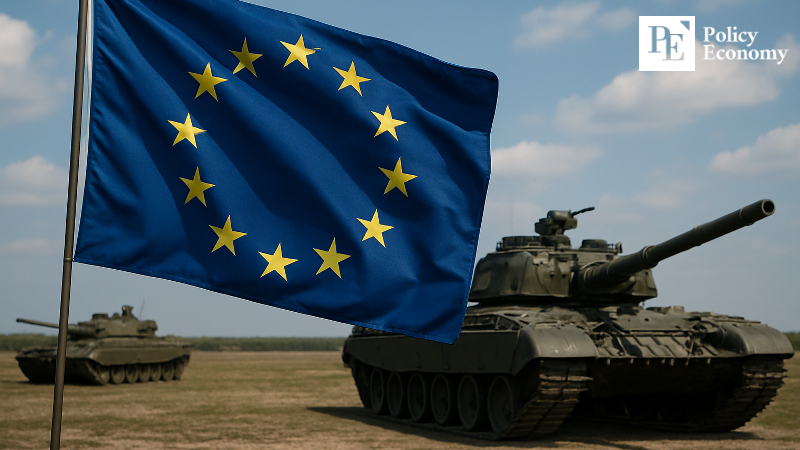
Europe’s rearmament is gathering pace. With the security landscape reshaped since the Russia–Ukraine war began in 2022, the perceived need for self-reliant defense has grown, and efforts to strengthen military capabilities—led by countries such as Germany—are moving into full swing. Beyond sharply increasing defense investment, governments are also pushing ahead with sweeping institutional changes, including major overhauls to how they recruit and retain personnel.
Germany’s defense spending surges
Based on reports in the press on the 10th, Germany is now driving the EU’s push to strengthen defense capabilities with large-scale spending. Germany plans to raise defense outlays to 3.5% of GDP by 2030. The goal is to increase spending from about $60.5 billion last year to about $72.7 billion this year, and to about $178.0 billion in 2029. A defense-to-GDP ratio of 3.5% would mark the first time since 1975, during the Cold War era, that Germany has reached that level. The pace of increases also far outstrips other major European countries such as France and the UK.
The necessary funding is likely to be covered through debt. In March, the German parliament amended the Basic Law (constitution) so that the debt-limit rule (the “debt brake”) would not apply to defense spending and infrastructure investment. Under the plan, defense spending would effectively be allowed without a hard ceiling, while infrastructure investment would be financed through a special fund of about $582.2 billion to be spent over 12 years. Including the special fund, various investment budgets have been set at about $135.1 billion this year and about $144.4 billion next year.
Germany’s rearmament push is also evident in space. Last month, the federal government approved a “National Space Security Strategy,” publicly signaling for the first time that it treats space as a security domain. The strategy cites Russia’s jamming of GPS signals in the Baltic and North Sea regions, as well as orbital threats posed by Russia and China, explicitly naming both countries as direct threats in the space domain. Germany plans to invest about $40.8 billion in space defense by 2030 to counter these threats and build space dominance.
‘Conscription revival’ remains on the table
Germany is also moving quickly on institutional steps to bolster troop numbers. On Dec. 5 (local time), the Bundestag passed an amended conscription law aimed at sharply expanding the size of the force in response to a growing military threat from Russia. The centerpiece is a new “two-stage service system”: volunteers come first, but if the security situation worsens or volunteer numbers fall short of targets, Germany would activate a selective draft to fill the gap.
Preparations for both recruitment and a potential draft will be significantly tightened to make the system workable. Under the bill, starting in 2026, all 18-year-old men and women in Germany will receive a questionnaire to assess their willingness and suitability for military service—men must respond, while women may participate voluntarily. Then, from July 1, 2027, all men aged 18 and older will be required to undergo a medical exam, widely seen as a de facto fitness screening for service. If the selective draft is activated and the pool of medically qualified candidates exceeds the number needed, a lottery system would be used.
The new model is being described as a transitional system: it keeps the basic framework of the current volunteer force, while leaving the door open to a rapid shift back to conscription in an emergency. Analysts say the gradual approach reflects concerns from progressive groups that oppose conscription. The German government expects the measures to lift its force size from about 182,000 to roughly 255,000–260,000 within the next decade.
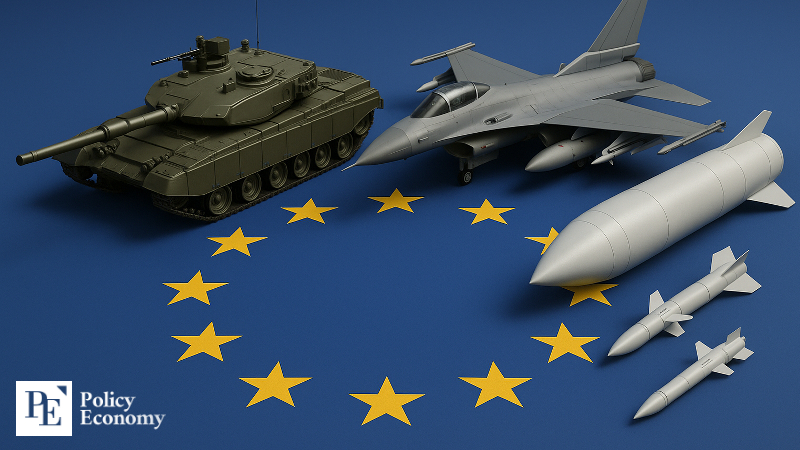
A rearmament wave is sweeping across Europe
Beyond Germany, other European countries are also visibly accelerating efforts to bolster defense. Croatia reinstated conscription in October for the first time in 18 years. Denmark, which already had conscription, overhauled the system in July to draft women as well as men and extended service from four months to 11 months. Poland—seen as moving fastest on military expansion in Europe—is pushing an expanded “mandatory military training” program similar to conscription, while Serbia plans to introduce compulsory training for all men aged 19 and older starting next year.
French President Emmanuel Macron last month visited an army base near Grenoble and announced a new voluntary military service program set to begin in mid-2026. The plan would allow 18- to 19-year-olds to serve voluntarily for 10 months. The French government aims to select 3,000 participants in the first year of 2026, limiting service to mainland France, then gradually scale up to 10,000 by 2030 and 50,000 a year by 2035. Macron said the program would “help France respond” as threats accelerate worldwide.
Nordic countries bordering Russia are also stepping up preparations by pursuing missiles capable of reaching Russian territory. Reuters reported that the Swedish army, in a recent report to the government, said it needs weapons with a range of 2,000 km to strike military and critical infrastructure targets deep behind enemy lines. Given the roughly 1,000 km distance between Stockholm and Moscow, the move is widely seen as effectively targeting military facilities inside Russia. Denmark previously announced in September—also for the first time in its history—plans to acquire long-range precision-strike weapons.
Aoife Brennan is a contributing writer for The Economy, with a focus on education, youth, and societal change. Based in Limerick, she holds a degree in political communication from Queen’s University Belfast. Aoife’s work draws connections between cultural narratives and public discourse in Europe and Asia.
Similar Post