Chinese Inverters Penetrate the U.S. Power Grid, Raising Security Alarms Over the Cost of Cheap Equipment

Authored On
Modified
Policy and market conditions prioritized lower costs
Inverters emerge as data and control risks
Energy security collides with cost pressures
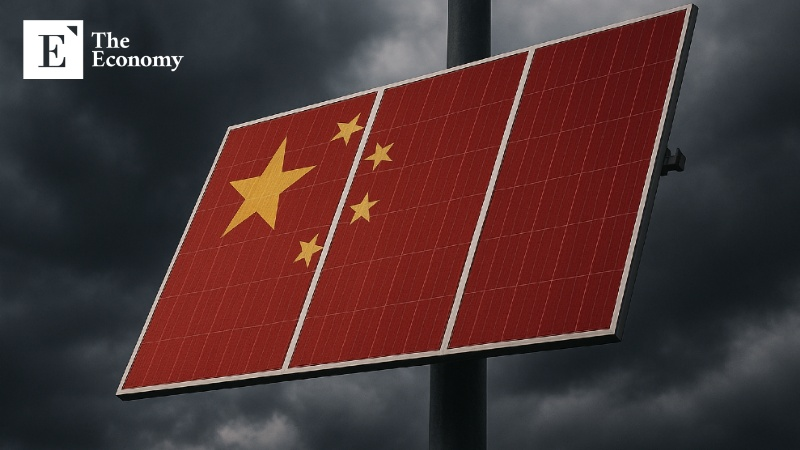
As the share of Chinese-made solar inverters used in the U.S. power grid rises rapidly, security concerns surrounding power infrastructure are beginning to surface in earnest. Similar debates are unfolding in Europe, where authorities are questioning how the communication and control functions embedded in inverters could affect grid stability. With the expansion of solar installations and surging electricity demand unfolding simultaneously, decisions over which equipment to adopt in the next phase of grid expansion are increasingly being framed around a trade-off between cost efficiency and security.
“Posing a Serious National Security Threat”
According to strategic intelligence firm Strider Technologies on the 16th (local time), more than 85% of U.S. power generation companies are using inverter equipment produced by firms linked to the Chinese government or military. Inverters, which convert electricity generated by solar panels into grid-compatible current, are critical components whose failure could trigger cascading disruptions across financial, communications, and other systems. Strider noted that its survey covered companies responsible for roughly 12% of total U.S. power generation and warned that “China could manipulate or disrupt the U.S. power grid during a crisis through data networks and control over affiliated companies.”
The spread of Chinese-made inverters in the United States coincided with the rapid expansion of solar power installations. Over the past decade, the U.S. has aggressively increased solar capacity under policies aimed at expanding renewable energy, with solar accounting for a growing share of new power generation. Backed by state support and strong price competitiveness, Chinese inverters quickly gained market share, penetrating both new installations and replacement projects. Meanwhile, domestic inverter manufacturers in the U.S. were often squeezed out of the market after losing on price.
The side effects have been far-reaching. In a report released last month, the U.S.-China Economic and Security Review Commission disclosed that in November last year, Chinese manufacturer Ningbo Deye Technology remotely disabled several of its inverters installed in the United States amid a contract dispute. The commission labeled inverters a “serious national security vulnerability.” Shortly after the report’s release, 52 Republican lawmakers sent a letter to Commerce Secretary Howard Lutnick calling for restrictions on imports of Chinese-made inverters, though no concrete follow-up measures have yet been announced.
The issue is not limited to the United States. South Korea has also seen a sharp rise in the share of Chinese-made inverters in its solar market. Industry estimates suggest that the majority of inverters distributed domestically are of Chinese origin, often produced entirely in China and sold under Korean brands through original equipment manufacturing arrangements. As controversies over such rebranding practices intensified, the Ministry of Trade, Industry and Energy launched a review into security concerns and the impact on domestic industry, signaling plans to strengthen certification requirements and adjust subsidy policies after consultations with industry stakeholders.
Risks Embedded in Remote Communication and Control
While solar inverters are typically selected based on price and efficiency at the installation stage, once operational they function as connected devices with external communication and control capabilities. They perform real-time output adjustments, system monitoring, and remote updates, directly interfacing with grid operation data. This means that while cost and delivery speed dominate procurement decisions, questions about data pathways and access control become critical once systems are live.
In both the U.S. and Europe, suspicious cases involving the communication functions of Chinese-made inverters have continued to surface. According to Reuters, U.S. energy authorities discovered undocumented communication devices inside certain Chinese inverters in May. Industry observers warned that these could provide remote communication channels capable of bypassing existing cybersecurity firewalls at power utilities. Such vulnerabilities could lead not only to power losses and outages but also to physical damage to grid infrastructure.
Concerns have spread rapidly across Europe as well. SolarPower Europe Manufacturing Council estimated that roughly 200 gigawatts of Europe’s solar capacity relies on Chinese-made inverters, a scale it equated to more than 200 nuclear power plants. Citing heavy dependence on specific suppliers, potential cyber manipulation, and access risks to grid operation data, the group warned that “security risks exist across the entire system.” A joint report by consultancy DNV and industry body SolarPower Europe similarly concluded that the risk posed by attacks on Chinese inverters exceeds acceptable levels, estimating that even a disruption affecting just 3 gigawatts of inverter capacity could have significant system-wide consequences.
The European Commission has formally acknowledged these concerns. In a recently released economic security document, the Commission designated solar inverters from Chinese suppliers as a “high-risk dependency” and stated that responses are needed from both energy and cybersecurity perspectives. It added that future assessments under revised network and information security rules, as well as the Cyber Resilience Act and non-price criteria under the Net-Zero Industry Act, would be used to identify vulnerabilities and consider mitigation measures.
Cost Shock From Excluding Chinese Equipment
In the United States, however, the debate over excluding Chinese power equipment collides with the urgent need to expand electricity supply. With aging grid upgrades lagging, the rapid proliferation of artificial intelligence data centers has made additional power capacity unavoidable. Generative AI and large-scale computing workloads consume electricity at far higher rates than traditional internet services. The Wall Street Journal reported in October that data centers already account for more than 6% of total U.S. electricity demand, a figure projected to rise to around 11% by 2030. This trajectory has fueled concerns that generation and transmission expansion will fail to keep pace with surging demand.
Grid constraints are already evident in the data. Of the 13 major regional power grids in the U.S., eight have seen surplus generation capacity fall below critical thresholds. The Electric Power Research Institute has estimated that if AI-powered search becomes widespread, the electricity consumption per query could rise by as much as 30 times compared with traditional search. While a single Google search consumes roughly 0.3 watt-hours, generative AI-based searches are estimated to use about 2.9 watt-hours, underscoring a fundamental shift in the demand structure.
These pressures are already affecting regional grid operations. In the PJM Interconnection region, which manages transmission across 13 states in the eastern and midwestern U.S., a concentration of data center construction has heightened concerns over additional load. PJM’s independent market monitor has submitted comments to the Federal Energy Regulatory Commission urging limits on new data center connections within grid capacity constraints. In Texas, grid operator ERCOT is also facing a backlog of large-scale data center projects, suggesting sustained pressure on the system in the coming years.
Against this backdrop, efforts to exclude Chinese power equipment are likely to trigger complex ripple effects tied to cost. BloombergNEF reports that prices of Chinese solar panels have fallen by about 90% over the past decade, reaching roughly 9 cents per watt by the end of 2024, compared with around 40 cents in the U.S. and 30 cents in Europe. This price advantage underpins China’s dominance of more than 80% of global solar module production. Reducing reliance on Chinese equipment in power systems built on this cost structure would inevitably drive up both replacement costs and grid expansion expenses.
Similar Post