Slow Return to the Suez Despite Falling Red Sea Insurance Premiums, Raising Fears of Freight Rate Reversals and Supply Shocks

Matthew Reuter is a senior economic correspondent at The Economy, where he covers global financial markets, emerging technologies, and cross-border trade dynamics. With over a decade of experience reporting from major financial hubs—including London, New York, and Hong Kong—Matthew has developed a reputation for breaking complex economic stories into sharp, accessible narratives. Before joining The Economy, he worked at a leading European financial daily, where his investigative reporting on post-crisis banking reforms earned him recognition from the European Press Association. A graduate of the London School of Economics, Matthew holds dual degrees in economics and international relations. He is particularly interested in how data science and AI are reshaping market analysis and policymaking, often blending quantitative insights into his articles. Outside journalism, Matthew frequently moderates panels at global finance summits and guest lectures on financial journalism at top universities.
Authored On
Modified
Red Sea insurance premiums fall to 0.2%, while Black Sea premiums surge 250%, deepening regional risk decoupling
Despite toll discounts by the Suez Canal Authority, security costs outweigh benefits, sustaining a “cost inversion” favoring the Cape of Good Hope route
If routes normalize, shorter sailing distances combined with record newbuild deliveries could trigger a supply glut, experts warn
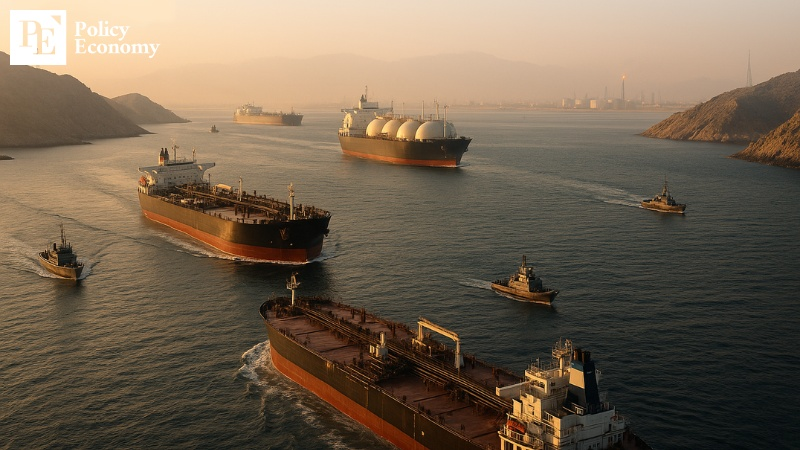
Despite tentative signs of easing geopolitical risk along the Red Sea corridor, heightened tensions in the Black Sea are reinforcing a decoupling dynamic that continues to cloud the outlook for global logistics networks. Even after the Egyptian Suez Canal Authority (SCA) belatedly rolled out toll discounts, security-related costs have more than offset the incentives, entrenching a cost inversion that has left shipping lines reluctant to return. Industry experts caution that if security risks eventually dissipate and routes normalize, the combined impact of reduced ton-miles—calculated as cargo weight multiplied by distance traveled—and the largest wave of new vessel deliveries on record could deliver a structural double supply shock to the shipping market.
Red Sea Premiums Fall, Black Sea Premiums Surge: Insurance Decoupling Intensifies
According to S&P Global Commodity Insights (Platts) on the 16th (local time), a clear decoupling trend is emerging in global marine insurance markets, with risk assessments for the Red Sea and the Black Sea moving in opposite directions. War risk insurance premiums for vessels transiting the Red Sea have eased from around 0.5% of hull value to roughly 0.2%, signaling relative stabilization. By contrast, additional insurance premiums for vessels calling at Russian Black Sea ports have surged sharply compared with the previous month.
Security risks in the Black Sea have escalated rapidly as Ukraine has intensified attacks on Russian maritime infrastructure. On the 30th of last month, Russian Foreign Ministry spokesperson Maria Zakharova said that two large tankers flying the Gambian flag en route to the port of Novorossiysk were struck by maritime drones on consecutive days, the 28th and 29th. The vessels were identified as part of a “shadow fleet” used to evade sanctions, and the port of Novorossiysk itself reportedly suffered shelling damage on the 29th. In response, Russian President Vladimir Putin warned on the 2nd of this month of retaliatory strikes against Ukrainian ports and vessels from countries supporting them, signaling a hardline stance.
This intensifying standoff has translated directly into surging insurance costs. According to global insurance broker and risk management firm Marsh, insurance premiums for vessels bound for Russian Black Sea ports have jumped by roughly 250% from mid-November levels of 0.25–0.30%. Additional war risk premiums (AWRP) for crude oil shipments have also climbed sharply, rising from $0.65 per barrel in late October to $0.85 per barrel as of the 4th of this month. Insurance rates for vessels calling at Ukrainian ports have likewise doubled, from 0.4% to around 0.8–1.0%.
The rising risk premium is being passed directly through to logistics costs. Freight rates for Suezmax-class Russian crude tankers sailing from the Black Sea to western India jumped within a single week from $42.86 per ton to $48.21 per ton. Marsh noted that “a decline in premiums in one region, such as the Red Sea, does not equate to a reduction in overall security costs,” adding that “the aggregate level of uncertainty in the market has not diminished; the epicenter of risk has merely shifted.”
The sluggish pace of vessel returns underscores this assessment. According to Tradlinx, South Korea’s largest export-import logistics platform, the Bab el-Mandeb Strait—the critical gateway linking the Red Sea and the Indian Ocean—recorded an average daily traffic of 37 vessels during the week of November 30. While slightly higher than the 34 vessels seen a year earlier, this remains barely half of pre-conflict levels of more than 70 vessels. Despite being a key artery for Europe-bound trade, the data suggest that headline signals of easing risk are insufficient to dispel shipping lines’ concerns.
Discounts Come Too Late: Risk Costs Swallow the Incentives
As shipping lines’ avoidance of the Suez Canal dragged on, the SCA was forced to reverse its earlier stance of holding firm on toll hikes. On January 15, at the height of escalating security risks, the authority had pushed through additional toll increases of 5–15% by vessel type, marking the second consecutive annual hike. This compounded the cost burden on carriers already grappling with security threats, providing a decisive rationale to abandon the Suez—the shortest route—and divert via the Cape of Good Hope. In effect, the toll hikes, combined with security risks, accelerated cargo diversion and amplified volume losses.
Confronted with deteriorating revenues, the SCA ultimately played the price-cut card. Canal revenues in the fourth quarter of 2024 fell to $881 million, down more than 60% from $2.4 billion a year earlier, prompting the authority to introduce belated concessions to lure back lost traffic. Starting May 15, the SCA implemented a 15% toll discount for 90 days on large container ships exceeding 130,000 SCNT (Suez Canal Net Tonnage).
Even so, vessel returns remain elusive. Reuters reported that while the SCA is attempting to entice carriers through discounts, lingering security concerns and insurance costs along the Red Sea route continue to loom as decisive variables. The core deterrent is that risk-related costs tied to security concerns exceed the magnitude of the canal’s discounts, creating a persistent “economic inversion.” Currently, transits through the Red Sea incur a range of security-related expenses, including war risk premiums, war risk surcharges (WRS), and hazard pay for crews—often amounting to twice standard wages—fully offsetting any fuel cost savings.
Platts assessments illustrate the inversion clearly. As of the 4th, freight rates for LR1-class product tankers sailing from the Arabian Gulf to Europe via the Red Sea stood at $52.31 per ton, higher than the $50.77 per ton charged for the longer Cape of Good Hope route. The container shipping market shows a similar pattern, with major carriers imposing war risk surcharges of up to $1,000 per TEU on Red Sea transits. Industry participants increasingly conclude that, once all risk costs are factored in, the Cape route remains more economical overall despite longer transit times.
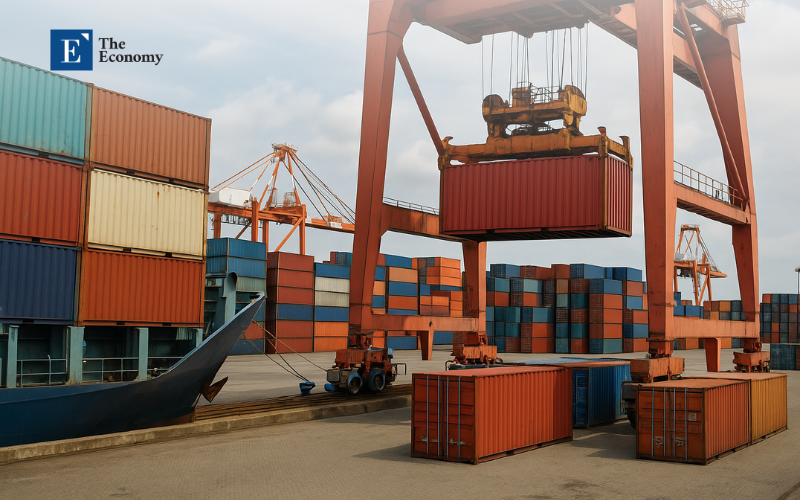
Ton-Mile Contraction and Newbuild Deliveries Converge, Raising Supply Shock Risks
Looking ahead, analysts warn that if security risks abate and routes normalize, the shipping market could face a structural shock driven by ton-mile contraction. According to Clarkson Research, a leading UK-based shipping and shipbuilding consultancy, a shift from the Cape route back to the Suez Canal on the Asia–Europe trade could shorten one-way sailing times by roughly 9–14 days. Reduced voyage durations would boost vessel turnaround rates, effectively increasing available capacity in the market. As normalization progresses, downward pressure on freight rates is widely anticipated.
Concerns over oversupply are being magnified by the largest wave of newbuild deliveries on record. Ships ordered during the pandemic-era boom are being delivered in large volumes across 2024 and 2025, adding to capacity pressures. Container vessels, in particular, are expected to see fleet expansion continue through 2026. If surplus capacity that has been absorbed by Cape diversions is suddenly released back into the market as routes normalize, freight rate resilience could erode rapidly.
Shifts in logistics costs are also closely tied to commodity price dynamics. In 2024, simultaneous bottlenecks at the Suez and Panama canals drove up freight rates and insurance costs, inflating landed costs for raw materials. Should normalization remove risk premiums, transportation costs would ease, potentially contributing to greater commodity price stability. Still, analysts urge caution, noting that commodity prices are shaped by a complex interplay of supply-demand fundamentals and currency movements, meaning lower logistics costs may not translate immediately into sharp price declines.
Against this backdrop, positions within South Korea’s industrial sector are diverging by industry. National carriers such as HMM face the challenge of defending profitability amid falling freight rates, while exporters in automobiles, batteries, and petrochemicals are welcoming the prospect of lower logistics costs. Battery makers with heavy exposure to European markets and petrochemical producers reliant on imported feedstocks such as naphtha, in particular, stand to benefit from improved cost structures and export margins. Many analysts argue that the trajectory of shipping rates is likely to serve as a leading indicator not only for logistics conditions, but also for the broader outlook on global inflation pressures and consumer price stability.
Matthew Reuter is a senior economic correspondent at The Economy, where he covers global financial markets, emerging technologies, and cross-border trade dynamics. With over a decade of experience reporting from major financial hubs—including London, New York, and Hong Kong—Matthew has developed a reputation for breaking complex economic stories into sharp, accessible narratives. Before joining The Economy, he worked at a leading European financial daily, where his investigative reporting on post-crisis banking reforms earned him recognition from the European Press Association. A graduate of the London School of Economics, Matthew holds dual degrees in economics and international relations. He is particularly interested in how data science and AI are reshaping market analysis and policymaking, often blending quantitative insights into his articles. Outside journalism, Matthew frequently moderates panels at global finance summits and guest lectures on financial journalism at top universities.
Similar Post
















