Honda Enters Global Production Cuts as Nexperia Chip Shock and EV Slowdown Intensify Pressure

Siobhán Delaney is a Dublin-based writer for The Economy, focusing on culture, education, and international affairs. With a background in media and communication from University College Dublin, she contributes to cross-regional coverage and translation-based commentary. Her work emphasizes clarity and balance, especially in contexts shaped by cultural difference and policy translation.
Authored On
Modified
Semiconductor inventory shortfalls leave required volumes unsecured
Production halts extend from North America to China and Japan
U.S. output scaled back amid cooling electric vehicle demand
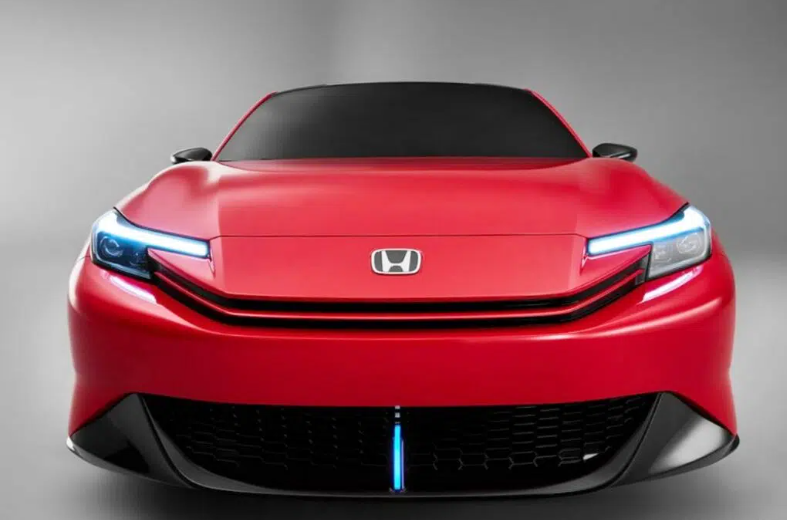
Amid rising uncertainty across the global automotive industry, Japanese automaker Honda has moved to adjust production worldwide from late this year into early next year. Supply disruptions triggered by geopolitical tensions surrounding automotive semiconductor supplier Nexperia—entangling China, the Netherlands, and the United States—have collided with a broader structural slowdown in electric vehicle demand. As a result, production cuts and temporary shutdowns are spreading across key manufacturing hubs in Japan, China, North America, and Southeast Asia. Industry observers note that the latest adjustments may extend beyond short-term contingency measures, potentially reshaping Honda’s medium- to long-term production strategy and global market positioning.
High Dependence on Nexperia Chips Triggers Production Disruptions
According to Japan’s Nikkei and Yomiuri Shimbun on the 17th, Honda will implement production suspensions and output reductions at plants in Japan and China from late December through early January due to semiconductor supply shortages. In China, three factories operated by GAC Honda—a joint venture with Guangzhou Automobile Group—will completely halt vehicle production for five days from December 29 through January 2. In Japan, Honda’s Suzuka and Saitama plants will suspend operations for two days on January 5 and 6, followed by reduced output from January 7 to 9 compared with initial plans.
The production adjustment stems from a suspension of shipments by Nexperia, a Netherlands-based semiconductor manufacturer backed by Chinese capital. Honda uses Nexperia-produced general-purpose chips in certain automotive components and, in some cases, relies exclusively on the supplier. Since October, Honda has already scaled back production of core models at major North American facilities. The Alliston plant in Ontario, Canada, cut output by half from October 27, while the Celaya plant in Guanajuato, Mexico, suspended production of SUV models such as the HR-V from October 28.
Honda stated that although Nexperia has recently resumed semiconductor shipments, shortages persist across the market. “We have made efforts to secure inventory, including circulating supply and substitute products, but have not been able to obtain the full volume required, leaving the situation fluid,” the company said, adding that it would “do everything possible to restore normal operations.” Honda previously projected that semiconductor shortages in North America would reduce operating profit by approximately $1.0 billion for the fiscal year ending March 2026, but noted that the impact of the latest additional production cuts has not yet been reflected in earnings forecasts.
China Responds to Dutch Government Intervention With Export Restrictions
The Nexperia crisis that triggered Honda’s production cuts originated in escalating tensions between China and the Netherlands. Although Nexperia is headquartered in Nijmegen, the Netherlands, it came under effective Chinese control in 2019 when it was acquired by Wingtech Technology, a Chinese electronics firm. In 2020, Wingtech founder and controlling shareholder Zhang Xuedong assumed the role of Nexperia’s chief executive officer. On September 30 this year, however, the Dutch government invoked its Cold War–era National Security Act—the first such use in history—to seize temporary management control of Nexperia and suspend Zhang’s authority. On October 13, an Amsterdam enterprise court formally dismissed Zhang as CEO, citing governance violations.
Industry analysts widely interpreted the Dutch government’s extraordinary move as the result of strong pressure from Washington. In December last year, the U.S. government placed Wingtech on its export control list and publicly warned that sensitive technology transfer risks would increase if Nexperia failed to operate independently from its Chinese parent. U.S. officials and lawmakers reportedly conveyed to Dutch authorities and Nexperia management on multiple occasions that lifting export restrictions would require Zhang’s removal.
China swiftly condemned the Dutch intervention as “political interference.” The Chinese Ministry of Commerce responded by imposing an export ban on approximately 50 billion semiconductors produced at Nexperia’s Dongguan plant. Commerce Minister Wang Wentao warned that the move would have severe repercussions for global supply chain stability and demanded immediate corrective action from the Netherlands. Nexperia supplies roughly 60% of the world’s automotive power and signal semiconductors, and the sudden blockage of Chinese export channels sent automakers across Europe and the United States scrambling for alternative suppliers. Bloomberg reported at the time that the chip shortage shock could cascade through major component suppliers within days and spread across the automotive industry within 10 to 20 days.
As the situation threatened to escalate into a global supply chain crisis, the United States moved to contain the fallout. U.S. President Donald Trump and Chinese President Xi Jinping reached a de facto truce during a meeting in Busan in late October, under which Washington agreed to suspend sanctions related to Nexperia for one year while Beijing eased export controls. The Dutch government subsequently announced on the 19th of last month that it would temporarily halt its management intervention at Nexperia. Nevertheless, China continues to demand the complete withdrawal of Dutch control and the reversal of the court’s CEO suspension, leaving underlying tensions unresolved.
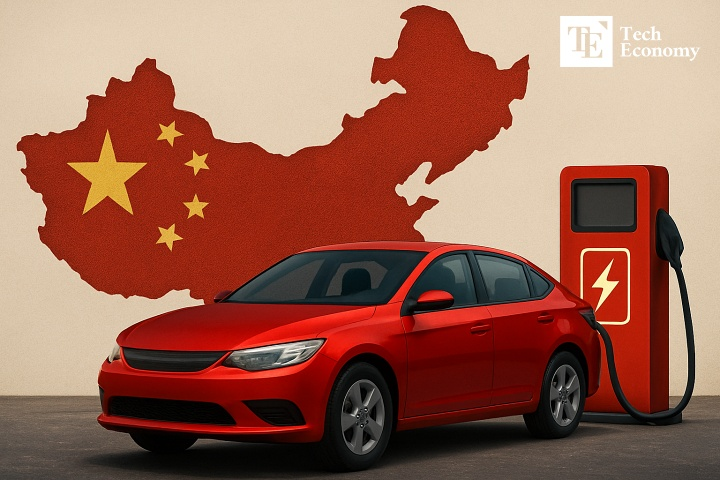
Honda Scales Back Overseas Production Footprint as EV Demand Weakens
Honda’s latest production cuts, however, are not solely attributable to short-term semiconductor supply disruptions. Industry analysts increasingly view them as intertwined with a structural slowdown in global electric vehicle demand. Honda has been restructuring its operations since last year, scaling back production bases across major Asian markets including China and Southeast Asia. In China, the company has sequentially shut down three of the seven plants it previously operated locally, closing two facilities in Guangzhou, Guangdong Province, and one in Wuhan, Hubei Province. As a result, Honda reduced its annual production target from 1.49 million units to 1.0 million units, while implementing voluntary workforce reductions.
Competitive pressure from emerging Chinese brands is intensifying across Southeast Asia as well. These manufacturers have rapidly expanded EV lineups, encroaching on markets long dominated by Japanese automakers. Honda’s production in Thailand fell from 228,000 units in 2019 to fewer than 150,000 units by 2023, with annual sales dropping below 100,000 units over the past four years. In July last year, Honda halted production at its Ayutthaya plant and consolidated output at its Prachinburi facility. At the time, a Honda spokesperson said, “Japanese automakers are facing competition from Chinese EV manufacturers such as BYD,” adding that declining exports from Thailand to India also contributed to the decision.
Market conditions in the United States are further weighing on Honda’s EV strategy. With the Trump administration moving to fully repeal EV purchase subsidies introduced under the previous Biden administration, U.S. electric vehicle demand is expected to weaken in the near term. In September, Honda ended production of the Acura ZDX electric vehicle, which had been manufactured under contract by General Motors in the United States. Honda explained that the decision reflected “optimization of the lineup in light of demand and market conditions.” NHK reported that as concerns mount over slowing EV sales in the U.S., Japanese automakers are increasingly reassessing their electric vehicle strategies.
Siobhán Delaney is a Dublin-based writer for The Economy, focusing on culture, education, and international affairs. With a background in media and communication from University College Dublin, she contributes to cross-regional coverage and translation-based commentary. Her work emphasizes clarity and balance, especially in contexts shaped by cultural difference and policy translation.
Similar Post