[Yen Carry] Rising Prospects of a Global “Yen Carry Trade Unwind,” With the Yen’s Direction as the Key Variable

Anne-Marie Nicholson is a fearless reporter covering international markets and global economic shifts. With a background in international relations, she provides a nuanced perspective on trade policies, foreign investments, and macroeconomic developments. Quick-witted and always on the move, she delivers hard-hitting stories that connect the dots in an ever-changing global economy.
Authored On
Modified
Limited FX-Market Reaction Despite BOJ Policy-Rate Hike Last Week
Global IB Warning of Large-Scale Liquidation Risk on Early-Year Yen Appreciation
Entrenchment of Yen Carry Capital Amid Persistent Early-Year Yen Weakness
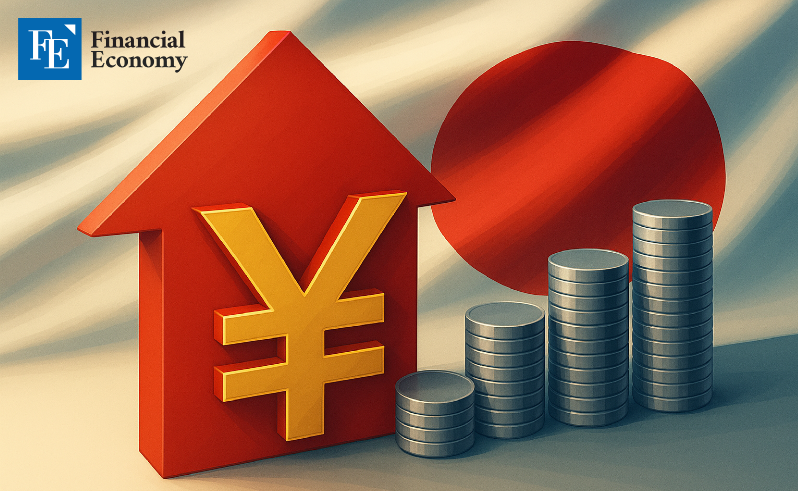
Despite the Bank of Japan’s (BOJ) benchmark rate hike last week, the reaction in foreign exchange markets remained muted. However, financial markets continue to price in lingering tension over the timing of a potential unwind of the yen carry trade—strategies that borrow yen at low cost to invest in higher-yielding assets. While major global investment banks (IBs) have warned that a shift toward yen appreciation early next year could trigger large-scale liquidation, the reality in currency markets has been persistent yen weakness since the start of the year, effectively anchoring carry trade capital in place.
Outstanding Yen Carry Positions Estimated at $500 Billion
According to Bloomberg and other international media on the 28th (local time), major global institutional investors including Morgan Stanley and Goldman Sachs have recently cautioned that, following the BOJ’s decision to raise its policy rate to 0.75%—the highest level in 30 years—the aftershocks of a yen carry trade unwind could intensify in early next year. They noted that “the limited market impact of the current rate hike reflects a combination of preemptive deleveraging by hedge funds and a seasonal liquidity vacuum ahead of year-end holidays,” adding that “as institutions resume portfolio allocation at the start of the year, a turn toward yen appreciation could make a cascading liquidation of yen carry positions difficult to rule out.”
The yen carry trade refers to investment flows that borrow yen—effectively at near-zero interest rates—to seek yield differentials by investing in equities, bonds, and digital assets in higher-rate markets such as the United States. In this structure, rising Japanese interest rates and yen appreciation increase funding costs and foreign-exchange losses, forcing investors to unwind positions. Indeed, when the BOJ raised rates from 0% to 0.25% in July last year, global financial markets experienced a sharp correction. As yen carry capital exited en masse, equity markets across the United States, South Korea, Japan, Taiwan, and China fell simultaneously, a sell-off widely labeled at the time as a “Black Monday.”
Morgan Stanley estimates that approximately $500 billion in yen carry positions remain outstanding in the market. The bank warned that if the yen were to appreciate to levels equivalent to roughly $0.0071 per unit—during a period of thin year-end liquidity—margin calls could be triggered, prompting a rapid withdrawal of carry capital from risk assets such as equities and Bitcoin. Goldman Sachs similarly noted that while the BOJ’s prior signaling helped cushion the immediate shock, ample liquidation capacity still remains. JPMorgan, by contrast, has focused on the likelihood of continued yen weakness, arguing that rather than a disorderly unwind, heightened volatility could emerge during renewed entry into yen carry trades.
Concerns Over Japan’s Fiscal Sustainability Add to Yen Weakness Pressure
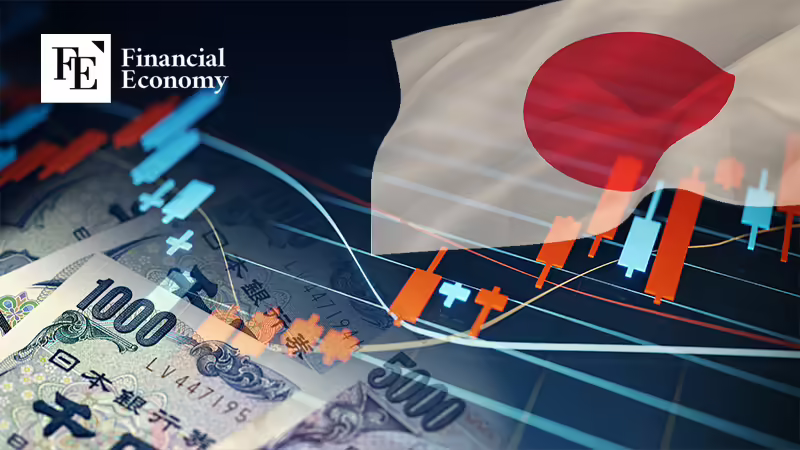
The yen’s trajectory is widely viewed as the decisive variable determining the timing of any yen carry trade unwind. As long as the currency remains weak, the carry trade’s profit structure holds. Recently, the dollar–yen exchange rate has shown little sign of reversal, hovering at levels equivalent to around $0.0064 per unit even after the BOJ’s rate hike. Prior to the policy decision, the rate had reached intraday levels near $0.0064, and immediately following the announcement it weakened further to around $0.0063. Given that U.S. rate cuts earlier this month and Japan’s rate increase narrowed the bilateral rate gap to its smallest in three years, market consensus had expected a pause in yen depreciation. Instead, the yen lost roughly 1.5% in value, defying expectations.
Market participants have pointed to remarks by BOJ Governor Kazuo Ueda as a key factor behind the yen’s counterintuitive move. At a press conference on the 19th, Ueda adopted a cautious tone on further rate hikes, stating that the BOJ would “adjust the degree of monetary accommodation depending on economic, price, and financial conditions.” Reuters interpreted the remarks as weakening bets on aggressive tightening, noting that “yen carry trade positions were maintained even after the rate hike, reinforcing downward pressure on the currency.” Japanese market information site Minkabu echoed this view, observing that “while rates were raised, policymakers failed to deliver the level of conviction and guidance needed to reverse the exchange rate.”
Some analysts also argue that, having lifted policy rates back to levels seen just before the collapse of Japan’s bubble economy, the BOJ faces limited scope for further hikes. Given the central bank’s tendency to observe economic responses after breaking with long-standing policy frameworks, expectations are growing that rates will remain unchanged for an extended period. Adding to the pressure on the yen are fiscal sustainability concerns. The Financial Times reported that a large-scale spending plan totaling approximately $142 billion—pushed by Prime Minister Sanae Takaichi—has intensified fiscal strain, contributing to the yen’s anomalous behavior.
Market Consensus Favors a BOJ Rate Hike in the First Half of Next Year
Against this backdrop, Governor Ueda has more explicitly signaled the prospect of further tightening. Speaking at a lecture hosted by the Japan Business Federation on the 25th, he stated that “if economic and price outlooks materialize, we will continue raising the policy rate and adjust the degree of monetary accommodation,” emphasizing that “real interest rates remain extremely low.” He added that “the likelihood of returning to a zero-normal era of frozen wages and prices is extremely small,” arguing that appropriately calibrated normalization would create an environment conducive to corporate investment and long-term growth.
This stance was reinforced in the minutes of the BOJ’s December Monetary Policy Meeting released on the 29th. According to the record, one board member noted that “Japan’s real policy rate is among the lowest globally” and that, given its transmission to prices via the foreign exchange channel, adjusting the degree of monetary accommodation would be appropriate. Another member argued that while the global environment this year has been characterized by rate cuts, next year could mark a shift back toward tightening, and that gradual rate increases would be advisable to avoid falling behind.
Nevertheless, opinions diverge on the precise timing of further hikes. Many analysts point to the first half of next year—particularly June or July—as the most likely window, citing the yen’s trajectory and inflation trends as key variables. According to Tokyo Short-Term Research and other market surveys, the probability that the next rate hike occurs in the first half of 2026 stands at 60%. Within the BOJ itself, a more hawkish view has also emerged, suggesting that if yen weakness persists, inflation remains above expectations, or wage growth accelerates during next spring’s labor negotiations, a rate hike as early as April next year could be on the table.
Anne-Marie Nicholson is a fearless reporter covering international markets and global economic shifts. With a background in international relations, she provides a nuanced perspective on trade policies, foreign investments, and macroeconomic developments. Quick-witted and always on the move, she delivers hard-hitting stories that connect the dots in an ever-changing global economy.
Similar Post