AI-Driven Semiconductor Investment Supercycle Faces Supply-Demand Disruption Risk from China’s Capacity Expansion

Authored On
Modified
Semiconductor Capital Expenditure Sets New High on Expanding AI Demand
Global Top Three Accelerate Investment Amid Advanced-Node Competition
China Emerges as a Key Variable Shaping Cycle Sustainability

Capital expenditure across the global semiconductor industry is once again pressing the accelerator, anchored by surging demand for artificial intelligence semiconductors. As the semiconductor equipment market spanning both front-end and back-end processes expands to a record scale, leading memory makers including Samsung Electronics, SK hynix, and Micron are stepping up investments centered on advanced manufacturing nodes. At the same time, China’s rapid expansion of production capacity is emerging as a potential disruptor of the medium- to long-term supply structure, heightening tensions over the durability of the current supercycle amid aggressive global capacity build-outs.
Semiconductor Equipment Market to Surpass $150 Billion by 2027
According to SEMI, the international association representing the semiconductor equipment and materials industry, global semiconductor manufacturing equipment sales this year are projected to rise 13.7% year on year to $133.0 billion. Growth is expected to continue beyond next year, reaching $145.0 billion in 2026 and $156.0 billion in 2027. Ajit Manocha, SEMI’s president and chief executive officer, stated that the global semiconductor equipment market is posting growth for a third consecutive year across both front-end and back-end segments and is poised to exceed $150 billion for the first time within two years, noting that forecasts were revised upward to reflect demand trends tied to AI.
The wafer fab equipment (WFE) market is also expected to maintain solid momentum. After reaching a record $104.0 billion in 2024, WFE sales are estimated to increase 11.0% to $115.7 billion in 2025, an upward revision from the prior forecast of $110.8 billion. The back-end equipment market is likewise set to recover, with semiconductor test equipment sales projected to surge 48.1% this year to $11.2 billion, while assembly and packaging equipment sales are expected to grow 19.6% to $6.4 billion.
By application, foundry and logic equipment sales are forecast to expand from $66.6 billion this year to $75.2 billion by 2027. Memory equipment investment is also expected to show pronounced growth, driven by rising demand for high-bandwidth memory (HBM). NAND equipment sales are projected to jump 45.4% this year to $14.0 billion, while DRAM equipment spending is estimated to rise 15.4% to $22.5 billion. Regionally, China, Taiwan, and South Korea are expected to retain their positions as the top three semiconductor equipment investment destinations through 2027.
Equipment and Materials Firms Poised to Benefit from Semiconductor Supercycle
Industry experts cite the expansion of AI demand as the primary growth engine for the semiconductor equipment market. Rising demand for AI accelerators and high-performance computing is driving concurrent investment across advanced logic, DRAM, HBM, and advanced packaging segments. Goldman Sachs Research has identified Applied Materials, Lam Research, and Teradyne among the key beneficiaries of the semiconductor upcycle, highlighting equipment and materials suppliers as principal winners. The market is projected to expand sharply, with global AI semiconductor capital expenditure expected to reach $527.0 billion next year, up 33.8% from $394.0 billion this year.
Capital spending by the world’s three leading memory manufacturers has also entered an expansionary phase. Micron has raised its fiscal 2026 capital expenditure plan to $20.0 billion, an 11.1% increase from the previously announced $18.0 billion. Samsung Electronics has disclosed plans to invest approximately $30.4 billion in its semiconductor division this year. While the growth rate has moderated due to base effects following last year’s record investment driven by large-scale infrastructure construction and leading-edge capacity expansion, investment in advanced processes such as HBM, high-value-added DRAM, and server-grade solid-state drives has continued to increase.
SK hynix is also accelerating its investment pace. The company’s capital expenditure trajectory has rebounded sharply this year, with planned investment raised significantly from $15.6 billion to $21.5 billion. SK hynix has officially stated that it intends to further expand capital spending next year. SK Group Chairman Chey Tae-won underscored the company’s aggressive investment strategy at the “SK AI Summit 2025” held earlier this month, emphasizing plans to consolidate leadership in HBM. He announced that the Yongin semiconductor cluster is scheduled to open in 2027, adding that while the project will require substantial capital, decisive investment is necessary to prevent supply shortages from destabilizing the semiconductor ecosystem.
China’s Catch-Up to Accelerate After CXMT Listing Next Year
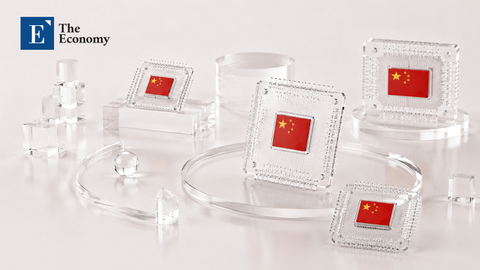
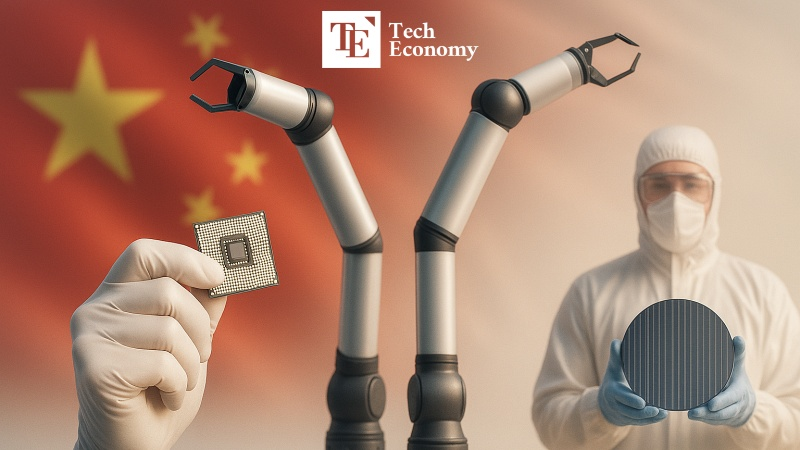
China’s capacity expansion represents another potential variable. While growth in China’s semiconductor industry has shown signs of moderation, continued localization investment centered on mature nodes, alongside selective advanced-node spending, is expected to sustain its status as the world’s largest market. Industry observers are closely watching the planned initial public offering of ChangXin Memory Technologies (CXMT) next year. If CXMT secures large-scale funding through its IPO and channels the proceeds into in-house HBM development and expanded memory production, it could significantly accelerate its pursuit of global leaders.
China’s semiconductor growth is increasingly being viewed less as a question of technological catch-up and more as a risk factor capable of reshaping the global memory supply structure. In advanced memory segments including HBM, South Korea, the United States, and Taiwan continue to dominate, maintaining high barriers to entry through process technology and packaging capabilities. However, in more standardized memory segments such as DDR5, where technical hurdles are comparatively lower, an influx of low-priced Chinese supply amid softening demand is raising concerns over oversupply and intensifying price competition.
As global semiconductor companies pursue simultaneous capital expansion on the assumption of sustained AI-driven demand, the pace of China’s capacity build-out is increasingly cited as a key factor that could hasten the next inflection point in the cycle. While industry participants generally expect demand to outstrip supply through 2026, there is growing consensus that once capacity expansion reaches maturity, supply-demand balances could shift rapidly. In particular, from 2027 onward, when China is expected to achieve more substantive competitiveness in advanced memory, the impact of its expansion decisions, financing outcomes, and actual mass-production yields is likely to become increasingly visible in the market.
Similar Post