Spain Defies Global Migration Clampdown, Legalizes Up to One Million Undocumented Migrants to Target Growth and Social Integration

Authored On
Modified
Active deployment of migrant labor across core industries such as agriculture and tourism
Consistent pro-immigration policy framework in place since the early 2000s
Criticism persists over mounting pressure on public systems
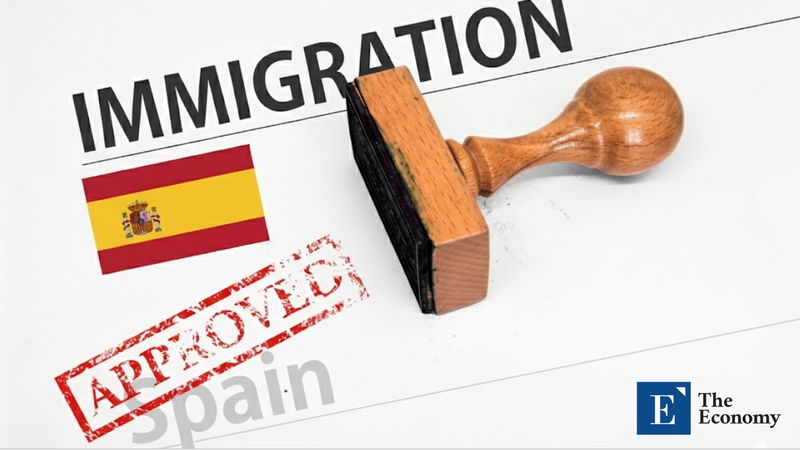
The Spanish government has unveiled a large-scale regularization plan granting legal residency and work permits to undocumented migrants. In contrast to the tightening immigration controls seen across the United States and Europe, the move is widely viewed as an inclusive policy aimed simultaneously at securing labor for key industries such as agriculture and tourism and advancing social integration. Spain has driven economic growth since the early 2000s by actively accommodating migrants from Latin America, yet ongoing controversies remain over the limited acceptance of African asylum seekers, rising dependence on foreign labor in certain sectors, and the expansion of public welfare burdens.
A Migration Model Pursuing Growth and Integration in Tandem
According to the BBC and The New York Times on the 27th (local time), the Spanish government announced a sweeping plan to grant legal status to more than one million undocumented migrants. Elma Saiz, Minister for Inclusion, Social Security and Migration, described the announcement as “a historic day for our country,” stating that the measure seeks to reinforce a migration model that upholds human rights, integration, and coexistence while remaining compatible with economic growth and social cohesion. She underscored the significance of the policy for Spain, where migrant labor plays a pivotal role across multiple industries, including agriculture and tourism.
The government outlined eligibility criteria requiring that applicants must have arrived in Spain by December 31, 2025, demonstrate at least five months of actual residence in the country, and have no criminal record. Asylum seekers may also qualify if they meet these conditions, and children already residing in Spain are included. Approved applicants will receive an initial one-year residence permit, renewable thereafter, along with a work permit allowing employment with any business anywhere in Spain.
The New York Times noted that Spain’s decision stands in sharp contrast to the prevailing trend in the United States and Europe, where governments are intensifying crackdowns on migrants. The United States has launched aggressive campaigns involving the detention of millions of undocumented migrants for deportation. The United Kingdom has sharply tightened asylum criteria and strengthened deportation and detention rules. Greece has imposed prison sentences on migrants who remain after asylum applications are rejected, while Italy is processing asylum claims in facilities located in Albania. France has also passed a series of laws reinforcing immigration restrictions, limiting access to welfare benefits and tightening family reunification requirements.
Economic Upswing Anchored in the Greco Plan
Spain is widely regarded as having maintained a consistently inclusive immigration stance since the early 2000s, particularly toward migrants from Latin America who share linguistic, religious, and cultural ties. A cornerstone of this shift was the Greco Plan, implemented between 2000 and 2004. The initiative formally reframed undocumented migrants as assets for economic and social integration, channeling them into labor-short sectors such as construction and agriculture, while prioritizing expanded legalization and institutional integration.
During this period, the Spanish government accepted more than 200,000 undocumented migrants and streamlined work permit procedures, enabling migrants with sustained employment to apply for permanent residency. Local governments simultaneously rolled out language education, vocational training, and other integration programs to support settlement within communities. The inclusive orientation of the Greco Plan, introduced under a Socialist government, later served as the institutional foundation for broader legalization efforts. As a result, even during the subsequent conservative administration of the Popular Party, Spain implemented one of Europe’s largest special regularization programs in 2005, granting legal status to approximately 750,000 migrants.
This policy philosophy continued in later years. In 2018, the government of Prime Minister Pedro Sánchez actively accepted rescue vessels carrying refugees in the Mediterranean, admitting thousands within a short period. Major cities such as Barcelona expanded locally driven policies emphasizing inclusion and solidarity. In 2024, Spain enacted sweeping immigration law reforms to address labor shortages and demographic aging, reducing the required residence period for undocumented migrants to apply for legal status from three years to two and simplifying procedures for family reunification and temporary work permits.
These initiatives translated into economic momentum. In the immediate aftermath of the Greco Plan, between 2005 and 2008, Spain recorded average annual growth rates in the mid-3% range, with migrant labor widely credited as a key contributor. In the 2020s, Spain has again emerged as one of Europe’s fastest-growing economies. According to the Organisation for Economic Co-operation and Development, Spain posted growth of 3.2% in 2024, outperforming major European economies such as Germany, Italy, and the United Kingdom, which either contracted or failed to exceed 1% growth.

Rising Dependence on Foreign Labor Remains a Challenge
Despite its inclusive immigration approach, concerns persist. Several major European countries that once championed large-scale immigration have since acknowledged shortcomings in multicultural integration. In 2010, former German Chancellor Angela Merkel declared that attempts to build a multicultural society had “completely failed.” The following year, former UK Prime Minister David Cameron stated that British multiculturalism had not evolved within the country’s core values. Around the same time, former French President Nicolas Sarkozy conceded the failure of multicultural policies, noting that they had neglected broader questions of social identity.
Spain also occupies a frontline position in the global refugee crisis due to its geographic location. While its policy rhetoric emphasizes inclusion, the refugee recognition rate remains below 3%, highlighting a significant gap between policy and practice. Since 2024, tens of thousands of migrants have arrived via the Canary Islands from northwest Africa, many traveling on small boats departing Mauritania and Senegal. Most have been held in temporary facilities before being redistributed to the mainland or deported. Human rights organizations argue that, unlike Latin American migrants who are perceived as economically advantageous, African refugees face language barriers, low skill levels, and heightened concerns over social tensions, resulting in de facto restrictions on their acceptance and underscoring the need for reforms to Spain’s asylum system.
Domestic criticism has also intensified over the potential for expanded immigration to deepen labor dependence in certain industries and strain public systems. Foreign workers account for as much as 80% of employment in Spain’s agriculture and tourism sectors. In construction, Latin American labor was heavily deployed during the economic boom beginning in 2005, and reliance on foreign workers deepened further after the bubble burst as local workers declined to return. The growing share of short-term, low-skilled labor has raised concerns over declining workforce quality and limited productivity gains. While the number of foreign workers has surged by 74% over the past decade, driving up public welfare costs, productivity growth has lagged behind.
Similar Post