[Rare Earth Decoupling From China] G7 and Partners Seek Mineral Supply-Chain Alliance, but China Dependence Hard to Break Quickly

As one of the youngest members of the team, Tyler Hansbrough is a rising star in financial journalism. His fresh perspective and analytical approach bring a modern edge to business reporting. Whether he’s covering stock market trends or dissecting corporate earnings, his sharp insights resonate with the new generation of investors.
Authored On
Modified
U.S., EU, UK and 20 Other Countries Move to Build Supply-Chain Alliance to Cut Reliance on China’s Rare Earths
China Controls 90% of Rare Earth Refining and Magnet Manufacturing, Making Full Exclusion From Supply Chains Difficult
China’s Rare Earth Dominance Expected to Weaken Gradually Over the Next Decade
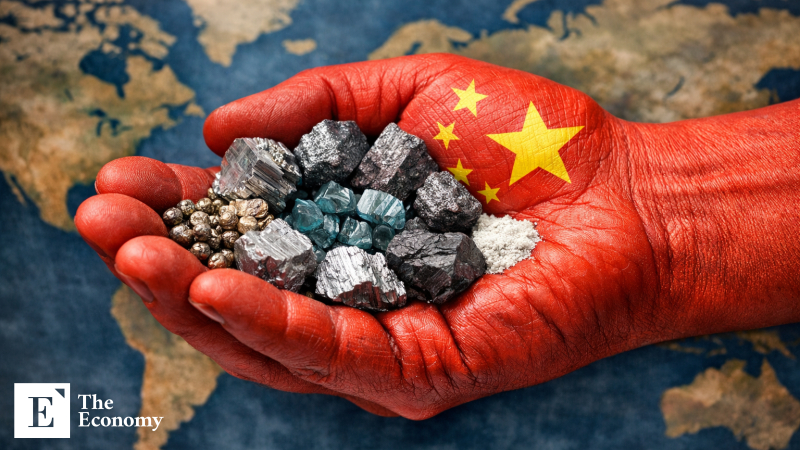
The United States, the European Union, the United Kingdom, and 20 other major countries are moving to build a strategic alliance to strengthen critical-mineral supply chains. The aim is to diversify sourcing for rare earths and other essential inputs for advanced industries in response to China’s increasing use of resources as a geopolitical tool. Experts, however, say a rapid shift in the center of gravity for rare-earth supply chains is unlikely in the near term, given China’s advantages in refining technology, geography, and a well-established policy and institutional base.
Major Economies Push Back Against China’s Rare Earth Dominance
According to The Guardian on the 1st (local time), Washington is set to host a high-level summit on mineral supply chains convened by U.S. Secretary of State Marco Rubio. The meeting will bring together G7 countries as well as major resource holders and consumers including Korea, India, Australia, and Mexico. Participants are expected to focus discussions on expanding non-Chinese supply chains through price stabilization and investment support, with the possible introduction of a “minimum price guarantee” for critical minerals emerging as a key issue.
Many of the participating countries have long taken steps to counter China’s threat to cut off supplies of key minerals. Australia, for example, recently decided to build a national stockpile of strategic critical minerals worth A$1.2 billion. The move was designed to shore up vulnerabilities in the domestic economy after China imposed restrictions on rare earth exports last year. Australia plans to secure essential elements such as antimony and gallium, positioning itself as an alternative supplier to China.
Japan has pursued supply-chain diversification since 2010, when China halted rare earth shipments amid a territorial dispute over the Senkaku Islands. In 2011, the Japan Oil, Gas and Metals National Corporation and trading house Sojitz signed a deal to provide $250 million in loans and equity investment to Australian rare earth producer Lynas, securing a long-term supply source outside China. As a result, Japan’s reliance on Chinese rare earth imports—which stood at nearly 90% during the 2010 dispute—has since fallen to around 60–70%.
Cooperation among participating countries is also gaining momentum. On the 22nd of last month, Japan’s economy minister Ryosei Akazawa met with EU industry commissioner Stéphane Séjourné and others, releasing a joint document pledging swift cooperation to build public-private projects aimed at diversifying supply chains for rare earths and other critical minerals. On the 31st, Japanese Prime Minister Sanae Takaichi and UK Prime Minister Keir Starmer also agreed at a bilateral summit to work together to secure supply chains for critical minerals, including rare earths.
China’s Rare Earth Dominance Rooted in Refining, Not Mining
Chinese experts argue that international efforts to “de-risk” rare earth supply chains away from China are unlikely to succeed in the short term. Cui Hongjian, a professor at Beijing Foreign Studies University, said last month that “China’s advantage in rare earths is rooted in decades of technological accumulation, integrated supporting industries, and scaled production,” adding that “it will be difficult for the West to achieve breakthroughs in technological maturity and cost control in a short period of time.” Zhou Mi, a senior researcher at the Chinese Academy of International Trade and Economic Cooperation, also noted that “supply-and-demand dynamics are the result of market-based behavior,” warning that “alliances built on zero-sum logic cannot provide sufficient rare earth supplies for their members.”
These assessments carry weight because China’s strength lies not merely in rare earth mining, but overwhelmingly in refining. Rare earths are widely known to require far more sophisticated technology in post-mining processes than in extraction itself. The 17 rare earth elements share highly similar chemical properties, making separation and refining dependent on advanced precision chemistry. A standard solvent extraction process can require more than 200 stages to isolate a single desired element. This process depends heavily on stable supplies of chemicals such as ammonium chloride and oxalic acid; without reliable access to these reagents, refining capacity effectively collapses. Market dominance, in other words, depends on both process expertise and secure chemical supply chains.
At present, China accounts for about 90% of the global market for rare earth refining and separation (oxide production), and roughly 93% of the permanent magnet manufacturing market at the end of the rare earth value chain. Even rare earths mined outside China are often shipped there for processing before being re-exported worldwide. This makes it extremely difficult to exclude China entirely from the rare earth supply chain at this stage.
Western countries are stepping up efforts to achieve technological self-sufficiency, but meaningful results are expected to take considerable time. Building a single rare earth refining or magnet manufacturing plant typically requires several years, and additional delays are likely due to environmental permitting processes and local community opposition. Even after facilities are completed, further time is needed to stabilize product quality.
Dominance Expected to Erode by 2040
China’s geographic advantage also cannot be overlooked. Rare earth minerals themselves are found in many parts of the world, but around 90% of the nine heavy rare earth elements (HREEs) most critical to advanced industries are concentrated in China. The erosion of institutional foundations in the West—after companies exited the rare earth industry in the past over cost and environmental concerns—has also become a barrier to supply-chain diversification. According to The New York Times, 39 universities in China offer programs related to rare earths, while no comparable specialized courses exist at universities in the United States or Europe.
One key variable, however, is that China does not fully control the entire rare earth permanent magnet value chain. Patents for neodymium magnets, which are essential for EV motors and advanced defense systems, are held by companies in the United States and Japan. Core precision equipment required for rare earth magnet production must also be sourced from Germany and Japan. If Western countries act in concert to restrict exports of advanced technology and equipment to China, China’s rare earth production could face significant constraints. Another potential pressure point is that roughly half of China’s HREE supply comes from border regions adjacent to Myanmar. These areas are controlled by armed groups, including border guard forces linked to Myanmar’s military junta and the Kachin Independence Army, and are effectively close to lawless zones. Western countries could use instability in these regions as grounds to impose additional sanctions on Chinese rare earth magnets, potentially disrupting China’s supply chain.
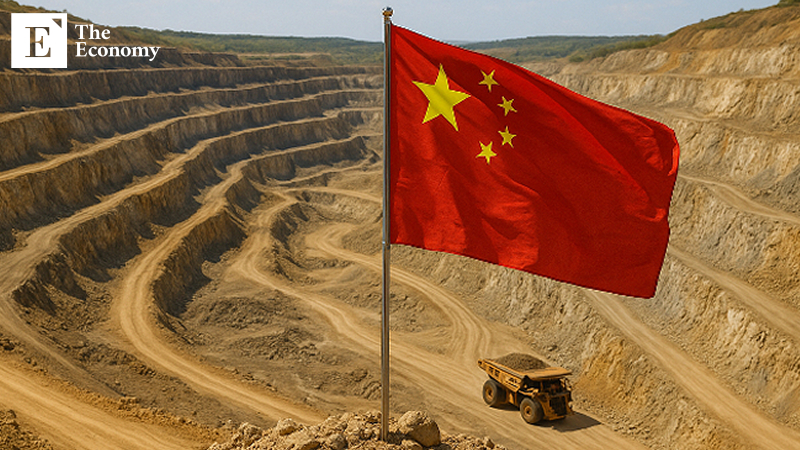
As tensions between China and the international community intensify over rare earths, China’s overwhelming dominance is expected to persist for some time. In a report released in March last year, the Chinese Academy of Sciences (CAS), a think tank under China’s State Council, projected that China’s grip on rare earth production—an essential input for advanced technology and green industries—could weaken substantially. The CAS research team estimated that by 2040, China’s share of rare earth production would fall to 23%, resulting in a complete loss of its dominant position, as Africa and Australia succeed in expanding mining output and structural changes take hold. Despite mounting international pressure, the prevailing view is that China’s control over the rare earth supply chain will not erode abruptly, but will instead weaken gradually over the next decade or more.
As one of the youngest members of the team, Tyler Hansbrough is a rising star in financial journalism. His fresh perspective and analytical approach bring a modern edge to business reporting. Whether he’s covering stock market trends or dissecting corporate earnings, his sharp insights resonate with the new generation of investors.
Similar Post