[US Power Grid] Trump Administration Pushes Nuclear Reactor ‘Environmental Review Exemptions’ Amid Fears of AI-Driven “Energy Shutdowns”

Authored On
Modified
U.S. DOE Quietly Revises Safety, Environmental, and Security Standards
Exploding Power Demand From AI Data Centers
Aging Infrastructure Adds to Rising Blackout Risks
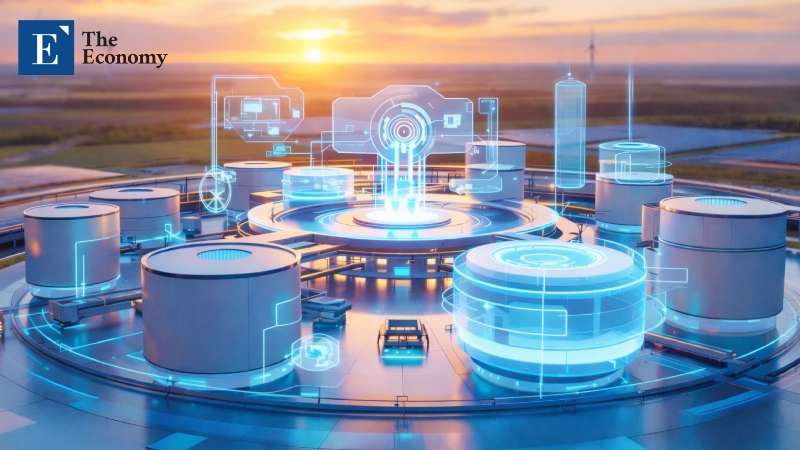
The administration of U.S. President Donald Trump is moving to exempt nuclear reactor construction from environmental assessments (EA), a core regulatory requirement, in a sweeping policy shift. As power demand surges due to the rapid expansion of artificial intelligence (AI) data centers, the administration is accelerating reactor deployment by pushing environmental and safety verification to the back burner. The move reflects mounting concerns that the U.S. power grid is approaching a critical threshold amid the 24/7 operation of AI infrastructure, while also seeking to alleviate electricity costs that are hovering near record highs.
Dismantling Regulation in the Name of Power Supply
On the 3rd (local time), U.S. public radio NPR reported that the Department of Energy (DOE) formally announced a new provision—known as “B5.26,” a categorical exclusion (CX)—through the Federal Register (91 FR 4550) the previous day, removing newly developed experimental reactors from key review requirements under the National Environmental Policy Act (NEPA). In the notice, the DOE stated that reactors falling under this category are designed with features such as passive safety systems that inherently prevent accidents, arguing that the risk of radioactive release is “extremely low” and therefore does not warrant separate environmental review.
Under the new measure, certain next-generation reactor projects may proceed rapidly without undergoing environmental assessments or the preparation of environmental impact statements (EIS). According to the DOE, the categorical exclusion applies across the entire lifecycle of eligible reactors, from site selection and construction to operation, license renewal, and decommissioning. Not all reactors are automatically exempt, however. The DOE will determine eligibility on a case-by-case basis, limiting exemptions to advanced reactors with demonstrably low leakage risk and verified safety through modern technologies.
The move follows an executive order signed by President Trump in May last year aimed at revitalizing the nuclear industry by slashing regulatory hurdles and accelerating reactor deployment. In line with that directive, the DOE is streamlining licensing procedures with the goal of bringing at least three next-generation experimental reactors online by July 4, Independence Day.
According to NPR, the DOE also quietly revised internal safety and environmental guidelines ahead of the announcement. Language in internal guidance at the Idaho National Laboratory (INL) governing environmental protection was downgraded from “must be protected” to “may be given consideration where practical.” The principle of ALARA (As Low As Reasonably Achievable)—a cornerstone of nuclear safety policy requiring radiation exposure to be minimized even below legal limits—was removed entirely. ALARA has been a foundational concept used for decades by both the DOE and the Nuclear Regulatory Commission (NRC).
‘Power-Hungry’ Data Centers Drive Explosive Demand
Behind the administration’s aggressive push lies the explosive growth in electricity demand from AI data centers. As AI models grow more sophisticated, the computational requirements for training and inference have increased exponentially, pushing power supply and cooling systems to their limits. The rise of generative AI services such as ChatGPT has fundamentally altered computing patterns, shifting from episodic, training-heavy workloads to inference-centric operations that run continuously. As long as services are live, inference workloads operate around the clock. AI has moved beyond an experimental phase into an always-on industrial infrastructure that consumes vast amounts of electricity, placing sustained strain on terrestrial power grids.
Renewable energy sources such as solar and wind face clear limitations as baseload power for data centers, given their intermittency due to weather conditions and technical instability associated with inverter-based systems. According to the International Energy Agency (IEA), global data center electricity consumption is projected to double from 415 terawatt-hours (TWh) in 2024 to 945 TWh by 2030. Some estimates suggest consumption could exceed 1,260 TWh by 2030 if AI adoption accelerates further. That level represents roughly 4% of global electricity demand and would require the equivalent output of 158 one-gigawatt nuclear power plants—each generating about 7–8 TWh annually—operating at full capacity year-round.
The U.S. power situation has already entered a critical zone. Data centers currently account for about 6% of total U.S. electricity demand, a figure projected to rise to 11% by 2030. Yet delays in constructing new nuclear power plants have left reserve generation capacity at or below critical levels in 8 of the country’s 13 regional power grids. As a result, U.S. data center expansion is expected to face constraints through 2030. Goldman Sachs analysts have warned that “limited effective reserve capacity could become a barrier to additional data center development in the United States,” while Microsoft CEO Satya Nadella recently remarked that even if massive quantities of chips were secured, “there is concern about whether there will be enough power to run them.”
Electricity costs are also climbing into focus. The average U.S. retail electricity price reached a record high of $0.1807 per kilowatt-hour in September last year. The pressure exerted by AI data centers on the national grid is now translating into tangible cost increases. Power shortages are also fueling social friction, as residents push back against data center construction amid fears of rising electricity bills, leading to a growing number of project cancellations. According to global market research firm DataCenterWatch, more than 20 data center construction projects were scrapped in the second half of last year alone.
Energy Shutdown Risk Looms for 151 Million Americans
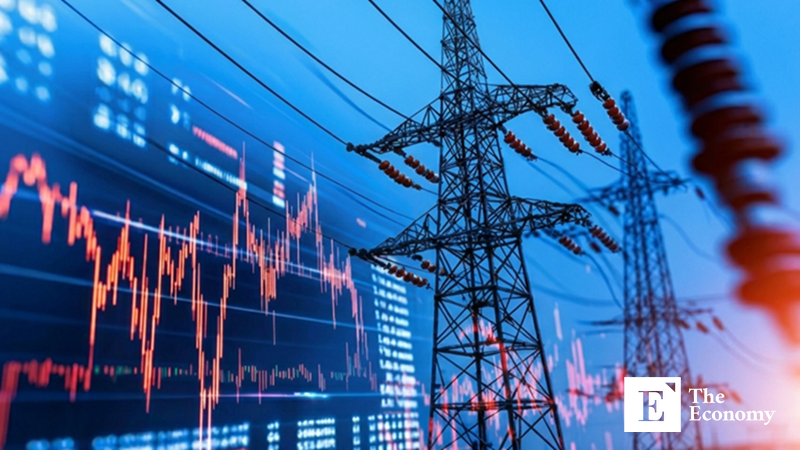
With power supply failing to keep pace with demand, warnings are mounting that energy shortages could cascade across the United States. The U.S. power grid has already faced increasing blackout risks for years, as aging infrastructure becomes more vulnerable to increasingly frequent storms and wildfires. The rapid proliferation of AI-driven data centers has sharply accelerated electricity demand after two decades of stagnation, adding further strain to an already stressed system.
The North American Electric Reliability Corporation (NERC) has described the convergence of aging infrastructure and data-center-driven demand growth as a “perfect storm” for the U.S. power system. In its annual report released on the 29th last month, NERC projected that peak summer electricity demand across the United States will rise by approximately 224 gigawatts over the next decade—69% higher than previous estimates. That increase is equivalent to the electricity consumption of roughly 179 million additional households.
According to NERC, regions at highest risk of power shortages include central parts of the continental United States, the Atlantic coast, the Pacific Northwest, and Texas—areas covered by the nation’s three major power grids. Expanding the risk category to include “areas of concern” places more than 200 million people, over 60% of the U.S. population, under potential blackout threats. The most vulnerable systems include PJM Interconnection, spanning 13 states; the Midcontinent Independent System Operator (MISO); the Southwest Power Pool (SPP); and the Electric Reliability Council of Texas (ERCOT). NERC warned that power shortage risks in the MISO region could rise sharply as early as 2028, with the crisis spreading to other major regions from 2029 onward.
Similar Post