Germany eyes GCAP after rift with France, shaking up Europe’s defense industry landscape

Stefan Schneider brings a dynamic energy to The Economy’s tech desk. With a background in data science, he covers AI, blockchain, and emerging technologies with a skeptical yet open mind. His investigative pieces expose the reality behind tech hype, making him a must-read for business leaders navigating the digital landscape.
Authored On
Modified
Accumulated friction over cooperation → alternative scenarios under review
France reaches out to UAE, equity demands emerge as a variable
Signs of growing GCAP influence led by Japan and the UK
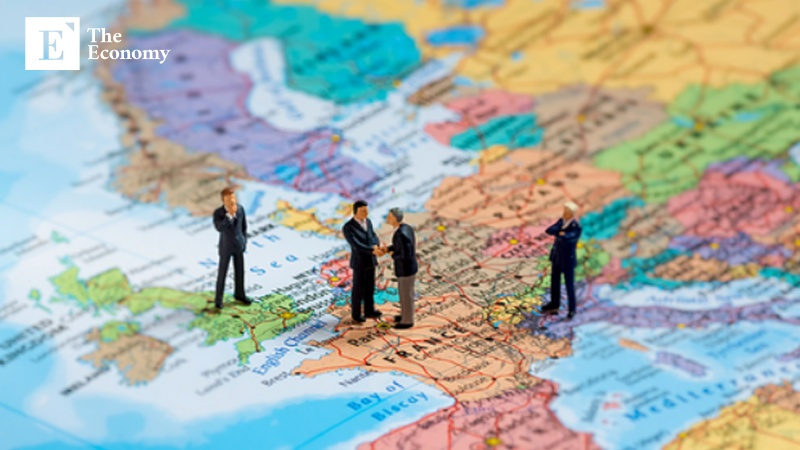
Germany is reportedly considering joining the Global Combat Air Programme (GCAP), led by the United Kingdom, Japan, and Italy, as it looks to step away from a next-generation fighter project jointly pursued with France. Having experienced prolonged leadership disputes and uncertainty in cooperation with France, Berlin is said to be exploring participation in a more stable multinational framework. Against this backdrop, France’s funding constraints, its search for external partners, and the broader implications for Europe’s security architecture are also coming under discussion, drawing heightened international attention.
Recalibrating options amid disputes over development leadership
According to Germany’s leading daily Frankfurter Allgemeine Zeitung (FAZ), the German government has recently begun reviewing the possibility of joining GCAP, the sixth-generation fighter program being advanced by the UK, Japan, and Italy. Germany had previously moved forward under a plan to jointly develop a sixth-generation fighter (FCAS) with France, but after prolonged leadership disputes it has now begun seeking an independent path, the report said. FAZ projected that if Germany—one of Europe’s largest defense spenders—were to join GCAP, global fighter development competition would increasingly consolidate into a confrontation between a large multinational coalition and the United States.
This shift is widely seen as the result of accumulated mistrust toward France. FCAS, involving Germany, France, and Spain, aims to replace France’s Rafale and Germany’s and Spain’s Eurofighter by 2040, but repeated clashes during the project’s progression have stalled momentum. In particular, disagreements between Dassault Aviation and Airbus over work-sharing, technical control, and the ownership of intellectual property rights have remained unresolved, leaving the project effectively mired in stagnation for years.
Concerns over the potential collapse of FCAS have surfaced repeatedly. In November last year, the Financial Times reported that Germany and France were considering a scenario in which cooperation would be limited not to fighter airframes but to the so-called “combat cloud”—a command-and-control system linking fighters, pilots, drones, and ground and maritime command systems through AI-based networks. Quoting Carlo Masala of the Bundeswehr University Munich, the FT likened the situation to “a couple who have decided to divorce but stay together until the children leave home,” underscoring the erosion of trust between the two countries.
Germany’s consideration of GCAP thus reflects a broader recalibration of strategic options. GCAP, agreed upon by the UK, Japan, and Italy in 2022, targets operational deployment of a sixth-generation fighter by 2035 and has already moved into the demonstrator phase. Should Germany, Europe’s largest defense market, join the program, it would help secure both development funding and future air force replacement demand. Separately, Germany is also reportedly exploring cooperation with Sweden’s Saab, the maker of the Gripen fighter—another indication that Berlin is seeking to keep multiple options open rather than remain bound to a France-led FCAS framework.
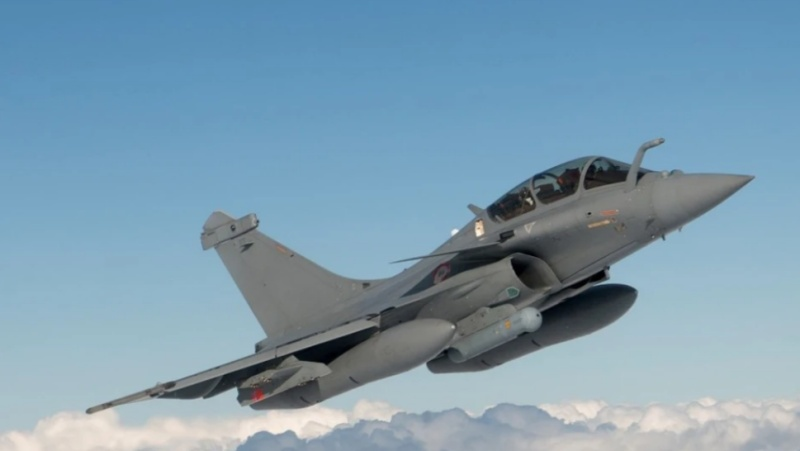
Moves to attract additional partners
France, meanwhile, has begun pivoting toward actively seeking external capital beyond its traditional European partners. FCAS was originally premised on France, Germany, and Spain sharing roles and costs, but as Germany signals the possibility of withdrawal, the financial burden on France has grown sharply. Given the project’s long-term nature—encompassing not only the airframe but also sensors, engines, and command-and-control systems—delays translate directly into additional costs, intensifying fiscal pressure on Paris and making outside partners an increasingly necessary alternative.
The United Arab Emirates (UAE) has emerged as a potential partner. The UAE already operates French-made Rafale fighters in large numbers and has committed substantial investment across the defense industry. Past cases in which the UAE demanded both technology transfer and local industrial development suggest that it could be a partner capable of providing both financial support and industrial collaboration. Industry observers note that France, having previously sought an 80% stake in FCAS, may present similar terms to the UAE—a signal that Paris intends to retain effective control despite the appearance of joint development.
As a result, the likelihood of UAE participation is widely viewed as low. FCAS is estimated to cost approximately 119 billion dollars, and is considered a project that will shape Europe’s defense technology standards and profit structures for decades. A partner granted only a limited stake would bear heavy financial burdens while remaining excluded from core technologies and decision-making. Even with its experience operating the Rafale and its vast financial resources, the UAE is expected to face difficult negotiations. Rigid French terms could ultimately dampen Abu Dhabi’s willingness to participate.
France’s approach underscores that FCAS has entered a phase of financial restructuring aimed at survival. As the original partner configuration weakens, Paris is seeking external capital to ensure continuity. However, without adjustments to equity and role-sharing arrangements, potential partners such as the UAE may find it difficult to commit. Ultimately, FCAS’s central challenge appears to be converging not on technology, but on the fundamental question of who pays—and who holds control.
Potential re-centering of Europe’s security order around the UK and Germany
The international community is closely watching the possibility of Germany joining GCAP and the resulting expansion of the program’s influence. If Europe’s largest economy were to join the existing UK–Japan–Italy framework, the political and military weight of the project would change significantly. As the single largest source of both demand and funding in Europe’s defense market, Germany’s departure from—or reduced role in—the France-centered FCAS could naturally shift the axis of Europe’s next-generation fighter development toward GCAP.
GCAP’s significance extends beyond weapons development. Since the mid-2010s, Japan and the UK have strengthened security cooperation largely in response to China, while Italy has maintained close military ties with the UK within the NATO framework. Germany’s participation would position GCAP as a nexus linking Europe and the Indo-Pacific, creating another multinational pole alongside US-led fighter development efforts and expanding choices for buyers and partners in the global defense market.
At the same time, Europe’s internal security balance could shift. If FCAS, led by France, continues to face uncertainty while the UK and Germany align more closely, leadership within Europe’s defense industry may tilt accordingly. The UK has sought to preserve its influence in European security even after leaving the EU, while Germany possesses the financial strength and industrial base to serve as a practical center of gravity. As cooperation between London and Berlin becomes more tangible, France’s relative position in the European fighter development market could narrow.
Still, such scenarios remain hypothetical. The participation of any new country depends on complex negotiations over financial contributions, industrial roles, and control of technology. Should Germany seek a central decision-making role, coordination with existing partners could introduce new variables. As a result, discussions over Germany’s potential entry into GCAP are widely seen as a test not only of the program’s capacity for expansion, but also of its ability to restructure financial and industrial participation frameworks.
Stefan Schneider brings a dynamic energy to The Economy’s tech desk. With a background in data science, he covers AI, blockchain, and emerging technologies with a skeptical yet open mind. His investigative pieces expose the reality behind tech hype, making him a must-read for business leaders navigating the digital landscape.
Similar Post
















