Silver Price Surge and Subsidy Retrenchment Drive Chinese Solar Price Increases, Raising Questions Over Energy Market Realignment

As one of the youngest members of the team, Tyler Hansbrough is a rising star in financial journalism. His fresh perspective and analytical approach bring a modern edge to business reporting. Whether he’s covering stock market trends or dissecting corporate earnings, his sharp insights resonate with the new generation of investors.
Authored On
Modified
Solar Product Price Increases Across China’s Industry
Erosion of Price Competitiveness Amid Rising Input Costs and Reduced State Support
Prospects of Weakened Position for Renewable Energy as the Lowest-Cost Power Source
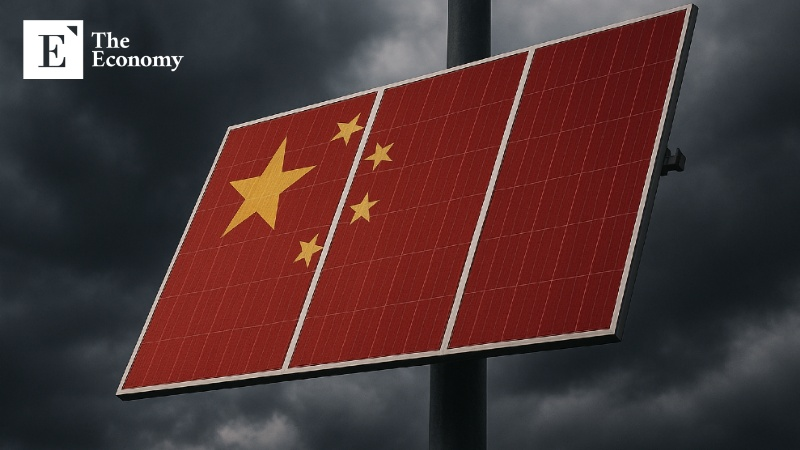
Chinese solar manufacturers have begun raising product prices. A sharp surge in silver prices, a critical raw material, has intensified production cost pressures, while mounting headwinds including U.S. sanctions and a scaling back of Chinese government support have visibly eroded price competitiveness. Market observers warn that if this trajectory persists, the standing of renewable energy—long established as the cheapest source of electricity across most regions worldwide—could soon face renewed strain.
Severe Impact of Silver Price Spike on Chinese Solar Sector
According to foreign media reports compiled on the 11th, Chinese solar firms have recently implemented successive price hikes. Trina Solar raised its average selling price by 3.5% to 3.66% last month, adjusting module prices to $0.12–$0.13 per watt. LONGi Green Energy also increased its per-watt price by approximately $0.008. Other major players, including JinkoSolar and JA Solar, joined the wave of price adjustments during the same period. Chinese companies that had aggressively captured global demand through low-price strategies are now recalibrating their pricing stance in unison.
The primary driver of this shift is the rapid escalation in silver prices. Silver, which traded at around $30 per ounce at the start of 2025, surged to an unprecedented $100 per ounce last month. Although prices have since entered a correction phase and are trading at roughly $80 per ounce, persistent supply constraints and rising industrial demand suggest continued upward pressure. Silver serves as a core material for solar cell electrodes and is estimated to account for 8% to 15% of crystalline silicon solar cell manufacturing costs. Price volatility in silver therefore exerts a direct impact on cell and module pricing.
Rising raw material costs have also weighed heavily on profitability. Earnings guidance released by nine major Chinese solar companies, including Tongwei, LONGi Green Energy, and Aiko Solar, indicates that their combined losses last year likely exceeded $4.2 billion. With losses of approximately $2 billion already accumulated in the first half of the year, the second half saw a rapid expansion of deficits as silver prices accelerated and oversupply conditions deepened.
Chinese Government’s Industry Consolidation Push
Persistent U.S. sanctions have further constrained China’s solar industry. In April of last year, the United States finalized anti-dumping and countervailing duty rates of up to 3,400% to 3,500% on solar cells and modules produced in Thailand, Vietnam, Malaysia, and Cambodia. These Southeast Asian nations had served as key transshipment hubs for Chinese exports seeking to circumvent earlier U.S. trade barriers. The new tariff regime effectively sealed off these established export channels to the U.S. market.
Domestic support is also gradually being scaled back. According to China’s Ministry of Finance and State Taxation Administration, beginning in April the government will suspend export tax rebates for 249 solar-related items, including panels, cells, and wafers. The export rebate program had functioned as one of the central pillars underpinning Chinese firms’ price competitiveness, alongside production subsidies and research and development support. Companies had previously received cash rebates equivalent to 9% of export value, leveraging the mechanism to sustain aggressive pricing strategies.
The decision to withdraw support is widely interpreted as a move to curb excess production from financially weak players. Numerous small and mid-sized Chinese solar firms continued operating despite limited market competitiveness, relying heavily on state subsidies and contributing to chronic overcapacity. This dynamic eroded the profitability of leading manufacturers and intensified criticism from Western countries that China was distorting global market order. By reducing financial support, Beijing appears to be accelerating industry consolidation around firms capable of surviving without subsidies while also seeking to ease trade frictions.
Potential Narrowing of Renewable–Nuclear Cost Gap
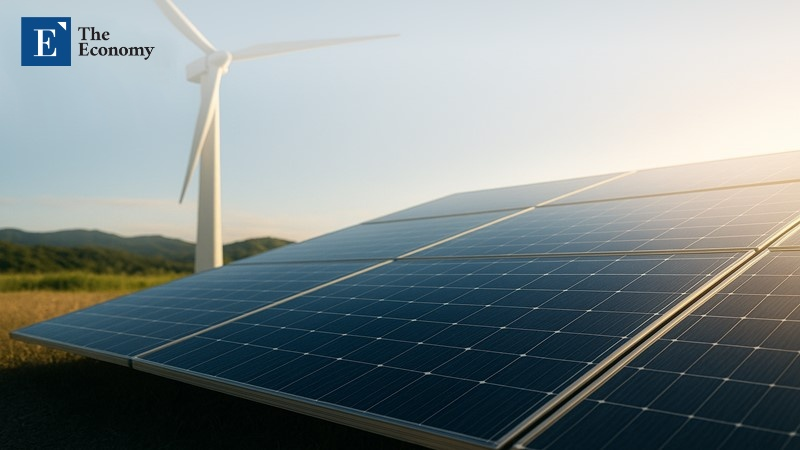
Market participants suggest that sustained increases in Chinese solar product prices could reshape the broader energy landscape. Solar and wind power currently rank as the lowest-cost sources of electricity across most regions globally. According to BloombergNEF’s Levelized Cost of Electricity (LCOE) analysis released in December 2023 for the second half of that year, the global average LCOE stood at $0.041 per kilowatt-hour for solar, $0.040 for onshore wind, and $0.081 for offshore wind, compared with $0.231 for nuclear power, implying a cost differential of roughly three to six times.
The sharp decline in solar LCOE over the past decade has been closely tied to China’s aggressive price competition. Solar module prices have fallen by nearly 90%, from about $1.8 per watt in 2010 to below $0.2 per watt in recent periods. China’s dominance across 70% to 90% of the supply chain enabled large-scale capacity expansions and sustained price reductions. As modules constitute a core component of solar power plant capital expenditures, lower upfront investment reduces financing and depreciation burdens, structurally driving down LCOE.
Should prices of Chinese-made modules—central to the global supply chain—continue to rebound, solar LCOE would likely face upward pressure. Solar generation requires minimal fuel costs but remains highly capital-intensive, rendering electricity costs sensitive to fluctuations in module pricing. Some analysts contend that if the cost advantage of renewables weakens, the gap with nuclear power—particularly as small modular reactors pursue shorter construction timelines and cost efficiencies—could narrow once again.
As one of the youngest members of the team, Tyler Hansbrough is a rising star in financial journalism. His fresh perspective and analytical approach bring a modern edge to business reporting. Whether he’s covering stock market trends or dissecting corporate earnings, his sharp insights resonate with the new generation of investors.
Similar Post