Facing the Loss of Europe After America: EU Raises Barriers Against Chinese Low-Cost Exports as Beijing’s Subsidy-Driven Economy Faces a Boomerang Effect

Siobhán Delaney is a Dublin-based writer for The Economy, focusing on culture, education, and international affairs. With a background in media and communication from University College Dublin, she contributes to cross-regional coverage and translation-based commentary. Her work emphasizes clarity and balance, especially in contexts shaped by cultural difference and policy translation.
Authored On
Modified
Chinese low-cost goods produced through overcapacity are being redirected to Europe after being blocked by U.S. tariffs
Europe’s industrial base under pressure as the European Commission weighs a “European Section 301” mechanism
China’s export expansion strategy collides head-on with escalating trade barriers
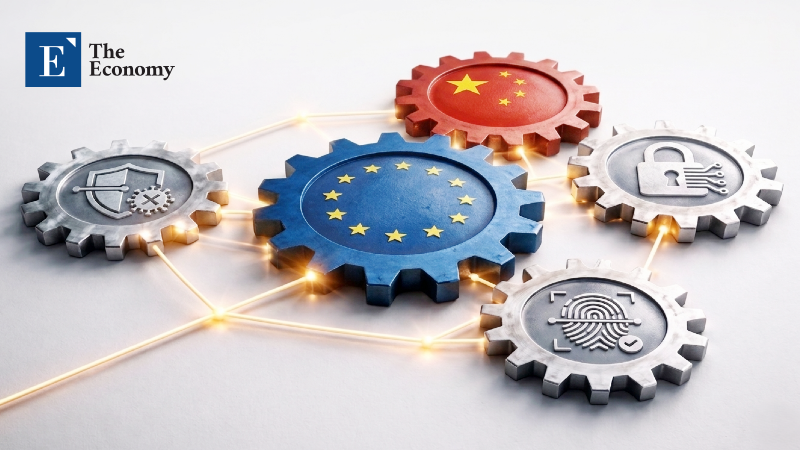
China’s state-subsidy policies are increasingly reshaping the global trading order. Following the United States’ response through punitive tariffs and export controls, the European Union (EU) has also begun a comprehensive strengthening of its trade-defense framework. While Beijing continues to portray itself as a defender of free trade and has reacted sharply, European policymakers argue that overcapacity and market distortions can no longer be tolerated. As subsidy-fueled production capacity disrupts global markets, the resulting backlash is increasingly returning in the form of shrinking export opportunities for China.
EU Calls for Tougher Trade Measures Against China, Beijing Responds Immediately
According to a June 1 report by the South China Morning Post (SCMP), China’s Ministry of Commerce stated on May 30 that “if the European side unilaterally introduces new trade instruments and adopts discriminatory measures, China will respond resolutely and take effective actions to safeguard its legitimate interests.” The ministry further stated that it hopes “the European side will adhere to World Trade Organization (WTO) rules, uphold free trade and fair competition, and firmly oppose protectionism and unilateralism.”
China’s reaction followed recent signals from the European Commission regarding new economic security measures targeting Beijing. In a statement issued on May 29, the Commission emphasized that while “cooperation and dialogue with China, an important partner, will continue,” the current trade and investment relationship with China “is not sustainable.” It added that “economic and security interests are becoming increasingly intertwined, requiring a strong and coherent response in both domains,” noting that trade imbalances with China would be further discussed at both the Group of Seven (G7) summit and EU leaders’ meetings.
According to official EU statistics, the bloc’s merchandise trade deficit with China exceeded $412 billion last year. That marked a sharp increase from approximately $357 billion in 2024 within the span of a single year, providing additional justification for Europe’s growing trade barriers. According to Politico Europe, France, Italy, Spain, the Netherlands, and Lithuania recently submitted a joint non-paper to the European Commission and fellow member states. Although the document did not explicitly name any country, it argued that “certain countries are generating structural industrial overcapacity,” in a clear reference to China.
The five countries called for more aggressive use of safeguard measures and trade investigations. They also proposed expanding WTO litigation, increasing investigative personnel, and incorporating “economic security” considerations into trade-remedy assessments. In addition, they advocated tighter regulations to prevent foreign companies from circumventing EU investigations and urged the expansion of the Commission’s authority to impose countervailing duties directly on individual foreign firms. The proposal has been widely compared to the United States’ Section 301 trade framework.
European Commission President Ursula von der Leyen is expected to present detailed economic security recommendations aimed at curbing Chinese overcapacity during the European Council summit scheduled for June 18–19. If this so-called “European Section 301” framework is adopted, the EU would gain greater flexibility to target what it sees as China’s unofficial currency undervaluation practices, as well as vulnerable sectors within European asset markets, including electric vehicles, chemical products, and clean-energy ecosystems such as solar and wind power.
China Pushes Excess Supply Abroad, Europe Moves to Defend Its Industrial Base
The EU’s increasingly forceful response is rooted in more than ordinary trade friction. Within Europe, concerns have been growing for years that China’s state-led industrial policies undermine the fair-competition principles underpinning the WTO system. The WTO itself identifies market-distorting subsidies, alongside excessive tariffs, as major regulatory concerns. The organization’s framework permitting countervailing duties and trade-remedy measures when subsidies harm foreign industries reflects the same rationale.
However, China’s large-scale industrial subsidies and supply-expansion strategy have increasingly overwhelmed the adjustment capacity of existing trade rules. Under a support system combining central and local governments with state-owned banks, production capacity in electric vehicles, batteries, solar energy, and steel expanded rapidly, with excess output flowing into overseas markets. This dynamic was a key factor behind the tariff war launched by the Donald Trump administration. In April of last year, the administration concluded that WTO dispute-settlement procedures alone were insufficient to address China’s supply-expansion strategy and accelerated the implementation of high tariffs, export controls, and supply-chain restructuring measures. Regulatory actions initially targeting Chinese steel, aluminum, and solar products have since expanded to include electric vehicles and batteries.
The EU is reaching a similar conclusion. The continued influx of low-cost Chinese goods is eroding both profitability and investment capacity across Europe’s manufacturing sector. Electric vehicles, batteries, chemicals, and clean energy are particularly sensitive because they represent strategic industries that Europe views as future growth engines. This explains why the EU has elevated China’s overcapacity issue to the level of economic security. While Beijing argues that it is defending free trade and fair competition, Brussels sees China’s industrial model—combining state subsidies, policy financing, and exchange-rate advantages—as fundamentally distorting market price formation. The recent imposition of countervailing duties on Chinese electric vehicles and the expansion of anti-subsidy investigations reflect this shift in thinking.
Chinese Firms Rush Into Morocco, EU Fears Tariff-Evasion Export Hub
The rapid expansion of Chinese investment in Morocco has become another source of concern in Europe. As electric vehicle and battery supply-chain companies establish production facilities in the country, fears are growing within the EU that Morocco could become a conduit for tariff-avoidance exports. Morocco enjoys both geographical proximity to Europe and access to an extensive free-trade network. For Chinese companies, it represents a strategically attractive location that can preserve access to European markets while reducing exposure to tariff barriers. As a result, Chinese battery and auto-parts manufacturers have increasingly concentrated investments there in recent years.
China announced approximately $6 billion in foreign direct investment (FDI) projects in Morocco between 2023 and 2025, most of which involve new manufacturing facilities. In the port city of Tangier, a five-million-square-meter agricultural zone has been transformed into an automotive-parts cluster where more than ten Chinese companies—including Century Tire, BTR Battery, and APG Brake—are operating or constructing factories. In Kenitra, located between Tangier and Casablanca, Chinese battery manufacturer Gotion is building a large-scale facility valued at $1.3 billion. Between 2023 and 2025, China-backed investment projects in North Africa totaled 19 in Morocco, nine in Egypt, and six in Algeria, far exceeding those announced in the United Arab Emirates (three), Saudi Arabia (two), and Qatar (one).
These developments have intensified concerns in Europe that products manufactured cheaply through state-supported Chinese investment could flood the European market and undermine local industries. The EU currently imposes tariffs of up to 45% on Chinese electric vehicles following its subsidy investigations. However, products that satisfy origin requirements and qualify as Moroccan-made can enter the EU tariff-free.
An even greater concern is that Chinese capital, technology, and key components could re-enter Europe through Moroccan production lines, weakening the effectiveness of existing countervailing duties. Consequently, the European Commission has repeatedly stressed the need to strengthen anti-circumvention rules and supply-chain traceability systems. The joint position paper submitted by major EU member states also included proposals to reinforce anti-circumvention regulations and improve enforcement of existing trade-defense mechanisms. Ironically, the overseas expansion of Chinese manufacturing bases is prompting Europe to develop increasingly sophisticated trade restrictions.
The repercussions extend beyond trade. China’s electric vehicle industry achieved rapid growth through government support, but capacity expansion has outpaced demand growth. Excess supply triggered intense price wars, undermining profitability across the sector. Dozens of automakers are now locked in a fierce struggle for survival within China’s domestic market. Chinese authorities have also acknowledged the seriousness of the situation. Beijing has recently criticized excessive price-cutting competition within the auto industry and called for the elimination of outdated production facilities and the restoration of orderly market conditions. The signals suggest that China’s electric vehicle sector is transitioning from a growth phase into a restructuring phase.
Signs of change are also emerging in China’s next industrial policy framework. According to Reuters, Beijing is considering adjustments to its support policies for the electric vehicle industry in its upcoming five-year plan. As the side effects of supply-driven expansion accumulate, improving industrial efficiency and restoring profitability have become increasingly urgent priorities. The United States and the EU are using these developments as further justification for strengthening trade defenses. The implication is clear: the longer China maintains its supply-expansion strategy, the greater the costs it may ultimately face in global markets.
Siobhán Delaney is a Dublin-based writer for The Economy, focusing on culture, education, and international affairs. With a background in media and communication from University College Dublin, she contributes to cross-regional coverage and translation-based commentary. Her work emphasizes clarity and balance, especially in contexts shaped by cultural difference and policy translation.
- Previous “From EVs to AI”: China Accelerates Expansion of Indigenous Standards in Advanced Industries, Clashing With the U.S., the Incumbent Leader
- Next EU Expands Free Carbon Allowance Allocations for Industry, Pressing Ahead with Preferential Support for Domestic Companies Despite Potential Trade Frictions
Similar Post