“U.S. Retreats, China Waits”: UN Faces Bankruptcy Risk as Both Powers Fall Behind on Dues, Forcing Renewed Debate Over Its Role

Siobhán Delaney is a Dublin-based writer for The Economy, focusing on culture, education, and international affairs. With a background in media and communication from University College Dublin, she contributes to cross-regional coverage and translation-based commentary. Her work emphasizes clarity and balance, especially in contexts shaped by cultural difference and policy translation.
Authored On
Modified
U.S. and China account for 42% of total UN budget
Crisis deepens amid deliberate arrears by both countries
Staff salary suspensions and operational paralysis possible
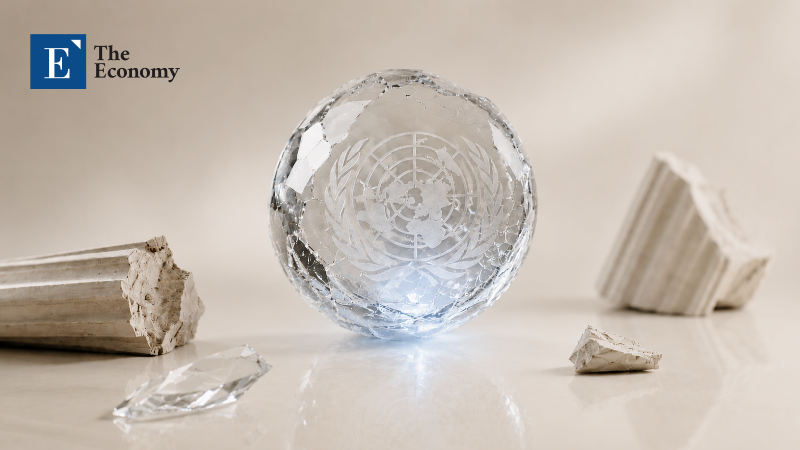
The United Nations, the emblem of the post-World War II international order, is facing its worst financial crisis since its founding. With the United States and China together accounting for more than 40% of assessed contributions, arrears and delayed payments by both powers have prompted the UN to warn that it could run out of cash by August. What is drawing even greater attention than the scale of the fiscal strain is the shift in attitude among major powers. As Washington’s willingness to shoulder the costs of the postwar order weakens and Beijing begins drawing a line at expanding its own responsibilities, the financial foundation and operational momentum of the multilateral system are being tested across the board.
UN Facing Cash Depletion in August
According to The Wall Street Journal on the 1st local time, UN Secretary-General António Guterres warned the previous day that “the UN is heading toward bankruptcy,” adding that “the possibility of financial collapse for our organization is very high.” It is extremely rare for UN headquarters to formally raise the possibility of cash depletion. The UN expects its cash balance to be exhausted around mid-August if current trends continue. That timing coincides with the beginning of the process to select the next UN secretary-general. In response to the financial crisis, the UN has implemented the largest budget cuts in its history and reduced the Secretariat’s workforce by about 3,000 employees. It has also cut interpretation staff, shut down escalators, and postponed repairs to the aging exterior of its 75-year-old New York headquarters building.
The UN has also begun redesigning its organizational structure. Through the “UN80 Initiative,” a reform plan led by Guterres, it is pursuing the consolidation of overlapping functions among agencies and the integration of administrative, accounting, and human resources systems into a shared platform. It is also considering relocating some support functions currently dispersed across New York and Geneva to lower-cost regions, while political and peacebuilding units within the Secretariat have also been included among the targets for streamlining.
Work to reset program priorities is also gaining pace. Departments and affiliated bodies have begun a sweeping review of thousands of existing mandates assigned by member states, moving to eliminate programs deemed less necessary or duplicative. Some specialized agencies and humanitarian organizations have also prepared their own restructuring plans, joining a broader push to downsize operations and reallocate functions. At the same time, the UN is reducing in-person meetings, expanding digital work systems, and seeking to ease financial pressure by sharing personnel and expertise across institutions.
The ‘Credit to Member States’ System Eroding UN Finances
Behind the UN’s financial difficulties lies a distinctive accounting rule that has been maintained for decades. At the center of the problem is the UN’s “Credit to Member States” system. After the end of a fiscal year, the UN converts unused budget funds into credits according to each member state’s contribution ratio, and those credits are then deducted from future assessed contributions. The original purpose was to improve the efficiency of budget execution and reduce the burden on member states, but critics have long argued that the system has produced serious distortions in practice.
The biggest problem is that even assessed contributions that have not actually been paid are treated in accounting terms as unused budget funds. Even if some member states fail to pay their dues on time, the corresponding budget is recorded as a balance if it is not spent. The result is a structure in which cash that does not exist is included in credits. According to the UN Secretariat, this year alone, $299 million has been booked as credit without any actual cash inflow. Guterres has gone so far as to urge rule changes, saying the UN is trapped in a “Kafkaesque cycle” of having to return funds that never existed.
This structure has become a factor worsening the UN’s cash flow. Member states can use credits to reduce future assessed contributions, but the UN does not actually hold the corresponding cash. The issue has also been repeatedly raised in the process of applying International Public Sector Accounting Standards. Internal UN audit reports and budget committee discussions have also cited the gap between arrears and credits as a chronic source of liquidity pressure.
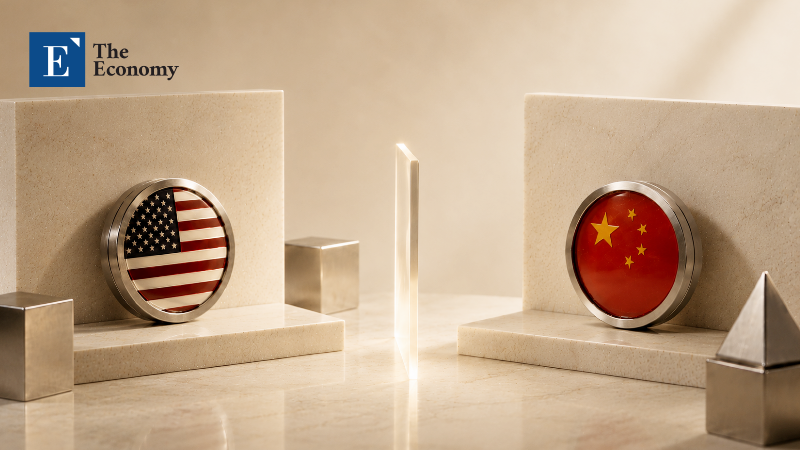
U.S. Arrears at $4.3 Billion, China Still Owes $455 Million
If accounting rules have amplified liquidity distortions, the direct cause of the actual cash shortage is the arrears of the United States and China. Under the UN Charter, member states must bear expenses apportioned by the General Assembly, while regular budget and peacekeeping assessments are levied according to each country’s assigned rate. As of last year, the United States’ assessed contribution to the UN regular budget accounted for 22% of the basic budget. It also remains the largest contributor to the peacekeeping budget. The UN’s ability over the past several decades to continue conflict mediation, peacekeeping operations, and humanitarian assistance has been made possible by the overwhelming financial contribution of the United States. For a long period, the system operated on the basis that Washington bore the cost of maintaining the international order while other countries shared in its benefits.
But the United States is currently withholding more than $4.28 billion in assessed contributions. The amount surged after U.S. President Donald Trump returned to office last year. While past U.S. diplomacy regarded the maintenance of the international order itself as a strategic asset, the Trump administration has halted financial support, arguing that the UN has failed to fulfill its core responsibilities, including resolving international conflicts, and has not cooperated with U.S. policy. In January, Trump announced that the United States would withdraw from a total of 66 international organizations, including 31 UN-related bodies such as the UN Framework Convention on Climate Change and the UN Population Fund, and also completed the process of withdrawing from the World Health Organization under the UN system. The move was framed as part of a broader effort to unwind international agendas that do not align with U.S. interests.
China, the second-largest contributor after the United States, is also leaving the UN anxious. China’s assessment rate has risen over the past decade from around 5% to about 20% in line with its economic growth. While criticizing Washington’s failure to pay its contributions and presenting itself as the UN’s “de facto largest financial contributor,” Beijing has in practice been dragging out its own payments as much as possible. China paid $844 million in peacekeeping contributions to the UN while Foreign Minister Wang Yi visited UN headquarters on the 26th of last month, but it still owes $455 million. China had completed its annual payments around April or May through 2021, but in 2022 it paid in full only in October. In 2023, it paid in November, and in 2024, it made payment on December 27, showing a continued pattern of delaying its payment schedule.
No Allies, Only Uncertainty: China Also Turns Away From the Bill for the International Order
Until last year, the U.S. retreat had been interpreted as a variable that would foreshadow an expansion of Chinese influence. During the first Trump administration, as the United States withdrew from UNESCO, the UN Human Rights Council, and other bodies, China expanded its presence in personnel appointments, budgets, and agenda-setting across numerous international organizations. The rise in Chinese heads of some UN specialized agencies and the emergence of a Chinese-style multilateralism built around developing-country agendas and Global South narratives were also tied to this trend.
Indeed, China has steadily expanded its internal influence by securing leadership posts at major UN-affiliated agencies, including the International Telecommunication Union, the International Civil Aviation Organization, the UN Industrial Development Organization, and the Food and Agriculture Organization. Based on its economic cooperation with countries in Africa, the Middle East, and Southeast Asia, China has also built friendly blocs in votes at the UN General Assembly and various committees. Using this foundation, Beijing succeeded in inserting language related to its core Belt and Road Initiative into UN resolutions and development agendas, while also using support from developing countries to blunt international criticism on issues unfavorable to China, such as human rights in Xinjiang and Hong Kong.
China’s recent moves, however, show that its multilateral strategy is becoming sharply more cautious at the stage of assuming responsibility. This shift in Beijing’s posture is based on cold strategic calculation. Expanding influence within international organizations and bearing the cost of maintaining the international order are entirely different matters. If China alone were to prop up international bodies abandoned by the United States, it could face the trap of cost transfer before gaining expanded leadership. The UN’s vast bureaucracy, political conflicts among member states, low efficiency of peacekeeping operations, and chronic shortfalls in humanitarian budgets could all become burdens for China as well.
From China’s perspective, there is little incentive to single-handedly uphold an international order from which the United States has withdrawn. The UN is an organization in which member states’ interests are intricately entangled. Paying several billion dollars more does not immediately translate into control. Moreover, China is already burdened by its domestic economic slowdown, property-market slump, and rising local-government debt. In a situation where its growth rate is stabilizing at a lower level, choosing to shoulder the cost of maintaining the international order could increase political pressure.
Siobhán Delaney is a Dublin-based writer for The Economy, focusing on culture, education, and international affairs. With a background in media and communication from University College Dublin, she contributes to cross-regional coverage and translation-based commentary. Her work emphasizes clarity and balance, especially in contexts shaped by cultural difference and policy translation.
Similar Post