EU Expands Free Carbon Allowance Allocations for Industry, Pressing Ahead with Preferential Support for Domestic Companies Despite Potential Trade Frictions

Anne-Marie Nicholson is a fearless reporter covering international markets and global economic shifts. With a background in international relations, she provides a nuanced perspective on trade policies, foreign investments, and macroeconomic developments. Quick-witted and always on the move, she delivers hard-hitting stories that connect the dots in an ever-changing global economy.
Authored On
Modified
The Gap Between Carbon Neutrality Ambitions and Manufacturing Realities
Rising Carbon Prices Feed Through to Electricity Bills and Production Costs
Mounting Pressure to Ease Regulations as Industrial Competitiveness Weakens
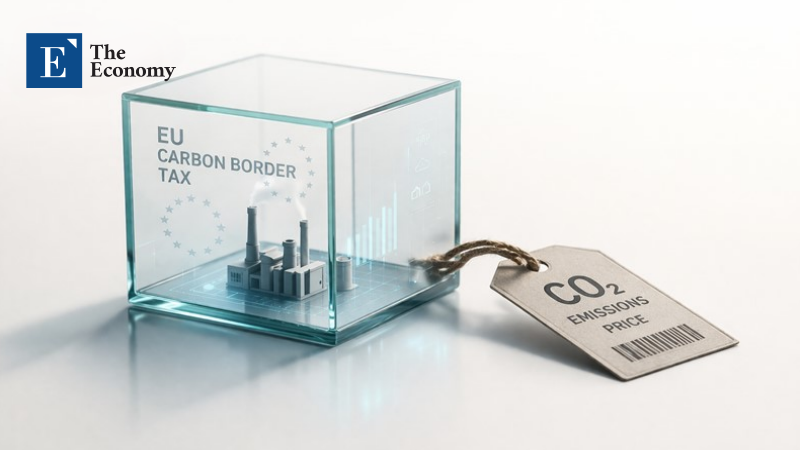
The European Union (EU) has begun revising the operational framework of its Emissions Trading System (ETS), long regarded as a cornerstone of its carbon neutrality agenda. The bloc’s previous strategy of increasing carbon costs to accelerate industrial decarbonization is increasingly giving way to a more industry-protective stance as it confronts soaring energy prices, weakening manufacturing competitiveness, and supply gluts originating from China.
EU Moves to Expand Free Emissions Allowances for Domestic Steel and Chemical Industries
According to pan-European media outlet Euronews on May 31, the European Commission recently proposed new ETS benchmarks for the 2026–2030 period, including a plan to provide an additional $4.6 billion worth of free emissions allowances to European industry. The revision adjusts the methodology used to allocate free allowances to highly efficient emitters. The Commission intends to incorporate indirect emissions into calculations that previously focused primarily on direct emissions. The goal is to preserve incentives for carbon reduction while preventing industrial flight amid mounting energy and carbon-related costs.
Under the ETS, governments establish an annual cap on greenhouse gas emissions for regulated facilities and require companies to purchase allowances corresponding to their emissions. In principle, governments are expected to auction these permits, but partial free allocations are often granted to ease corporate burdens in light of market conditions and regulatory considerations. The EU expects the latest measure to raise the average share of free allocations to roughly 75% of a company's total allowance requirement.
Although presented as a routine benchmark update conducted every five years, the policy implications are far more significant. For years, the European Commission maintained that higher carbon prices would spur industrial investment in emissions-reduction technologies. The underlying assumption was that rising emissions costs would encourage companies to invest in cleaner production facilities. To support this objective, the EU pursued a gradual reduction in free allowances while introducing the Carbon Border Adjustment Mechanism (CBAM) to impose equivalent carbon costs on imports. Reality, however, unfolded differently. As energy costs surged and economic growth slowed simultaneously, companies increasingly prioritized preserving cash rather than investing in decarbonization. With profitability deteriorating, many firms found it difficult to commit to multi-billion-dollar investments in green industrial transformation.
Factory Closures Surge Sixfold as 40.8 Million Tons of Chemical Production Capacity Vanish
The pressure has been most evident in Europe’s heavy industries. Energy-intensive sectors including steel, cement, chemicals, non-ferrous metals, and fertilizers have faced elevated electricity and natural gas costs since the outbreak of the Russia-Ukraine war in 2022, while also bearing rising carbon expenses. Simultaneously, expanding supplies of low-cost Chinese steel and chemical products, combined with aggressive industrial subsidies in the United States, have entrenched Europe's cost disadvantage in manufacturing.
As higher production costs accumulated, profitability deteriorated sharply, prompting some companies to reduce output and close facilities in an effort to contain expenses. According to the European Chemical Industry Council (CEFIC), the pace of chemical plant closures across Europe has increased sixfold since 2022 compared with historical levels. The continent has already lost approximately 40.8 million tons of chemical production capacity, affecting roughly 20,000 direct jobs.
The petrochemical sector accounts for 48% of the total capacity that has been shuttered, with half of that loss stemming from the closure of nine steam crackers. Germany represents 25% of the total closed capacity, while the Netherlands accounts for 20%. The contraction represents one of the most significant reductions in industrial capacity in the history of the European chemical industry.
New investment is also slowing dramatically. According to industry data cited by the Financial Times, new investment projects in Europe's chemical sector have fallen sharply over the past year. Companies are increasingly prioritizing expansion in the United States, the Middle East, and Asia rather than Europe, reflecting a widening production-cost gap.
The steel industry faces similar challenges. As Chinese overcapacity continues to pressure global markets, European steelmakers are grappling with both elevated energy costs and rising carbon expenses. Several companies have already decided to shut down production lines, while others have postponed planned investments in new facilities.
Competitiveness Recovery Takes Priority Over Trade Friction Concerns
Germany’s position has also evolved. As Europe’s largest manufacturing economy, Germany has experienced some of the most severe declines in industrial competitiveness in recent years. As profitability deteriorated across the chemical, automotive, and steel industries, the German government repeatedly called for stronger EU-level industrial support measures. Recent policy discussions within the European Commission increasingly center on restoring competitiveness. The Clean Industrial Deal likewise identifies lower energy prices, expanded manufacturing investment, and supply-chain stabilization as key objectives.
Pressure for policy adjustments has also come from Central and Southern European member states. According to the FT, six countries—Czechia, Bulgaria, Poland, Romania, Greece, and Slovakia—jointly urged the EU to ease carbon-cost burdens on heavy industry. They argued that high energy prices, geopolitical uncertainty, and relatively carbon-intensive industrial structures are undermining the competitiveness of their manufacturing sectors. In particular, they called for additional free allowances for companies that submit credible green-transition plans.
However, expanding free allocations could undermine the trade legitimacy of the CBAM. The EU began the full implementation phase of the mechanism in January this year. Importers are now required to report embedded emissions associated with carbon-intensive products such as steel, cement, aluminum, fertilizers, electricity, and hydrogen, and must purchase CBAM certificates linked to EU carbon allowance prices. The EU has consistently described the CBAM as a mechanism designed to eliminate carbon-cost disparities between domestic and foreign producers. However, if domestic firms receive expanded or more generous free allowances, criticism could intensify that the bloc is effectively imposing costs only on imports, raising accusations of protectionism.
Moreover, the CBAM was explicitly designed in conjunction with the gradual phaseout of free emissions allowances. The European Commission itself has stated that the mechanism’s phased implementation is linked to the progressive elimination of free allocations. If free allowances remain in place longer than anticipated or are expanded further, the balance underpinning the system could be disrupted. Domestic firms would continue receiving cost relief while foreign producers shoulder carbon expenses at the border. Such a scenario would strengthen arguments from major trading partners including China, India, and Brazil that the CBAM functions less as a climate policy and more as an industrial protection measure.
Nevertheless, given the current direction of EU policymaking, the bloc appears unlikely to scale back industrial support measures solely because of concerns over trade disputes. Recent policy priorities have increasingly shifted toward restoring economic growth rather than focusing exclusively on price stability. The eurozone economy has struggled with prolonged low growth for years, while manufacturing output remains weak. Concerns are also growing that Europe’s long-term potential growth rate could decline if investment and production activity weakened by the energy crisis fail to recover. From the Commission’s perspective, rebuilding the foundations for growth has become a more urgent priority than avoiding potential trade conflicts.
Anne-Marie Nicholson is a fearless reporter covering international markets and global economic shifts. With a background in international relations, she provides a nuanced perspective on trade policies, foreign investments, and macroeconomic developments. Quick-witted and always on the move, she delivers hard-hitting stories that connect the dots in an ever-changing global economy.
Similar Post