"From Fines to M&A Roadblocks" EU Raises Regulatory Barriers Against Chinese Companies While Loosening Restrictions on Intra-European M&A

As one of the youngest members of the team, Tyler Hansbrough is a rising star in financial journalism. His fresh perspective and analytical approach bring a modern edge to business reporting. Whether he’s covering stock market trends or dissecting corporate earnings, his sharp insights resonate with the new generation of investors.
Authored On
Modified
EU Imposes $228 Million Fine on Chinese E-Commerce Platform Temu
Warning Signals Emerge Over JD.com's Acquisition of Ceconomy
M&A Regulations Relaxed Within the EU as Deal Volumes Surge
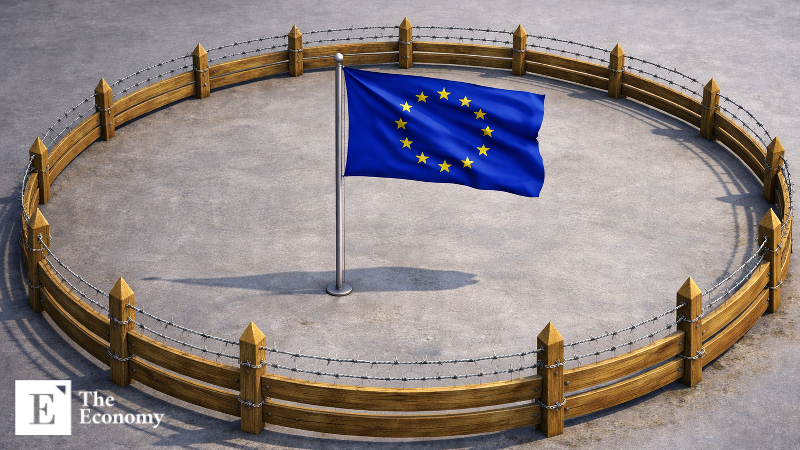
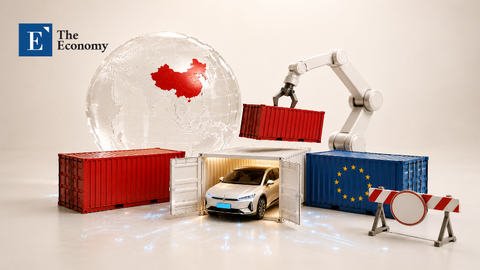
The European Union (EU) has rolled out a series of enforcement measures targeting Chinese e-commerce companies. After imposing a substantial fine on Temu for violations of the Digital Services Act (DSA), regulators have also moved to scrutinize JD.com's planned acquisition of a German retailer. Market observers view the EU's actions as an extension of its strategy to cultivate "European champions." While raising regulatory barriers against companies from outside the bloc, Brussels is adopting a more accommodative stance toward mergers and acquisitions (M&A) among European firms, concentrating policy efforts on strengthening industrial competitiveness.
Temu Hit With DSA Fine
According to Reuters on June 28, the European Commission announced that it had decided to impose a $228 million fine on Temu, stating that the company had failed to adequately identify, analyze, and assess the structural risks posed by illegal products sold on its platform and the resulting harm to EU consumers. The Commission concluded that Temu had violated its risk-assessment obligations under the DSA. Introduced in 2024, the DSA requires large online platforms and marketplaces to evaluate structural risks arising from their services and implement measures to mitigate them. Violations can result in fines of up to 6% of a company's annual global revenue.
The Commission stated that a significant number of products sold on Temu failed to meet safety standards. Problematic items included children's toys and jewelry containing chemical substances exceeding safety limits, as well as chargers that failed basic safety tests. Henna Virkkunen, Executive Vice-President for Tech Sovereignty, Security and Democracy, said Temu's risk assessment underestimated fact-based risks and lacked specificity, evidence, and comprehensiveness. She added that the deficiencies prevented regulators, users, and the broader public from properly understanding the potential risks posed by illegal products sold on the platform.
Temu immediately objected to the Commission's decision. In a statement, the company argued that the ruling was based on the Commission's initial DSA assessment conducted in 2024 and did not reflect the platform's current systems. Temu said it had cooperated constructively with regulators throughout the investigation and had already implemented additional measures to strengthen user protections. Unless meaningful consultations with EU authorities produce a resolution, the company must submit a corrective action plan by the end of August. Failure to comply could trigger additional daily, weekly, or monthly penalties.
JD.com Faces Expansion Setback
On the same day, the Commission announced the launch of an in-depth investigation under the Foreign Subsidies Regulation (FSR) into JD.com's planned acquisition of Ceconomy. JD.com had announced last month that it intended to acquire Ceconomy for approximately $2.5 billion. Ceconomy is Europe's largest consumer electronics retailer, operating 1,067 stores across 11 European countries under the MediaMarkt and Saturn brands as of fiscal year 2025.
The FSR, which entered into force in July 2023 after being adopted in December 2022, was designed to prevent companies receiving subsidies, preferential loans, tax benefits, or other forms of support from non-EU governments and public institutions from gaining unfair advantages within the EU market. Under the regulation, M&A transactions must be notified in advance if the target company generates more than approximately $570 million in EU revenue and the parties involved have received more than roughly $57 million in aggregate financial contributions from non-EU countries over the previous three years. If the Commission determines that a transaction distorts competition, it may impose conditions for approval, restrict participation in public procurement tenders, order repayment of subsidies, or even prohibit the acquisition.
EU authorities currently believe JD.com may have benefited from support provided by the Chinese government or state-owned financial institutions, enabling it to participate in the acquisition process under more favorable conditions than competitors. JD.com, however, maintains that the acquisition will be financed through loans from international commercial banks and cash reserves generated through its own business operations rather than subsidies from the Chinese government or other non-EU entities. The company argues that the deal is a purely commercial investment decision.
The EU's European Champion Strategy
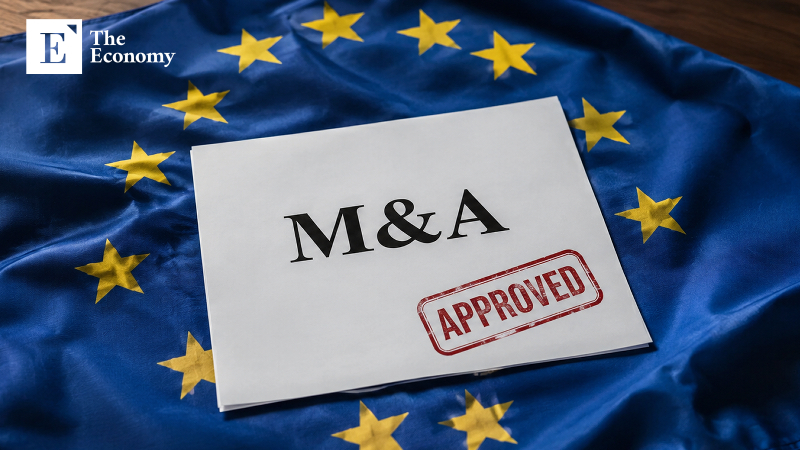
Market participants view the measures against JD.com as a clear illustration of the EU's industrial protection strategy. Brussels has taken a notably more accommodating approach toward mergers involving European companies. Last month, the Commission unveiled draft revisions to its M&A guidelines, indicating that merger reviews would assess not only pricing effects but also innovation capacity, investment expansion, supply-chain resilience, and contributions to global competitiveness. The initiative effectively lowers barriers in merger reviews that have traditionally focused on market share and monopoly concerns. Policymakers argue that larger corporate scale can strengthen innovation, investment, and supply-chain resilience, ultimately benefiting both consumers and industry. The long-standing political consensus to foster "European champion" companies capable of competing with U.S. technology giants and Chinese state-backed enterprises is beginning to take tangible form.
In line with this policy direction, European companies have accelerated their M&A activity. According to data from the London Stock Exchange Group (LSEG), the value of M&A transactions involving European firms reached $455 billion this year, up 39% from the previous year. By comparison, deal values in the Americas and Asia-Pacific regions grew by only around 9% over the same period, highlighting Europe's exceptionally strong momentum. Some analysts believe that if the trend continues, the European M&A market could recover to the boom-era levels seen just before the 2008 global financial crisis.
Mega-deals exceeding $20 billion are also emerging in rapid succession. One prominent example is consumer goods giant Unilever, headquartered in the United Kingdom and the Netherlands, which agreed to merge its food business with U.S. spice producer McCormick. The transaction, part of Unilever's broader effort to reshape its portfolio around beauty and personal care businesses, is valued at nearly $44.8 billion. In addition, Finnish elevator manufacturer Kone announced last month that it would acquire German rival TK Elevator for approximately $33.5 billion, while Italy's second-largest lender UniCredit proposed a roughly $39.9 billion merger with Germany's largest bank, Commerzbank, and has begun directly lobbying shareholders in support of the deal.
As one of the youngest members of the team, Tyler Hansbrough is a rising star in financial journalism. His fresh perspective and analytical approach bring a modern edge to business reporting. Whether he’s covering stock market trends or dissecting corporate earnings, his sharp insights resonate with the new generation of investors.
Similar Post