Kia Rides Europe’s EV Wave While Chinese Rivals Stumble on Tariffs

Authored On
Modified
Kia Expands Sales in Europe, Plans to Boost Local Production
New hatchbacks and locally favored models lined up for Q4
Chinese EV makers losing price edge in Europe pivot to local production
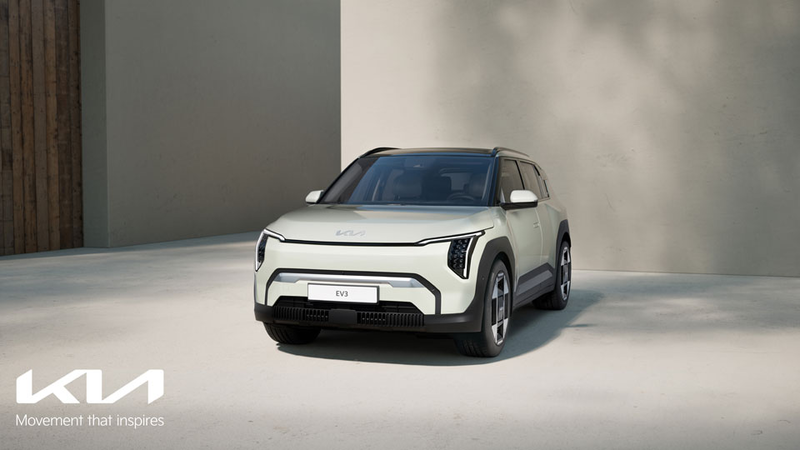
Kia is accelerating its push into the European auto market. As EU tariffs have eroded the price competitiveness of Chinese EV makers, Kia is seizing the opportunity by focusing on vehicle types that appeal to European consumers.
Kia’s Push in the European Market
According to EV-focused outlet Arena EV on October 14 (local time), Kia recently announced plans to triple its battery electric vehicle (BEV) production in Europe over the next two years. The company’s plant in Žilina, Slovakia — its main European production hub — currently has an annual capacity of about 320,000 vehicles, which can be increased to 350,000 with overtime operations.
Kia’s aggressive expansion follows a sharp rise in sales for Hyundai Motor and Kia in the European market. Their combined EV sales in Europe had fallen from a record 147,799 units in 2022 to 141,868 in 2023 and 119,710 in 2024. But the trend reversed this year: from January to September 2025, Hyundai and Kia sold 126,029 units, up 36.7% year-on-year — an average of 14,000 vehicles per month. If this pace continues, they are on track to sell around 168,000 units in Europe this year, setting a new record after three years.
The surge has been driven primarily by compact electric SUVs like Kia’s EV3 and Hyundai’s Inster. European consumers traditionally favor smaller, more affordable cars that balance quality, practicality, and value for money over large, expensive models. Kia’s EV3, launched in Europe last October, sold 38,207 units through September this year — ranking sixth among all EV models sold in the region. The EV3 offers a practical WLTP range of 605 km per charge and, with government subsidies applied, is priced around $30,000. Hyundai’s Inster (sold in Korea as the Casper Electric), launched in Europe last December, has also performed strongly, with 19,104 units sold through September at an accessible price point in the mid-$20,000 range.
New “Europe-Specific” Models to Launch in Q4
Kia plans to accelerate its European expansion in the fourth quarter with four new models. Last month, Kia Europe unveiled key specifications for the small crossover utility vehicle (CUV) Stonic, the compact hatchback K4, the electric hatchback EV4, and the electric SUV EV5. Designed from the outset with European consumers in mind, the four models will go on sale sequentially across major markets such as Germany and the U.K. in the coming months.
The Stonic targets the high-demand B-segment (small) CUV market in Europe. It incorporates Kia’s design philosophy, “Opposites United,” in its Star Map signature lighting and front grille, and offers top-class features such as a panoramic dual display and an advanced driver assistance system (ADAS). The K4 is Kia’s first new model tailored specifically for Europe. It has been sized to appeal to both the compact (C-segment) and midsize (D-segment) markets while adopting the hatchback form favored by European drivers.
The EV4, positioned in the C-segment, will be Kia’s first electric vehicle produced and sold locally in Europe. Like the K4, it is a hatchback model. The EV5, aimed at families, is built on the Electric-Global Modular Platform (E-GMP) and offers one of the roomiest interiors in its class. Equipped with an 81.4 kWh battery, the EV5 delivers up to 530 km (WLTP) of range on a single charge.
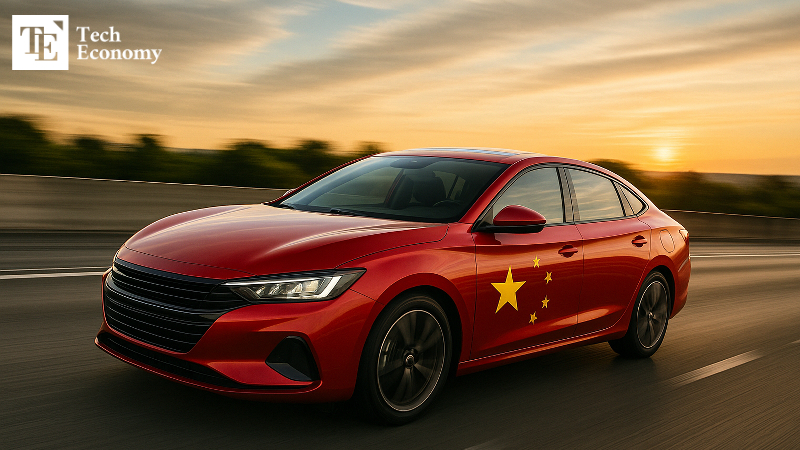
China’s Biggest Rivals Face Tariff Roadblocks in Europe
The main reason South Korean automakers have gained competitiveness in Europe lies in the European Union’s tariffs on Chinese electric vehicles. Since October last year, the EU has imposed additional countervailing duties on Chinese EVs, arguing that Beijing’s unfair subsidy policies had distorted market prices. As a result, the tariff rate for Chinese-made EVs rose from the standard 10% to as high as 17.8–45.8%, stripping Chinese manufacturers of their once-dominant price advantage.
However, analysts note that this dynamic may not last long, as Chinese automakers are quickly securing local production capacity in Europe. XPeng, for instance, has partnered with Austrian contract manufacturer Magna Steyr to establish a local production system. The company is currently assembling its G6 and G9 SUV models in Graz, Austria, using a semi-knockdown (SKD) method and plans to expand production to sedans, compact SUVs, and hybrid vehicles. This strategy is viewed as a “lightweight market entry model” that allows XPeng to minimize upfront investment, meet European regulations, and flexibly respond to demand fluctuations.
BYD, meanwhile, sees Europe as a long-term growth hub and is building its own manufacturing infrastructure. The company aims to produce all vehicles sold in Europe locally by 2028 — signaling a strategy that goes beyond tariff avoidance to pursue sustainable growth in the region. BYD’s plant in Hungary began full operations this year, and a new assembly line in Türkiye is set to open next year.
Similar Post