Global Expansion Narrative Fuels M&A Momentum in Korea’s Food Industry

Authored On
Modified
Umji Foods nears sevenfold return in three years
Fierce bidding erupts over “K-sauce” brands
Global reach becomes make-or-break after acquisitions
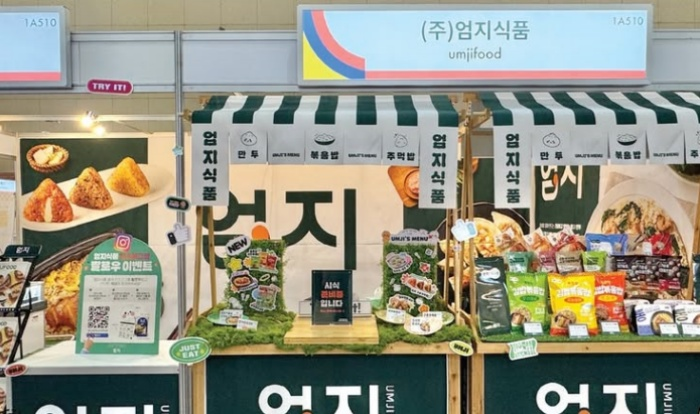
A surge of food and dining (F&B) assets is flooding South Korea’s mergers and acquisitions market. Major brands such as Umji Foods, Gwangcheon Seaweed, and Bonchon are seeking new owners, but investors’ attention has shifted from short-term profitability to global scalability. Strategies for entry into major markets such as the United States and Europe are emerging as the key gauge of corporate value, forcing private-equity-backed food companies to rethink survival models. Beyond short-lived fads, “building a sustainable profit structure” is fast becoming the new standard of the K-food industry.
F&B sell-offs accelerate after boom in ready-to-eat meals
According to investment-banking sources on the 16th, Umji Foods’ largest shareholder, UCK, recently appointed Samjong KPMG as its sale manager and distributed teaser letters to potential buyers, launching the divestment process. UCK acquired 70 percent of Umji Foods in 2022 for about $214 million and has since pursued diversification and profitability improvements. As of end-2024, UCK owns 83.07 percent, and the expected sale price is reported at around $1.8 billion. If realized, UCK would recoup roughly seven times its investment within three years.
Beyond Umji Foods, the domestic M&A market is seeing a sharp rise in F&B deals. The pandemic cemented home-meal trends while the restaurant slump spurred growth of meal-kit and franchise brands. As saturation deepened, mid-tier food firms and private-equity portfolio companies that had enjoyed years of expansion are now rushing to exit. Currently, barbecue chain Myeongryun Jinsagalbi, seaweed producers Seonggyeong Foods and Gwangcheon Seaweed, and chicken-franchise Bonchon, owned by VIG Partners, are all up for sale.
Buyers, however, skew toward financial rather than strategic investors. Large food conglomerates, already armed with broad brand lineups, prefer a “selection and focus” strategy over new acquisitions. Private-equity firms, by contrast, are drawn to K-food’s scalability and potential to secure global distribution. “With F&B assets, story matters more than numbers,” said an investment-banking official. “The key valuation driver today is how well a brand can resonate overseas.” Only those that can prove international appeal will capture capital.
A “sauce war” defines taste and identity
Among F&B targets, sauce manufacturers are the hottest commodities. They tend to find buyers almost immediately once listed, as sauces—embodying the flavor of Korean cuisine—have become gateways to spreading food culture worldwide. Market-research firm Euromonitor estimates the global sauce market grew from $45 billion in 2019 to $59.7 billion in 2023 and will surpass $70 billion by 2028. Korea’s own sauce exports hit a record $399.8 million last year.
Food conglomerates have moved aggressively to seize the moment. Samyang Roundsquare, parent of Samyang Foods, acquired specialty producer G&F in July for about $428 million. G&F supplies flavoring powders to Nongshim, Ottogi, and Pulmuone and is recognized for ramen-soup and dry-sauce expertise. Samyang Roundsquare rebranded it as “Samyang Spice” and began full-scale global expansion. Analysts note, however, that some liquid-sauce lines, including the popular “Buldak Fried Chicken Sauce,” still rely on external suppliers, meaning full integration will take time.
Around the same period, Nongshim Holdings acquired seasoning manufacturer Saeu Foods for roughly $714 million, setting its own internalization strategy in motion. The acquisition gave Nongshim a complete ingredient chain—from traditional soy, soybean-paste, and red-pepper sauces to the spice blends used in its instant noodles. The move is seen as a bid to enhance product competitiveness and profitability by combining sauce production with its noodle-based core business.
LF Corp. followed suit in August, buying sauce maker MG Food Solution for $357 million to expand its food division. MG Food supplies Korean, Western, and Chinese sauces mainly in B2B form. Through the acquisition, LF Food can now oversee manufacturing and restaurant distribution directly, improving quality control and cost efficiency while securing a stable supply chain and preparing for overseas expansion. “Sauces blend most naturally into local food cultures,” an LF official said. “The future of K-food’s global reach will be decided by sauce.”

Global expansion becomes the new battleground
Market attention now focuses on how aggressively these companies can penetrate large markets such as the U.S. and Europe. Despite the global popularity of K-food riding on K-content fever, simple export growth has hit its limits. Key determinants of valuation now include global distribution, brand-portfolio restructuring, and, above all, localization strategy. For firms heavily backed by private equity, achieving a foothold overseas before exit has become a matter of survival.
Sajo Group illustrates this trend. After completing $5.7 billion worth of acquisitions last year—including food-distribution firm Foodist and starch-extraction company Ingredion Korea (now Sajo CPK)—the group is pursuing another overseas sauce acquisition worth about $3.6 billion this year. The aim is to localize K-food in North America and Southeast Asia while building its own production and distribution networks—a dual strategy of securing stable supply chains and embedding itself in local consumer patterns.
Private-equity firms are also shifting gears. Throughout the 2020s, they poured vast sums into frozen foods, ready-meals, and franchises. With the domestic market now saturated, investment-exit strategies are turning abroad through joint ventures or brand acquisitions in the U.S., Japan, and Europe. “The industry is now competing on how quickly ‘Korean flavor’ can be localized,” said an executive at a mid-sized food company. “Only firms that secure global distribution, logistics, and brand experience can defend their value.”
Industry analysts see the next two to three years as a watershed for K-food. Even if its global popularity endures, corporate valuations will fall rapidly without portfolio adaptation and clear brand identity tailored to overseas markets. From this perspective, the domestic F&B sector has moved beyond expansion into a phase of “designing sustainable business models.” Both conglomerates and private-equity investors, they say, must shift from short-term cash-out strategies to structures that generate long-term returns.
Similar Post