Trump Vows to “Pay the Troops” as Federal Layoffs Begin Amid Prolonged Shutdown

Authored On
Modified
Shutdown Enters Third Week, Federal Layoffs Materialize
Bipartisan Distrust Deepens as Power Struggle Escalates
Economic Uncertainty Mounts Amid Prolonged Stalemate
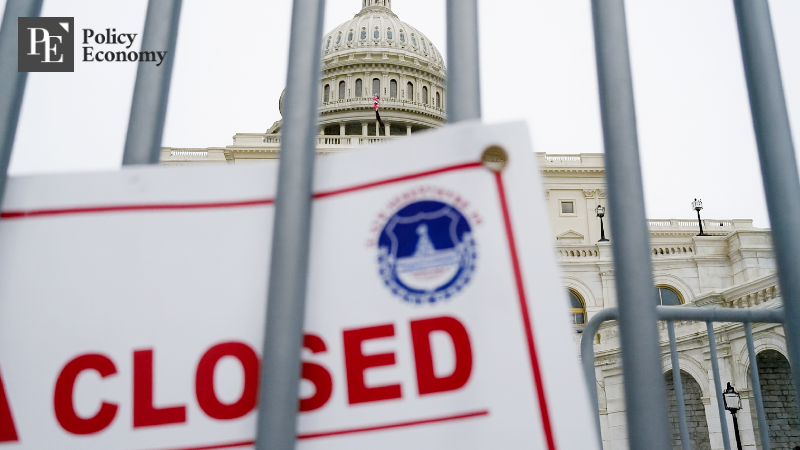
As the U.S. federal government shutdown enters its third week, cracks are spreading across the political and economic landscape. President Donald Trump has pledged to continue paying military salaries, portraying the crisis as a “controlled shutdown.” In reality, however, thousands of federal employees have already been laid off, and core administrative functions have come to a halt. With Democrats and Republicans locked in a protracted budget standoff, the shutdown is evolving from a fiscal dispute into a battle over political power and institutional control.
Trump Orders Military Pay to Continue
According to Reuters on the 15th, President Trump stated on Truth Social on October 11 that “our troops were at risk of missing their October 15 paychecks due to the Democrats’ irresponsible shutdown,” adding that “as Commander-in-Chief, I have directed Defense Secretary Pete Hegseth to use available funds to ensure that our military personnel are paid.” He added, “The necessary resources are already secured. I will not allow Democrats to hold our military and national security hostage through this dangerous shutdown.”
The Washington Post reported that Trump is seeking to directly manage the nation’s finances by continuing to fund military-related programs. His administration is said to be reallocating $8 billion from military R&D funds to cover active-duty pay. Additionally, a portion of the funding from the One Big Beautiful Bill (OBBBA) — a large-scale tax and immigration reform law signed in July — has reportedly been diverted to pay salaries for U.S. Coast Guard personnel under the Department of Homeland Security. A federal official told WP on condition of anonymity that authorities were “looking for ways to pay certain law enforcement officers who are required to work without pay during the shutdown.”
While the executive branch retains discretion over which programs to maintain or suspend during a shutdown, reallocating funds without congressional approval is tightly constrained by law. Shalanda Young, former director of the Office of Management and Budget (OMB) under the Biden administration, criticized the move, saying, “It’s Congress that decides how general funds can be spent. You can’t just take money from the Treasury and use it for whatever you want.”
White House Expects More Than 10,000 Federal Layoffs
As the shutdown halts most federal operations except for essential national security functions, staff reductions have begun in several departments. OMB Director Russell Vought announced on X that “the reductions in force have begun.” Court filings show that up to 4,000 employees have already been laid off from the Treasury and Health and Human Services Departments.
Vought warned that “the number could climb much higher, eventually surpassing 10,000.” He also indicated plans to shutter the Consumer Financial Protection Bureau (CFPB) within months, arguing that the agency “no longer protects consumers,” and confirmed that layoffs would continue “throughout the shutdown.”
The Trump administration’s actions are widely seen as an attempt to pressure Democrats. The U.S. Congress has failed to pass a new fiscal year 2026 budget, extending the shutdown beyond two weeks. Republicans are pushing for a “clean continuing resolution” that maintains current spending levels, while Democrats oppose the measure, demanding the extension of Affordable Care Act (ACA) tax credits and the restoration of low-income healthcare funding. President Trump has pinned the blame squarely on Senate Majority Leader Chuck Schumer and other Democratic leaders, urging them to “reopen the government” and accusing “radical left Democrats” of holding up the process.
Vanishing Compromise, Entrenched Distrust
While shutdowns are a recurring feature of U.S. politics, this one is markedly more severe, underscored by deepening partisan distrust. Democrats are believed to view the crisis not merely as a healthcare policy dispute but as an opportunity to reclaim oversight over Trump’s assertive executive authority. Their main demands include renewing soon-to-expire public health subsidies, but also curbing the President’s discretionary use of congressionally appropriated funds — a power Trump has previously exercised by withholding or canceling foreign aid allocations.
Unlike past shutdowns, when both parties would negotiate late into the night to reopen the government, this time there is little sign of such bipartisan effort. Instead, mutual resentment dominates. In the days leading up to the shutdown, both sides traded accusations, blaming each other for the gridlock.
House Speaker Mike Johnson, a Republican, accused Democrats of “refusing to negotiate in good faith” and “stalling for political cover,” while Schumer countered that “Republicans’ promises to discuss healthcare assistance after reopening the government can’t be trusted.” President Trump further inflamed tensions by posting controversial AI-generated images depicting Schumer and House Democratic Leader Hakeem Jeffries — the latter caricatured with a sombrero and mustache — prompting Democrats to condemn the post as racist. Vice President JD Vance dismissed the criticism outright.
The greater concern, however, lies in the economic fallout of a prolonged shutdown. About 800,000 federal employees — roughly 40% of the government workforce — have been furloughed without pay. The resulting decline in household spending, combined with halted environmental permits, patent approvals, and contractor payments, threatens to ripple through the broader economy. The shutdown adds yet another layer of uncertainty to an already fragile environment shaped by tariffs, spending cuts, immigration crackdowns, and AI policy disputes. Analysts estimate that each week of shutdown could shave up to 0.2 percentage points off U.S. GDP growth. If Trump proceeds with the mass layoffs he has threatened, the economic damage could become far more enduring.
Similar Post