“Our Food Security in Our Hands”: China Puts Food at the Heart of Its Five-Year Plan

Authored On
Modified
Food supply chain uncertainty deepens amid U.S.–China tensions
Climate change reshapes China’s agricultural map
Beijing shifts toward a technology-driven food economy
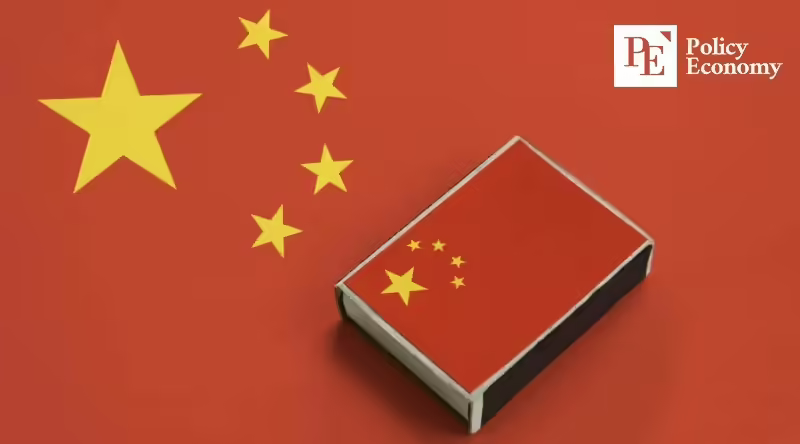
China has redefined “food security” as a top national strategy in its 15th Five-Year Plan. As trade tensions with the United States and growing climate risks converge, safeguarding the dining tables of 1.5 billion people has become not just an economic issue but a core pillar of political stability. To that end, Beijing is strengthening traditional measures such as raising grain self-sufficiency, diversifying soybean imports, and expanding farmland. Alongside these efforts, the country is advancing climate-adaptive agricultural technologies and food-tech investments—signaling a broader transformation of its food-production system.
Three-pronged strategy: Production, distribution, and reserves
According to a report by the South China Morning Post on the 16th, Beijing is expected to position food security as a central pillar in its 15th Five-Year Plan draft. In the current 14th Plan, food was already elevated alongside energy and finance as one of the three pillars of economic security, under the principle that “the rice bowl must remain in our own hands.” The renewed emphasis reflects the growing volatility of supply chains for key commodities such as soybeans, corn, and cooking oil—areas where China remains heavily import-dependent. Ren Pengtian, a professor at Renmin University, warned that “global grain flows are now effectively aligned with the U.S. and its allies,” adding that “China’s loss of food self-sufficiency could quickly translate into political risk.”
The imbalance is visible in data. According to China’s General Administration of Customs, soybean imports reached 86.18 million tons between January and September this year, up 5.3 percent from a year earlier. While China has reduced its reliance on U.S. soybeans and expanded imports from Brazil and Argentina, it remains vulnerable to policy shifts and logistical disruptions in those trading partners. To mitigate such risks, Beijing has placed dual safeguards—boosting domestic production capacity and stockpiling agricultural technology—at the forefront of its policy design.
At the same time, production infrastructure is being reinforced. The Ministry of Natural Resources reported that as of the end of last year, China’s cultivated land area totaled 129 million hectares, a 1.46 percent increase from 2020. The agricultural mechanization rate has surpassed 75 percent, and grain output has exceeded 650 million tons annually for five consecutive years, topping 700 million tons for the first time last year. This reflects efforts to strengthen the “fundamental fitness” of agriculture—spanning land, facilities, and operational efficiency.
In the technology domain, China is promoting a new productivity model that integrates artificial intelligence (AI), gene editing, and synthetic biology under the banner of “new agricultural productivity.” Yan Jianbing, president of Huazhong Agricultural University, noted that “raising corn protein content by just one percentage point could reduce feed soybean demand by as much as 8 million tons,” emphasizing that “high-protein corn, smart farms, drone-based cultivation, and data-driven management of distribution and storage must be aligned within a single production–distribution–reserve system.” In this sense, China’s food security strategy aims not merely to increase output but to build a self-sustaining structure resilient to external shocks.
Climate change hits major grain-producing regions
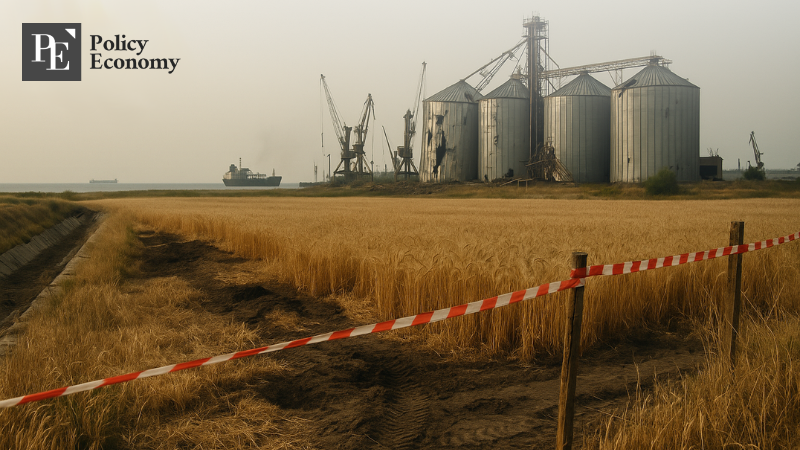
This push stems from the recognition that China has already lost significant farmland to climate change—and that the pace of loss is accelerating. A research team led by Professor Gao Peichao at Beijing Normal University projected in a study earlier this year that up to 35 percent of China’s arable land could disappear by 2100. Key grain-producing regions such as the Sichuan Basin and the northern and northeastern plains are suffering rapid salinization and desertification, with some areas nearing the point where crop cultivation may no longer be viable.
Using the “CLUMondo” land-use simulation model, the researchers found that even a 1.5°C rise in average temperature from pre-industrial levels could halve China’s high-density farmland. Large portions of cropland are expected to revert to forests and wetlands, shrinking the overall base for food production. The findings suggest that China faces a “dual risk” of falling productivity—floods and salinity in southern coastal areas, drought and warming in the north.
Although Beijing maintains a “redline” policy to preserve roughly 120 million hectares of farmland, the study calls into question its long-term feasibility. Without simultaneous advances in agricultural technology, crop diversification, and alternative proteins or synthetic foods, China’s production base may become structurally fragile. This reality underpins the 15th Five-Year Plan’s decision to elevate food security to a national survival strategy.
Investment expands into alternative proteins and new food industries
China’s growing focus on food technology, despite its vast farmland resources, reflects the understanding that climate change will not allow traditional agriculture to recover fast enough. Beijing has launched a “dual-carbon plus food security” initiative under its “Greater Food” vision, integrating emissions reduction with food resilience. The goal is to rebuild the food supply structure within ecological limits of land, water, and technology—simultaneously reducing greenhouse gases, reinforcing food security, and promoting industrial growth.
In practice, China is channeling capital into alternative proteins, cultivated meat, and plant-based food industries. In 2022, the government issued its “Plant-Based Diet Guidelines” to reduce meat dependence and designated “green biomanufacturing” as a core pillar of its next-generation food industry. Since then, dozens of startups have attracted large-scale funding to expand production facilities for cultured and plant-based proteins. Even a partial shift of China’s 1.5 billion population toward low-carbon proteins could generate enormous environmental and economic benefits.
Beijing also views reducing food loss and waste as a form of “invisible productivity.” According to the Chinese Academy of Agricultural Sciences, 20.7 percent of major grain output is lost during distribution, and cutting that loss by just 8 percentage points could recover 55 million tons annually. Based on such findings, the government is prioritizing cold-chain infrastructure expansion and blockchain-based traceability to minimize waste. Plans include scaling up eco-friendly packaging and temperature-controlled logistics to boost distribution efficiency.
On the global front, China is promoting a transition toward a “sustainable food economy.” A notable example is its agreement with Brazil to import 1.5 million tons of soybeans certified as deforestation-free since 2020. However, in palm oil and other forest-based crops, weak certification systems and limited participation by small producers remain unresolved challenges. Against this backdrop, Beijing is positioning the concept of a “climate-resilient dining table” as a new national symbol—accelerating its shift from land-based agriculture to a technology-driven food economy.
Similar Post