“Get Out While You Can” — Foreign Investors Dump Chinese Real Estate Amid Economic Slump

Authored On
Modified
Chinese Property Investors Rush to Cut Losses and Exit the Market
Many Failing to Recover Even Their Principal as Losses Deepen the Longer They Hold
Property Slump Accelerates China’s Deflationary Pressures
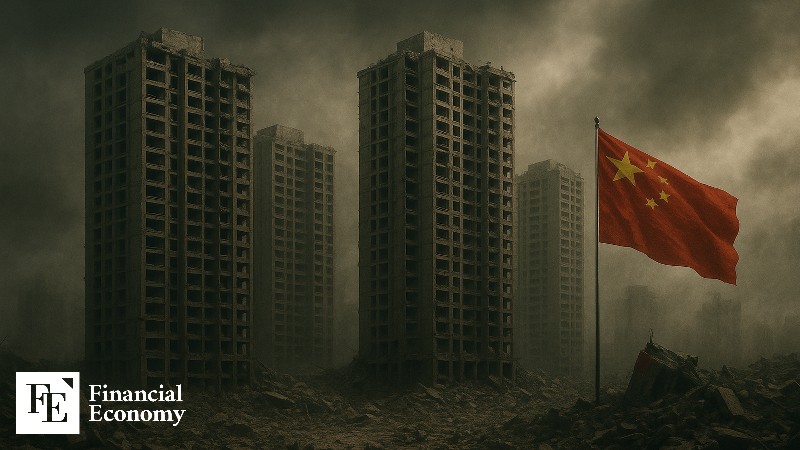
Global investors who once poured money into China’s property sector are now facing mounting losses. A wave of government restrictions imposed during the COVID-19 pandemic has plunged the real estate market into a prolonged slump, triggering sharp declines in asset values and widespread sell-offs. The chill sweeping through the property sector is now dealing a serious blow to China’s broader economy, which is struggling to maintain its 5% growth target.
Chinese Property Investors Taste Bitter Losses
According to a Bloomberg report on October 21 (local time), major global asset managers including BlackRock and the Carlyle Group have begun selling commercial properties in China at prices far below their purchase cost since late 2024. Foreign institutions are cutting their losses and pulling out of the Chinese market one after another.
Data from MSCI Real Capital Analytics show that over the past 15 years, foreign investors poured roughly 140 billion dollars into Chinese real estate — including office towers, logistics centers, shopping malls, and data centers — betting that the property market would continue to grow. That optimism has since collapsed. The China Index Academy reported that from January to July 2025, total sales by the country’s top 100 developers reached 2.07 trillion yuan (about 290 billion dollars), down 13.3 percent from a year earlier. The sharp decline underscores the deep structural crisis facing China’s property sector.
Home prices continue to fall as well. According to the China Index Academy’s September Real Estate Market Trends Report, the average price of existing homes across 100 major cities dropped to 13,381 yuan (about 1,830 dollars) per square meter in September — down 0.74 percent from the previous month and 7.38 percent year-on-year. The cumulative third-quarter decline stood at 2.26 percent, widening slightly from Q2, while prices fell 5.79 percent over the first nine months of the year.
Wave of Forced Sell-Offs
Foreign investors are resorting to fire sales as prolonged exposure only deepens their losses. The estimated market value of prime office properties in Beijing and Shanghai — key assets for foreign capital — has plunged at least 40% from its 2019 peak. According to CBRE, China’s nationwide office vacancy rate neared 25% last year, while major cities hovered between 20% and 40%, among the highest globally. Shanghai’s oversupply is expected to persist until at least 2028.
The grim reality of China’s property market becomes clearer through specific cases. The Carlyle Group, managing funds from Korea’s National Pension Service (NPS), purchased the 31-story Shanghai office tower The Crest for about 2.15 billion dollars in 2015 but struggled for over a year to find a buyer before selling it in late 2024 for just 1.2 billion — only 57% of the original investment and even below the 1.4 billion loan secured by the asset. Vacancy rates surged from 4.6% at the time of purchase to over 23% by the sale.
BlackRock likewise abandoned repayment on loans tied to its two Waterfront Place office buildings in Shanghai, forfeiting its 59 million dollars in equity. The creditor consortium, SC Group, later sold the properties in March 2025 for roughly 110 million dollars, failing to recover the 125 million in principal owed.
Analysts see no quick recovery ahead. Patrick Wong, senior analyst at Bloomberg Intelligence, said, “Foreign investors are trapped in China’s property market. The only exit is through cash-rich state-owned enterprises, but even they are waiting for signs of improvement.” Nicholas Wilson, Asia property lead at Oxford Economics, added, “A recovery isn’t in sight — rents will likely continue falling through 2026, and by 2030, property values could drop below 2020 levels, marking a ‘lost decade’ for China’s commercial real estate sector.”
China’s Deflation Crisis Deepens
The property market slump is not only devastating global investors but also dealing a severe blow to China’s domestic economy. Before the COVID-19 pandemic, the Chinese government relied heavily on real estate development as a key source of fiscal revenue. Local governments, which faced borrowing restrictions, generated income by selling land-use rights to private developers — a system where rising land prices directly boosted local revenues and, in turn, fueled a nationwide property boom. As property values surged, the real estate sector grew to account for nearly 30% of China’s GDP, becoming one of the country’s main economic pillars.
However, the situation changed dramatically in 2020 when President Xi Jinping’s administration introduced the so-called “three red lines” policy. The rules required developers to maintain a liability-to-asset ratio below 70%, a net gearing ratio under 100%, and a cash-to-short-term debt ratio above one. Developers that failed to meet these criteria were banned from taking on new debt. The policy aimed to curb excessive speculation and reduce financial risk but instead triggered a liquidity crunch at a time when the economy was already reeling from pandemic-related uncertainty. Within just the first half of 2021 — the year after the policy was implemented — roughly 200 Chinese real estate firms went bankrupt.
Since then, the tightening measures have accelerated China’s deflationary spiral. The country’s GDP grew just 4.8% in the third quarter of this year, falling below the 5% threshold for the first time in 2025 and marking its weakest performance since Q3 2024 (4.6%). The main drag on growth: collapsing property investment. From January to September, real estate development spending plunged 13.9% year-on-year, underscoring how deeply the sector’s decline is weighing on China’s broader economy.
Similar Post