Samsung to Equip Entire Galaxy S26 Lineup with In-House Exynos AP for the First Time in Four Years, Signaling Profitability Boost

Authored On
Modified
Exynos to Power Even the Ultra Model
Yield Improvement to 50% from Initial 30%
Positive Outlook for Both Semiconductor and Smartphone Divisions
Samsung Electronics is set to strengthen its system semiconductor competitiveness by equipping its upcoming flagship smartphone series, the Galaxy S26, with its in-house mobile application processor (AP), the Exynos 2600, for the first time in four years. With yield rates improving and performance enhanced through a separated AP–modem architecture, the Exynos 2600 is emerging as a key driver of a turnaround for the company’s System LSI business next year. The move is also expected to bolster the competitiveness of Samsung’s MX (Mobile eXperience) division by reducing its dependence on Qualcomm.
Mass Production of Exynos 2600 to Begin in November
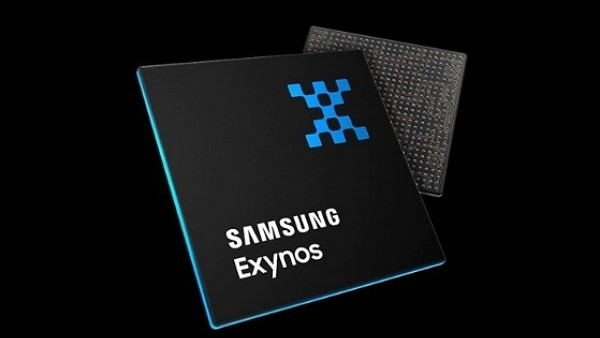
According to the semiconductor industry on October 21, Samsung’s System LSI division has completed development of the Exynos 2600 and will begin mass production in November for use in the Galaxy S26 lineup. The company plans to reintroduce its in-house AP even in the Ultra model, marking a return after a four-year hiatus. Designed by the System LSI division and fabricated by Samsung’s Foundry arm, the Exynos serves as the “brain” of the smartphone, determining its overall performance.
Samsung began wafer input for Exynos 2600 production last month, followed by wafer fabrication and testing processes conducted by partner firms. Packaging and final tests were completed internally. The chip is produced on Samsung’s most advanced SF2 process, incorporating third-generation gate-all-around (GAA) transistor technology, which delivers higher performance and energy efficiency compared with the previous SF3 node.
From Integrated SoC to Split Design: AP and Modem Separation
The accelerated improvement in production yields has been a key factor enabling Samsung to start mass production earlier than expected. Yields for the SF2 process, initially hovering around 30%, have risen to roughly 50% in the third quarter. The prior model, Exynos 2500, suffered from low yields and was excluded from the Galaxy S25 lineup, resulting in heavy losses for the System LSI business. To recover, Samsung has since focused its resources on developing and stabilizing the Exynos 2600.
Performance levels have also advanced significantly. Internal testing indicates that the Exynos 2600’s neural processing unit (NPU) delivers over six times the performance of Apple’s A19 Pro in large language model (LLM) and other generative AI workloads. Its multi-core CPU performance is about 15% higher than the A19 Pro, while its GPU performance exceeds Apple’s by 75%. Multimedia processing capabilities are reportedly superior to both Apple’s A19 Pro and Qualcomm’s Snapdragon 8 Gen 5 Elite.
For the first time, Samsung has separated the AP and modem components previously integrated within a single system-on-chip (SoC). This architectural shift allows the CPU and GPU to utilize additional area on the chip previously reserved for the modem, further improving performance. Industry observers note that with SF2 process maturity currently around 85% of target levels, additional refinements could yield further gains in Exynos 2600 performance.
Reduced Dependence on Qualcomm to Lower Smartphone Costs
With the Exynos 2600 now confirmed for use in the Galaxy S26 series, expectations are growing for a turnaround in the System LSI division’s earnings next year. Samsung’s MX division is also poised to benefit, as in-house AP integration will reduce reliance on Qualcomm and improve cost efficiency. Although the Galaxy S25 lineup—launched earlier this year—was well received for its Galaxy AI features and refreshed OS, exclusive use of Qualcomm’s Snapdragon 8 Gen 5 Elite increased production costs and weighed on profitability.
According to Samsung’s business report, the DX (Device eXperience) division spent $34.7 billion on mobile AP purchases in the first quarter, up 37.16% from $25.3 billion a year earlier. The proportion of mobile AP costs in total raw material expenses rose from 18.7% to 22.5% during the same period. With Taiwan’s TSMC—manufacturer of Qualcomm’s APs—continuing to raise advanced-node prices, Qualcomm’s AP costs have also increased. Last year, Samsung’s total mobile AP procurement expenses were up about 19% year-on-year.
Industry analysts expect Samsung’s turnaround momentum to accelerate as both DRAM and system semiconductor businesses rebound. Losses are projected to narrow further in the fourth quarter as Exynos 2600 shipments ramp up. The outlook for next year is even brighter: Samsung will begin producing Tesla’s autonomous driving chip AI6 and Apple’s image sensors. The company signed a $16.5 billion foundry contract with Tesla in July and secured an image sensor supply deal for iPhones and iPads with Apple in August.
Similar Post