“Dollars Came In, but Trust Flowed Out”: Argentina’s Crisis and the Uneasy Parallels for Korea

Authored On
Modified
Limited real effects, symbolic diplomacy at best
Argentina collapses under reform fatigue
The illusion of swap reliance—Korea’s warning sign
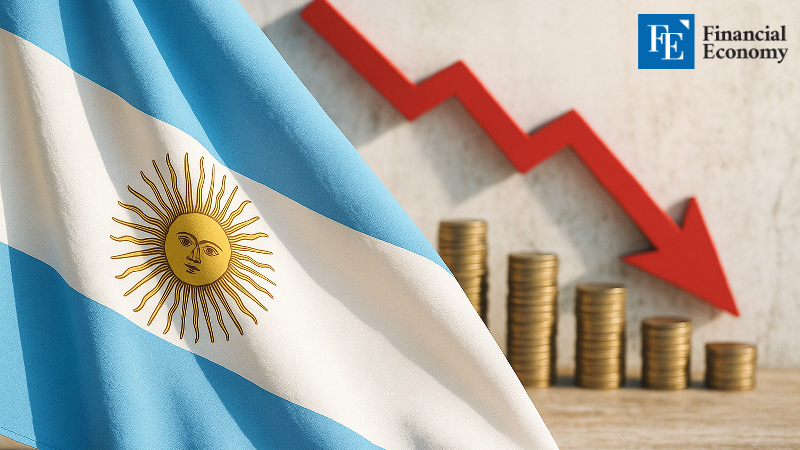
Argentina’s financial crisis has reignited alarm across global markets. President Javier Milei’s so-called “chainsaw reforms” have drained the nation’s economic vitality, and even the United States’ $20 billion swap line and direct peso purchases have failed to trigger recovery. Experts describe the situation as proof that external liquidity alone cannot restore confidence. Markets now trust consistent policies and internal resilience more than short-term “dollar promises.” The true cause of crisis, they argue, lies not in the absence of swaps but in the erosion of economic fundamentals—a reality casting an uneasy shadow over Korea as it faces surging U.S. investment commitments and a weakening won.
Peso slides despite Washington’s currency defense
The U.S. Treasury this month signed a $20 billion currency-swap agreement with Argentina’s central bank and began direct peso purchases. Treasury Secretary Scott Besant said on social media that “Argentina faces a severe liquidity shortage” and that “the United States stands ready to take any exceptional action needed to stabilize markets.” He stressed, “While the international community supports Argentina’s prudent fiscal path, only the U.S. can act swiftly—and we have directly purchased pesos.”
Markets initially rallied. The Argentine stock index, which had hit its yearly low, jumped 5.3 percent on July 9, and the peso, which had fallen 3 percent the day before, closed 0.8 percent stronger at 1,418 per U.S. dollar. Yet analysts viewed this as a short-term correction triggered by the swap announcement and direct purchases. Because Washington disclosed neither the swap interest rate nor repayment terms, links between reform progress and repayment remain opaque. The signal effect was clear, but actual foreign-currency inflows are still uncertain.
Private-sector participation also appears shaky. The Wall Street Journal reported that half of the $40 billion (government swaps + private loans) relief package relies on bank lending. However, JPMorgan, Goldman Sachs, and Citigroup said loans would be impossible without sovereign guarantees. They noted that Argentina’s nine defaults make its bonds too heavily discounted to serve as collateral. With private funding blocked, the U.S. program’s liquidity impact could shrink by half.
As a result, sentiment turned negative again. Despite reports of three peso-purchase rounds this month, the currency fell to a record 1,477 per dollar—near the lower end of its April exchange-rate band. Investors, betting on persistent liquidity gaps rather than further U.S. intervention, widened risk premiums. Markets also reacted to news that Economy Minister Luis Caputo had injected $500 million during the election period, raising doubts about policy consistency. For these reasons, analysts see Washington’s action as little more than a temporary patch.
Inflation and unemployment surge amid failed confidence recovery
Since taking office, President Milei’s administration has pursued radical austerity—cutting subsidies, shrinking public payrolls, and privatizing state firms—in an effort to tame inflation. The outcome, however, was the collapse of domestic demand and jobs. Repeated currency interventions drained reserves, while an overvalued peso eroded export competitiveness. Companies, citing unstable financing costs, postponed investments.
The broader economy shows clear signs of strain. Inflation has eased from its peak, but unemployment has climbed from 5.7 to 7.6 percent, while public-transport and energy prices have soared more than 300 percent. The Financial Times noted that “plummeting household sentiment has stripped inflation control of its meaning.” Artificial peso strength, it argued, is undermining growth potential—evidence that Milei’s rapid-fire reform blitz has outpaced the economy’s ability to adjust.
Political turmoil has further shaken markets. U.S. economists estimate the Treasury’s peso purchases at only $400 million, far below expectations. Meanwhile, Argentina’s net foreign reserves have dropped below $5 billion, raising questions about its defense capacity. Non-deliverable-forward (NDF) rates already price the peso below 1,600 per dollar by year-end, implying expectations of further depreciation. Even if external aid buys time, the combination of eroding political support and dwindling liquidity rapidly weakens currency-defense credibility.
Such concerns fuel the academic backlash against the swap strategy. Paul Krugman of the City University of New York wrote in a column titled “Whose Rescue?” that “without government guarantees, private capital won’t move; with reserves near exhaustion, additional aid has little effect.” He warned that “unless reform pacing and foreign-reserve strategies are synchronized, markets will view any rebound as a temporary mirage.” As long as artificial currency strength drains reserves, large-scale U.S. support is unlikely to produce real gains.
Safety net or symptom of mistrust?
The parallels with Korea are hard to ignore. Seoul, facing dollar shortages linked to its $350 billion U.S. investment program, has reportedly proposed an “unlimited swap line” with Washington. Yet analysts note that the U.S. Exchange Stabilization Fund (ESF) holds only $43.4 billion, roughly half of which—$20 billion—has already gone to Argentina, leaving little room for Korea. Moreover, the Federal Reserve is seen as highly unlikely to establish unlimited swaps with non-reserve-currency economies.
Bank of Korea Governor Rhee Chang-yong also downplayed the idea’s effectiveness. Speaking before the National Assembly’s finance committee on the 20th, he said, “It is well known that the U.S. ESF is limited in size. Currency swaps serve short-term liquidity purposes; they are not instruments for long-term investment like the $350 billion commitments.” Overreliance on external liquidity, he cautioned, can heighten rather than ease market anxiety; real confidence must come from a country’s own capacity to stabilize markets.
In that light, Argentina’s experience underscores that currency swaps are no cure-all. External support may buy time, but without internal growth drivers and policy credibility, markets quickly expose structural weaknesses. The same lesson applies to Korea: the stability of the won hinges not on swap lines but on the alignment of monetary and fiscal policy and the economy’s fundamental strength. Dependence on temporary dollar facilities may cushion short-term volatility, yet it cannot disguise deeper fragilities—a point experts agree remains the core warning of Argentina’s crisis.
Similar Post