US Teams Up with Australia on Rare-Earth Supply Chain to Counter China’s Chip Export Controls

As one of the youngest members of the team, Tyler Hansbrough is a rising star in financial journalism. His fresh perspective and analytical approach bring a modern edge to business reporting. Whether he’s covering stock market trends or dissecting corporate earnings, his sharp insights resonate with the new generation of investors.
Authored On
Modified
US and Australia Pour 3 Billion Dollars into Minerals Project
“China’s Rare-Earth Export Curbs Resemble Pearl Harbor Attack,” Analysts Warn of Escalating Tensions
US Invests in Domestic Rare-Earth Supply Chain, but Progress Remains Slow
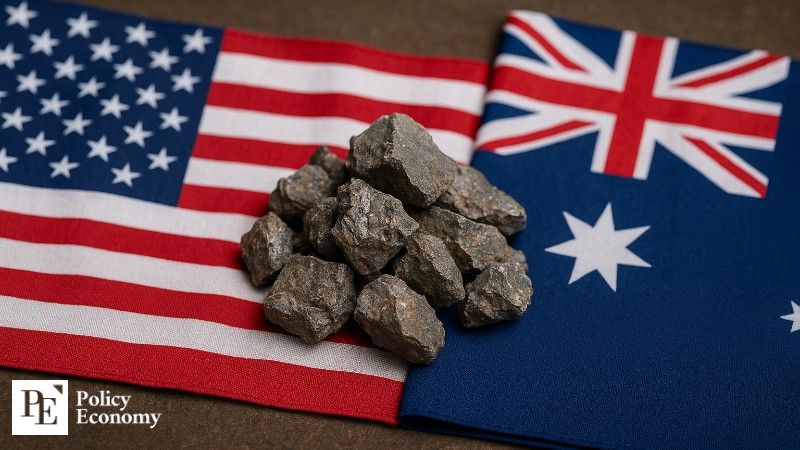
US President Donald Trump has established a rare-earth cooperation network with resource-rich Australia. As China tightens its export controls on rare earths, reigniting tensions between Washington and Beijing, the United States is moving to strengthen alliances and diversify its supply chains. Markets are now watching closely to see whether this effort will help the U.S. reduce its long-standing dependence on Chinese rare-earth materials.
US and Australia Join Hands to Secure Their Own Rare-Earth Supply Chain
On October 20 (local time), President Donald Trump met with Australian Prime Minister Anthony Albanese at the White House and signed a joint “US–Australia Framework for the Stable Supply of Critical Minerals and Rare Earths.” As China, the world’s largest rare-earth exporter, has used rare-earth exports as leverage in trade talks with Washington, the United States signaled its intent to diversify supply sources by strengthening cooperation with resource-rich Australia. Earlier on October 9, China expanded its export control list from seven to twelve types of rare-earth materials and included products made abroad using Chinese rare earths or related technologies. The new restrictions will take effect on December 1.
In the agreement, the two countries declared that they would “enhance joint efforts to accelerate the stable supply of critical minerals and rare earths essential for national defense and advanced manufacturing.” They also pledged to mobilize public and private sector funds through guarantees, loans, equity investments, and regulatory support to finance capital and operating costs for mining and processing projects.
According to the White House, under the framework, the two governments plan to jointly invest more than 3 billion dollars over the next six months in critical mineral projects, with potential resource recovery valued at around 53 billion dollars. The U.S. Export-Import Bank (EXIM) has issued seven letters of intent for financial support totaling over 2.2 billion dollars, aiming to leverage a total of 5 billion dollars in overall investment.
Why Did the US Respond So Quickly?
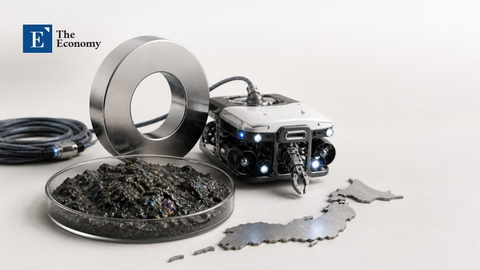
Following the new framework, the US Department of War plans to invest in building a gallium refinery in Western Australia with an annual capacity of 100 metric tons. According to the Center for Strategic and International Studies (CSIS) in Washington, DC, the initiative is expected to become a joint project among the United States, Australia, and Japan. Japan, which classifies gallium as a “critical mineral,” has shown significant interest in the project as part of its supply chain stabilization strategy and is reportedly planning to purchase refined gallium for domestic use and export to other countries.
Washington’s swift, coordinated action with its allies stems from the severity of China’s rare-earth export restrictions—described by some as “akin to the Pearl Harbor attack.” During a briefing in Washington, DC, on October 20 ahead of President Trump’s Asia tour, a former senior US administration official remarked that “there are people within the administration who understand the gravity of this situation, and some even argue it is almost comparable to Pearl Harbor.”
The official added, “This move isn’t aimed solely at the United States—it also targets its allies and partners. The reason Washington focused on this issue at that time was because preparations for Australian Prime Minister Anthony Albanese’s visit were underway.” He noted further, “If you look at President Trump’s social media posts, he has been emphasizing allies and partners—something quite rare for a leader who typically approaches issues through the lens of domestic and personal interests.”
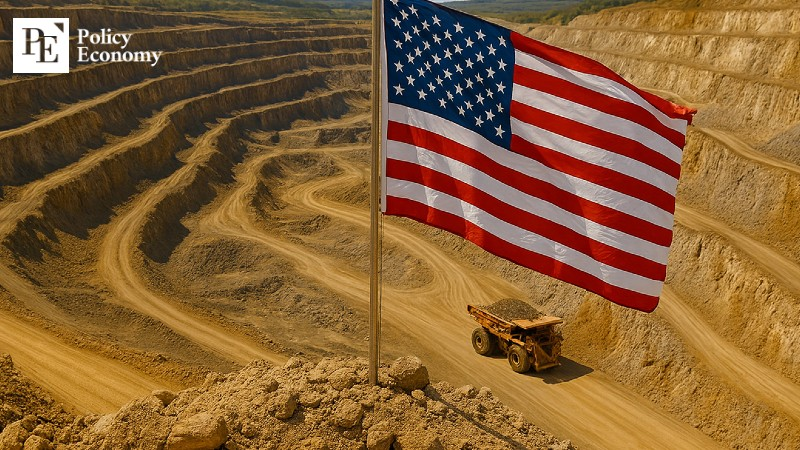
US Efforts to Secure Its Own Rare-Earth Supply Chain
The United States has long sought to reduce its dependence on China by building an independent rare-earth supply network. One notable example came in July, when the government acquired a 15% preferred equity stake worth 400 million dollars in Nevada-based MP Materials. The move is seen as an effort to expand the company’s production capacity at its Mountain Pass mine in California and to establish a self-sufficient supply chain for defense and industrial-use rare-earth magnets within the United States.
Founded in 2017, MP Materials is a mining and processing company that operates Mountain Pass—the only rare-earth mine in the country—and runs a production facility for rare-earth metals and magnets in Fort Worth, Texas. This structure gives the company a fully integrated domestic supply chain, from raw ore to finished products. Through the new equity deal, MP plans to rapidly expand its magnet manufacturing capacity to ten times the current level. The U.S. government has indicated that it may inject additional funding worth several billion dollars to support the expansion. The contract also includes a “minimum price guarantee” clause and a ten-year long-term supply agreement to guard against price collapses driven by China’s aggressive undercutting in global markets.
Still, most analysts agree that the U.S. has yet to establish meaningful competitiveness in the rare-earth sector. According to the U.S. Geological Survey, the country’s 2024 rare-earth output is estimated at about 45,000 tons, ranking second globally but far behind China’s 270,000 tons. MP’s current target for permanent magnet production—about 1,000 tons per year—accounts for less than 1% of China’s output. However, continued investment and closer cooperation with allies could eventually strengthen U.S. production capacity and narrow the gap.
As one of the youngest members of the team, Tyler Hansbrough is a rising star in financial journalism. His fresh perspective and analytical approach bring a modern edge to business reporting. Whether he’s covering stock market trends or dissecting corporate earnings, his sharp insights resonate with the new generation of investors.
Similar Post