Korea at the Center of Global Tariff Tensions as U.S. and EU Tighten Rules on Transshipment

Stefan Schneider brings a dynamic energy to The Economy’s tech desk. With a background in data science, he covers AI, blockchain, and emerging technologies with a skeptical yet open mind. His investigative pieces expose the reality behind tech hype, making him a must-read for business leaders navigating the digital landscape.
Authored On
Modified
Chinese exports disguised as “Made in Korea” surge
Risk of being labeled a rerouting hub raises trade concerns
Industry losses likely, urgent need for stronger trade defenses
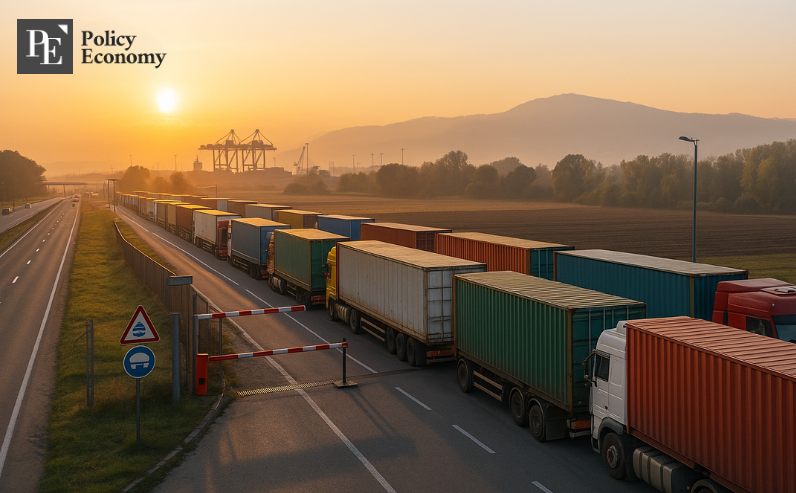
Chinese exporters are increasingly rerouting goods through third countries to evade U.S. tariffs—turning Korea into a critical flashpoint in global trade enforcement. Korea’s customs authority reported that exports disguised as Korean-made exceeded $2.5 billion this year, prompting the government to introduce new regulations that classify third-country assembly as “circumvention dumping” starting next year. With global trade barriers tightening, Korea faces growing pressure to avoid being branded as a tariff-evading transit hub.
U.S. moves to close tariff loopholes
Korea’s Ministry of Economy and Finance recently announced draft amendments to the Enforcement Decree of the Customs Act, setting detailed criteria for determining when products assembled or completed in a third country qualify as circumvention dumping. The update follows the ministry’s August decision to expand anti-dumping coverage to include goods that use third-country assembly to bypass tariffs. Previously, only cases involving minor modifications in the exporting country were considered circumvention; now, products assembled or completed outside both the exporting and importing nations may also face penalties.
The six new assessment criteria include: the nature of processing, total production costs, scale of facilities and capital investment, share of parts and materials sourced from the dumping country, value added in the third country, and changes in trade flows before and after anti-dumping measures. A government official explained, “For example, if China ships raw materials to Vietnam for processing and the goods are then exported to Korea, we must determine whether the process is designed to evade anti-dumping duties that would normally apply to direct imports from China.”
The government’s tougher stance reflects a surge in low-cost export practices by foreign companies. Trade data shows China’s total global exports reached $3.05 trillion in the first half of this year—up 6 percent year-on-year—despite U.S. tariff pressure. China’s industrial output rose 6.1 percent in April, and second-quarter GDP growth exceeded 5 percent, marking strong performance even under the highest tariff rates since the 1930s.
Competition heats up, raising regulatory risks
Authorities believe a substantial portion of Chinese exports are entering the U.S. market disguised as products of other nations, including Korea. Korea Customs Service data shows that between January and August this year, disguised exports reached $2.55 billion, up 1,313 percent by value and 150 percent by volume from a year earlier. Notably, 98 percent of these rerouted exports were bound for the U.S., placing Korea under scrutiny as a possible transshipment hub. With the U.S. maintaining high tariffs and tightening import restrictions on Chinese goods, Chinese firms appear to be systematically using Korean trade routes to rebrand their exports.
To counter this, Korea Customs established a Special Trade Security Investigation Unit under the “U.S. Tariff Policy Response Headquarters” in April. Using AI-driven big data, the task force monitors export patterns and cargo flows in real time. Investigations revealed that the majority of disguised exports involved high-tariff items such as precious metals and paper products. Cases included Chinese and Vietnamese gold products falsely claiming Korean origin under the Korea-U.S. Free Trade Agreement to enter the U.S. at zero tariff rates—while being reported as foreign goods to Korean customs.
Other examples included Vietnamese tarpaulins rebranded as Korean-made for U.S. government procurement, and Chinese steel flanges (subject to up to 257.11 percent anti-dumping duties) engraved as Korean products. Chinese-made paper shopping bags were relabeled to evade tariffs as high as 172.36 percent, and similar tactics were detected in the EU, where Chinese melamine was repackaged as Spanish origin. These findings reveal a shift from simple labeling fraud to complex “multi-layer laundering,” involving falsified certificates of origin, trade declarations, and shipping routes.
The greater concern is reputational damage to Korea’s trade credibility. If foreign goods continue entering the U.S. market disguised as Korean-made, trust in Korean exports will erode, and Korea risks being officially designated a “rerouting country.” In August, the U.S. announced an executive order requiring semiannual disclosure of countries and companies caught engaging in transshipment, with violators facing 40 percent additional tariffs and procurement bans. To minimize both industrial losses and diplomatic fallout, Seoul must strengthen its trade defense systems urgently.
Corporate losses mounting, urgent need for protection
Meanwhile, the European Union is also moving to counter rerouted Chinese exports. The European Commission has formed a joint task force with all 27 member states to monitor import surges by product and route, particularly for goods potentially diverted to Europe following the Trump administration’s tariffs of up to 145 percent on Chinese products. The EU is using customs and shipping data to identify anomalies, targeting overcapacity sectors such as steel, machinery, and intermediate goods. Rapid-response tools—safeguard measures, import quotas, and additional surcharges—are being prepared for potential activation.
At the heart of the EU’s efforts is a commitment to blocking circumvention routes. When Chinese goods enter Europe through Southeast Asia or under false origin claims, the EU plans to impose quotas and tighten origin verification. While cooperating with the U.S. in curbing China’s industrial overcapacity, the EU is also drawing clear lines to protect its own market from secondary shocks, even considering WTO disputes and retaliatory tariffs if necessary.
For Korea, this sends a clear signal: as Europe restricts quota volumes and closes rerouting channels, Korean industries risk becoming both competitors to Chinese rerouted goods and unintended regulatory targets. If re-exported goods disguised under bonded trade, third-party names, or transshipment via FTA routes are discovered, penalties could escalate from corporate sanctions to national trust damage. With anti-dumping petitions already at record highs in Korea, calls are growing for tighter pre-clearance reviews, stricter origin verification, and a comprehensive upgrade of the trade defense framework.
Stefan Schneider brings a dynamic energy to The Economy’s tech desk. With a background in data science, he covers AI, blockchain, and emerging technologies with a skeptical yet open mind. His investigative pieces expose the reality behind tech hype, making him a must-read for business leaders navigating the digital landscape.
Similar Post