LG H&H Ends 17-Year Growth Streak, Offers Voluntary Retirement Amid Slumping China Sales

Authored On
Modified
Gradual downsizing of department store and duty-free channels
Two consecutive years of negative growth after pandemic-driven China slump
Slow entry into M&A and beauty device market
LG Household & Health Care (LG H&H) has begun offering voluntary retirement to employees in its Beauty Division, including sales and promotional staff. The move reflects a structural realignment following the gradual phase-out of offline retail channels such as duty-free and department stores, as its core beauty business continues to underperform. Once one of Korea’s “top two” cosmetics powerhouses with 17 consecutive years of growth, LG H&H has now posted two straight years of contraction following a steep drop in China sales after the COVID-19 pandemic. Industry analysts say the company failed to adapt swiftly to fast-changing beauty trends, deepening the decline in performance.
Restructuring Following Withdrawal from Offline Channels
According to the beauty industry on October 22, LG H&H began accepting applications for voluntary retirement on October 20 and will continue until the 31st. The program targets beauty division employees engaged in sales, promotion, and training who were born before December 31, 1990. Both active and on-leave employees are eligible. Following a screening process after the application deadline, results will be announced between November 3 and 7, with retirement and handover procedures to be completed by November 20, and final separation scheduled for November 21.
Eligible employees will receive compensation equivalent to 20 months of base salary, along with a living support subsidy, reemployment incentive, and education grants. The reemployment incentive varies by age: $7,300 for those aged 35–39, $14,600 for 40–49, and $18,300 for 50–59. The living support subsidy is $14,600. Education grants are also available—$3,600 for middle school, $5,100 for high school, and up to $10,900 per year for college tuition, capped at four semesters.
This is not LG H&H’s first round of voluntary retirement. The company first implemented the measure after a 2023 spinoff, targeting managerial staff over 50, resulting in roughly 20 departures. “As offline retail channels like duty-free and department stores gradually contract, we have been reviewing ways to realign our workforce in response to the shifting distribution environment,” the company said. “We plan to operate a voluntary retirement program in November to help participants plan their next stage of life.”
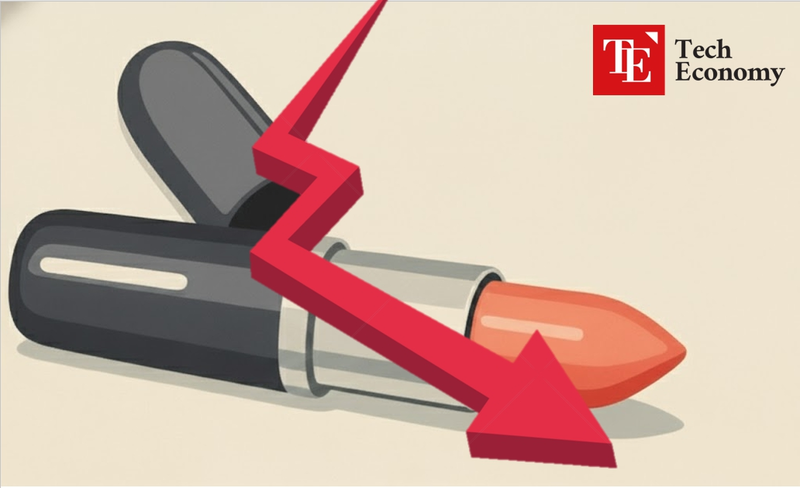
Beauty Division Turns to Deficit as Duty-Free Sales Collapse
Industry sources view this restructuring as a self-rescue effort following steep declines in the Beauty Division’s performance. According to LG H&H’s filing with the Financial Supervisory Service, the company’s second-quarter revenue fell 8.8% year-on-year to $11 billion, while operating profit plunged 65.4% to $38 million. For the first half, revenue totaled $23 billion, down 5.4% year-on-year, and operating profit fell 36.3% to $138 million.
The slump was particularly severe in the beauty segment. The division posted an operating loss of $11 million in the second quarter—the first deficit since the fourth quarter of 2004—while revenue dropped 19.4% year-on-year to $417 million. Duty-free sales, one of the company’s key channels, plummeted 63% to $79 million, cutting its share of total sales by five percentage points over the past year. Core China market revenue also declined more than 8%, further amplifying losses.
LG H&H’s market capitalization has also slid sharply. As of August, following its second-quarter earnings announcement, the company’s valuation stood at $3.3 billion, trailing APR ($6.2 billion) and Amorepacific ($5.4 billion), dropping it to third place in Korea’s beauty sector. Despite its plans to intensify restructuring, market sentiment remains bleak. Brokerages have revised LG H&H’s 2025 operating profit forecast down by 33% and lowered their target price from $290 to $210 per share.
Revenue Hit from China Reseller Price Disruptions
LG H&H’s decline began in earnest in 2020, at the onset of the pandemic. The company had weathered earlier shocks such as the THAAD missile defense dispute and the MERS outbreak, maintaining 17 straight years of growth in both revenue and profit to earn the title of “K-beauty leader.” However, as sales in its largest market—China—collapsed, growth momentum broke. After reaching a record $5.7 billion in 2021, revenue fell to $5 billion in 2022 and $4.8 billion in 2023, marking two consecutive years of contraction. Its heavy reliance on duty-free channels has also been cited as a key weakness. Following widespread price disruptions among Chinese resellers, LG H&H deliberately scaled back duty-free supply to protect the premium image of its flagship brand, The History of Whoo—an inevitable move that nonetheless took a short-term toll on sales.
The company’s conservative approach to mergers and acquisitions (M&A) has also drawn criticism. Over the past three years, LG H&H has acquired only one beauty brand—Hince. Competitors, by contrast, have aggressively pursued “brand aggregator” strategies, acquiring promising e-commerce-based brands and integrating them with existing retail and marketing platforms to maximize efficiency and growth. For example, Goodai Global has acquired five brands over the past three years and is adding two more in 2025. The company’s consolidated revenue is projected to surge from $25 million in 2020 to $1.2 billion this year, while EBITDA is expected to jump from $90 million to $315 million.
LG H&H’s delayed entry into the beauty device sector has also been viewed as a strategic misstep. The company’s flagship example is Pra.L—a premium skincare device launched by LG Electronics in 2017, when the beauty tech market was still in its infancy. The device failed to gain mass appeal due to its high-end positioning. Although LG H&H took over the Pra.L business this year, it now faces a mature market dominated by fierce competition, where profitability will be difficult to achieve. In contrast, market leader APR launched its AGE-R brand in 2021, effectively pioneering the mass-market beauty device segment. By integrating skincare devices with cosmetic products, APR has successfully driven repeat purchases, rapidly expanding its contribution to overall earnings.
Similar Post