Gmarket Partners with Alibaba, to Invest 500 Million Dollars Next Year in Seller Support and Global Expansion

As one of the youngest members of the team, Tyler Hansbrough is a rising star in financial journalism. His fresh perspective and analytical approach bring a modern edge to business reporting. Whether he’s covering stock market trends or dissecting corporate earnings, his sharp insights resonate with the new generation of investors.
Authored On
Modified
Gmarket to Invest 500 Million Dollars in 2026
Leveraging Alibaba’s Capabilities to Expand Overseas Channels
Can the Company Rebound Amid Worsening Performance?
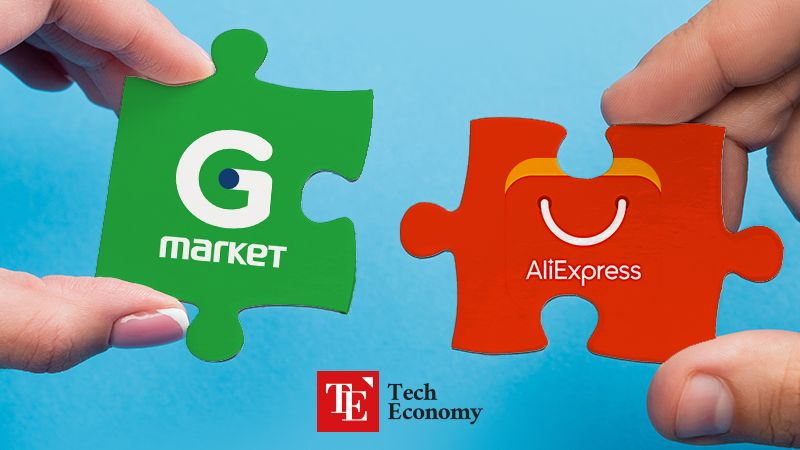
South Korea’s e-commerce platform Gmarket, which recently partnered with China’s Alibaba Group, has announced sweeping changes ahead. The company plans to invest heavily in seller support, customer benefits, and artificial intelligence (AI) technology to strengthen its domestic platform competitiveness while accelerating global expansion through the export of Korean products.
Gmarket’s Ambitious Growth Vision
At a media day event held at COEX in Seoul’s Gangnam District on October 21, Gmarket unveiled its new slogan, “G-Market = Global–Local Market,” signaling its ambition to become a leading e-commerce platform connecting domestic and international markets. To realize this vision, the company plans to invest 500 million dollars next year alone.
Of this, about 350 million dollars will go toward supporting sellers. Gmarket will allocate roughly 250 million dollars to direct seller support programs designed to boost promotions and sales. For large-scale events like “Big Smile Day,” in which all sellers can participate, the company will cover all customer discount costs itself. It also plans to spend more than 14 million dollars annually—50% more than before—on nurturing new and small-scale sellers. In addition, Gmarket will introduce a new “zero-commission” policy, temporarily waiving platform fees to help new sellers establish themselves more quickly.
The company also plans to invest about 70 million dollars annually over the next three years to advance artificial intelligence technologies, a key driver in the e-commerce industry. Starting next year, Gmarket will enhance its “multimodal search” capabilities to improve the shopping experience. This technology goes beyond simple text-based input, analyzing unstructured data such as tone and texture to better understand customer intent and return more relevant results. For example, when a shopper searches for “soft running shoes,” the system interprets attributes like “softness” and “material” through image recognition to display the most suitable products.
Accelerating Global Expansion
Gmarket’s overseas growth strategy, the second key pillar of its plan, is being driven through Alibaba’s global network. After receiving approval from Korea’s Fair Trade Commission last month to establish a joint venture, Gmarket officially launched overseas operations via Alibaba’s e-commerce platform Lazada, now selling products in five countries—Singapore, Malaysia, Thailand, the Philippines, and Vietnam. Lazada has about 160 million active users, and roughly 20 million Gmarket products are now available on the platform.
Looking ahead, Gmarket aims to help domestic sellers expand their reach worldwide. Min-ki Lee, Head of Seller Growth at Gmarket, said, “We’re building a one-stop model where sellers can simply agree to overseas sales and have their products exported instantly to multiple countries.” The company plans to extend distribution channels to more than 200 markets where Alibaba operates, including Europe, South and Southeast Asia, Latin America, and the United States. “Our goal is not just to open global sales channels,” Lee added, “but to become a true business partner that grows together with Korean sellers.”
Years of Slumping Performance
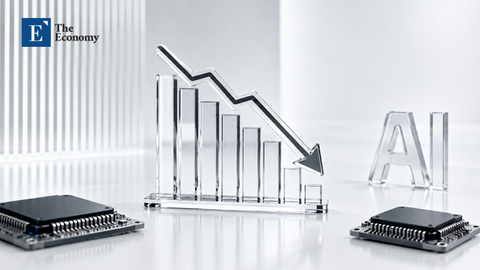
Despite its ambitious plans, market watchers remain skeptical about Gmarket’s outlook. Before forming its joint venture with Alibaba, the company’s poor profitability had already weighed heavily on its former parent, E-Mart. Since its acquisition by the Shinsegae Group in 2021, Gmarket has remained in the red. The company recorded operating losses of about 49 million dollars in 2022, 24 million dollars in 2023, and 50 million dollars in 2024. Revenue has also declined steadily—from roughly 990 million dollars in 2022 to 900 million in 2023, and down to 720 million in 2024.
Gmarket’s ongoing losses have significantly affected E-Mart’s financial health. Last year, E-Mart booked impairment losses totaling about 700 million dollars, the majority of which—around 680 million dollars—came from Emerald SPV, the special-purpose vehicle established for Gmarket’s acquisition. During the valuation review for the new Alibaba joint venture, Gmarket’s deteriorating performance resulted in a downward adjustment of its equity value.
The weak trend continued into 2024. In the first half of this year, Gmarket posted sales of about 280 million dollars, down 24.8% year-on-year, while operating losses widened to roughly 31 million dollars. A market insider commented, “Although the 500 million–dollar investment will be jointly funded by Shinsegae and Alibaba, it’s unclear whether such capital can pull Gmarket out of its financial slump. If its strategy to expand Korean sellers’ global reach succeeds, it could reshape the e-commerce landscape—but if it fails, Gmarket risks becoming little more than Alibaba’s Korean subsidiary.”
As one of the youngest members of the team, Tyler Hansbrough is a rising star in financial journalism. His fresh perspective and analytical approach bring a modern edge to business reporting. Whether he’s covering stock market trends or dissecting corporate earnings, his sharp insights resonate with the new generation of investors.
Similar Post