AI-Induced Power Inflation: U.S. Electricity Prices Near Data Centers Soar 267% in Five Years

Siobhán Delaney is a Dublin-based writer for The Economy, focusing on culture, education, and international affairs. With a background in media and communication from University College Dublin, she contributes to cross-regional coverage and translation-based commentary. Her work emphasizes clarity and balance, especially in contexts shaped by cultural difference and policy translation.
Authored On
Modified
Surging power demand from data center expansion
Electricity costs passed on to consumers
Global ripple effect of energy inflation emerging
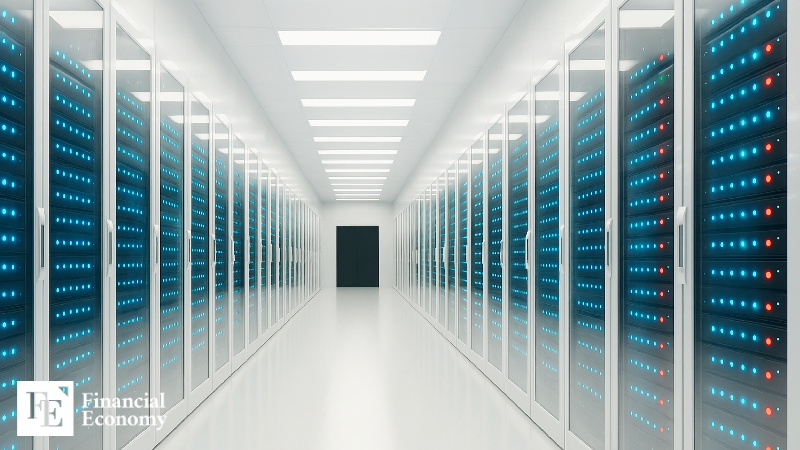
Electricity prices across the United States have surged, with artificial intelligence (AI) data centers identified as the primary culprit behind the spike. Wholesale power prices near major data center clusters have jumped 267% over the past five years, and the costs are being directly passed on to households. As large-scale AI infrastructure projects continue to proliferate, the upward trajectory of electricity prices shows no sign of slowing. The rapid growth of advanced industries is now rebounding as an “energy inflation” shock.
Wholesale Prices Skyrocket Near Data Centers
According to Bloomberg on the 22nd (local time), the average wholesale electricity price across the U.S. was $16 per megawatt-hour (MWh) in 2020, with San Francisco at $21, Baltimore at $17, and Phoenix at $16. Five years later, those figures have soared to $35 in San Francisco, $38 in Baltimore, and $21 in Phoenix.
The steepest increases were recorded in areas adjacent to data centers. Bloomberg reported, “In some regions neighboring major data centers, monthly power bills are up as much as 267% from five years ago,” adding that “the impact of the AI boom on the power market is unprecedented.” Data from the U.S. Energy Information Administration (EIA) show that data centers account for 39% of total electricity consumption in Virginia, 33% in Oregon, and 14% in Nebraska.
The surge in corporate data center power consumption is being directly transferred to residents. Nationwide, average household electricity rates rose 6.5% between May 2023 and May 2024, but the increases were much steeper in data center-heavy states such as Connecticut (up 18.4%) and Maine (up 36.3%). PJM Interconnection, one of the country’s main grid operators, has also seen capacity market prices spike amid soaring data center demand—with more than 60% of capacity costs now tied to data center usage. This amounts to about $9.3 billion, a burden ultimately borne by consumers.
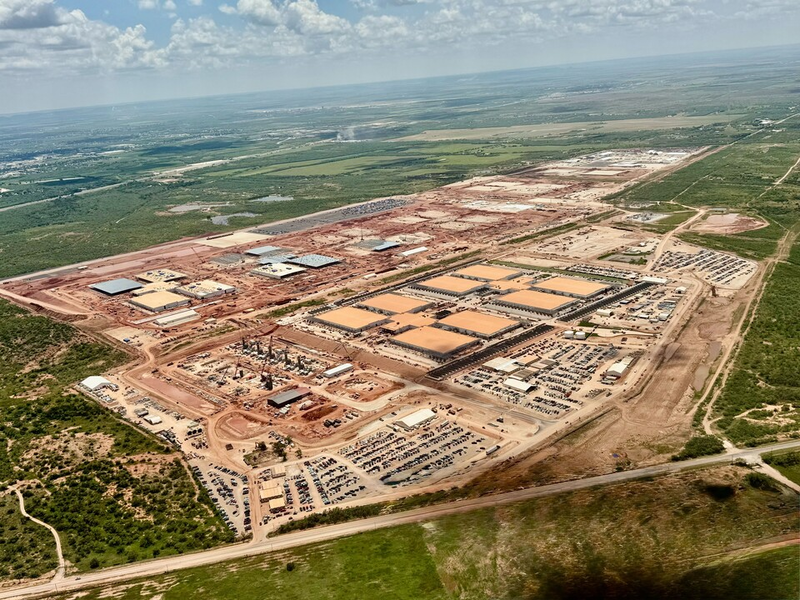
Wave of Mega Data Center Projects Deepening the Strain
Electricity costs are expected to rise even further as large-scale AI infrastructure projects move forward. OpenAI, Oracle, and SoftBank have launched the $500 billion “Stargate Project,” announcing plans to build five new data centers across the U.S. Last month, OpenAI confirmed expansion in Shackelford County, Texas; Doña Ana County, New Mexico; and an undisclosed Midwestern site. Google has also begun building a $4 billion data center campus in Arkansas, joining other Big Tech firms rolling out aggressive expansion plans.
According to investment bank Jefferies, capital expenditures (CAPEX) by electric utilities are expected to total $212.1 billion this year, up 22.3% from last year and 129% higher than a decade ago. The firm projects the figure will reach a record $228.1 billion by 2027. A Jefferies analyst for utilities and clean energy noted, “Companies are investing in generation and transmission as they reindustrialize their economies,” adding that the global drive to revive advanced manufacturing—such as semiconductors and batteries—is propelling demand for power-intensive data centers and grid expansion alike.
BloombergNEF forecasts that the expansion of AI and data centers will more than double U.S. electricity consumption by 2035. The International Energy Agency (IEA) similarly projects that data centers will account for over half of total U.S. power demand growth by 2030. As a result, pressure for consumer rate hikes is intensifying. According to PowerLines, a U.S. consumer energy advocacy group, utilities filed for $29 billion worth of rate increases in just the first half of this year—up 142% from a year earlier—indicating how rapidly the financial burden on consumers is escalating nationwide.
AI-Driven Inflation Accelerating
A growing debate now surrounds who should shoulder the costs of the AI-induced electricity surge—ordinary consumers or the tech giants driving the demand. Consumer advocacy groups argue that “households shouldn’t be footing the bill for America to maintain its leadership in AI innovation.”
The most realistic policy response under discussion is to impose greater cost responsibility on large-scale industrial users such as data centers. Hyperscalers like Amazon, Microsoft (MS), and Meta are beginning to either directly fund grid infrastructure or pay higher rates through special pricing schemes. One such mechanism is the “high-load tariff,” which charges major electricity users additional fees proportional to the strain they place on generation and transmission systems. For example, utility company AEP Ohio recently applied to regulators for approval of a “data center-specific tariff” that would bill customers for 85% of their forecasted monthly power use—regardless of actual consumption.
This trend is not limited to the United States. In South Korea, OpenAI recently announced joint plans with Samsung and SK to build 20-megawatt AI data centers in Pohang and South Jeolla Province, with potential for expansion. These projects are expected to boost electricity demand and costs. Japan’s wholesale electricity auction prices have hit record highs amid AI-related demand forecasts, while Malaysia has raised data center tariffs citing power shortages. In the United Kingdom, rising data center demand is projected to push electricity prices up 9% by 2040.
Siobhán Delaney is a Dublin-based writer for The Economy, focusing on culture, education, and international affairs. With a background in media and communication from University College Dublin, she contributes to cross-regional coverage and translation-based commentary. Her work emphasizes clarity and balance, especially in contexts shaped by cultural difference and policy translation.
Similar Post
















