Japan’s Auto Slump Masks “Export Rebound” — U.S. Trade Surplus Shrinks for Fifth Consecutive Month

Stefan Schneider brings a dynamic energy to The Economy’s tech desk. With a background in data science, he covers AI, blockchain, and emerging technologies with a skeptical yet open mind. His investigative pieces expose the reality behind tech hype, making him a must-read for business leaders navigating the digital landscape.
Authored On
Modified
Auto-heavy export structure takes a direct tariff hit
Industry accelerates shift in export strategy
Controversy brews over “behind-the-scenes” Japan–U.S. tariff deal

Japan’s exports rebounded in September, yet the U.S. market remained in a slump, drawing scrutiny to the underlying drivers. Analysts said shrinking shipments in Japan’s core categories—centered on automobiles—make the overall recovery look like a statistical illusion. Experts also argued the results reflect structural problems where tariff burdens and a cyclical slowdown overlap.
Trade deficit shows signs of persistence
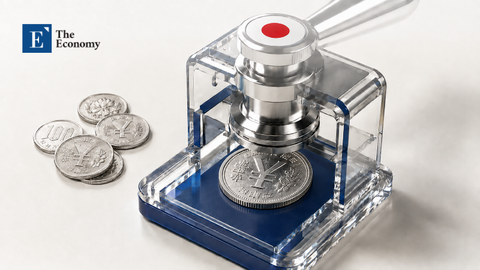
According to the Ministry of Finance on the 23rd, Japan’s worldwide exports in September totaled $61.74 billion, up 4.2 percent year on year. Exports to the United States, however, were $10.53 billion, down 13.3 percent and falling for a sixth straight month. The decisive factor was a 24.2 percent drop in auto exports over the same period. Even with total exports turning positive, the U.S. market shows deepening weakness.
What looks like a rebound on the surface is, in effect, a statistical mirage. The U.S. still accounts for more than 20 percent of Japan’s export exposure, and high-value manufactures like autos and machinery dominate the mix. If U.S. weakness persists, Japan’s structural trade deficit will be hard to unwind. In September, the trade balance showed a $1.54 billion deficit, extending a three-month run. The U.S. trade surplus also plunged 37.7 percent to $3.43 billion, declining for the fifth consecutive month.
Last July, Tokyo and Washington agreed to cut the Trump-era auto tariff from 25 percent to 15 percent, but the easing effect did not show up in the data. The Finance Ministry suggested U.S. importers front-loaded orders before the cut, depressing subsequent shipments, while automakers said they lowered selling prices to absorb the tariff hit. In support, the average export price per Japanese vehicle to the U.S. fell 20.9 percent in September to about $23,600.
Meanwhile, exports to China rose 5.8 percent, to Southeast Asia 9.2 percent, and to the European Union 5 percent, underscoring widening regional divergence. The Ministry of Economy, Trade and Industry cited China’s stimulus and a recovery in semiconductor-equipment demand as drivers. Market analysts countered that the overall increase reflects rebounds in select Asian markets while the U.S. remains pinned down by tariffs and softer domestic demand—an entrenched imbalance of “U.S. slump, Asia pull.”

Accelerating exit from the U.S. market reduces local competition
With profitability elusive in the U.S., Japanese automakers are reducing North America dependence and diversifying into Latin America, Southeast Asia, and Europe. Even at a 15 percent tariff, total landed cost remains elevated once freight, dealer incentives, inventory carrying costs, and local compliance are included, compressing margins. The prevailing view is that, absent a change in the tariff environment, portfolio reconfiguration is the only viable path.
Company moves are specific. Mitsubishi Motors plans to use its Brazilian distribution base to scale exports to Argentina and neighboring markets, lifting its South America share. Mazda is trimming small-car volumes to the U.S. and rerouting to Canada and Colombia. Toyota is strengthening European local production, locking in plans to mass-produce an electric SUV in the Czech Republic from 2028 at roughly 100,000 units a year. Together these steps signal less direct U.S. exporting and more capacity growth or rerouting elsewhere.
Price and demand effects are also expected. Citing Nikkei, industry analysis projects that the average selling price of Japanese cars in the U.S. could rise by up to 15 percent in the first half of next year as part of the tariff burden is passed through. With volumes cut and competition easing, prices are likely to prove sticky on the upside. In short, a two-track pattern emerges: “higher prices, lower volumes” in the U.S., and “expanded supply, faster localization” in other regions.
Seen this way, the auto industry’s move away from the U.S. goes beyond one-off shipment tweaks toward a medium-term roadmap that redesigns models, regions, and plants. Absorbing tariffs via pricing is too costly, and tighter local-content rules plus certification/recall risks make local production or regional reallocation more rational. The result: U.S. consumers face upward price pressure from weaker competition, while Japanese firms trade off for steadier earnings via geographic diversification.
Analysis points to an effectively “high-tariff” status quo
Experts note that the tariff accord between Japan and the U.S. has not measurably improved trade conditions. Despite cutting duties on autos and machinery from 25 percent to 15 percent, Japan’s exports to the U.S. have fallen even faster. Within the trade community, the deal is widely seen as success in name only.
Recent political disclosures in Tokyo have amplified doubts. Economy Revitalization Minister Ryusei Akazawa told AFP that only 1–2 percent of Japan’s $550 billion U.S. investment pledge is cash, with the balance in loans and guarantees—at odds with Washington’s framing of “massive Japanese investment.” In substance, the U.S. controls the funds while Japan plays a consultative role.
It also emerged that the agreement includes a “capital call” clause allowing the U.S. to request additional payments from Japan as needed. As Nikkei put it, this amounts to practical U.S. investment pressure in exchange for tariff relief. In effect, Japan traded nominal tariff reductions for U.S. supply-chain investment and financial guarantees.
Analysts therefore view the episode less as a tariff spat than as confirmation of political-economic dependence. With nominal cuts offset by long-term investment obligations inside the U.S., Japan’s room to craft an autonomous export strategy has narrowed. Stephen Engrich, Japan economist at Moody’s Analytics, noted that Tokyo “ceded a measure of economic sovereignty to maintain stable ties with the U.S.,” warning that the long-run burden of such commitments is likely to outweigh any short-term benefit from tariff relief.
Stefan Schneider brings a dynamic energy to The Economy’s tech desk. With a background in data science, he covers AI, blockchain, and emerging technologies with a skeptical yet open mind. His investigative pieces expose the reality behind tech hype, making him a must-read for business leaders navigating the digital landscape.
Similar Post