Samsung’s Galaxy XR Hits the Market — Better Than Vision Pro, But No Match for Quest 3?

As one of the youngest members of the team, Tyler Hansbrough is a rising star in financial journalism. His fresh perspective and analytical approach bring a modern edge to business reporting. Whether he’s covering stock market trends or dissecting corporate earnings, his sharp insights resonate with the new generation of investors.
Authored On
Modified
Samsung Electronics Teams Up with Google, Qualcomm to Enter XR Market
But Faces Tough Competition from Meta’s Low-Priced Quest 3
Meta Shifts Focus from Quest 4 to High-End XR Headsets and Smart Glasses
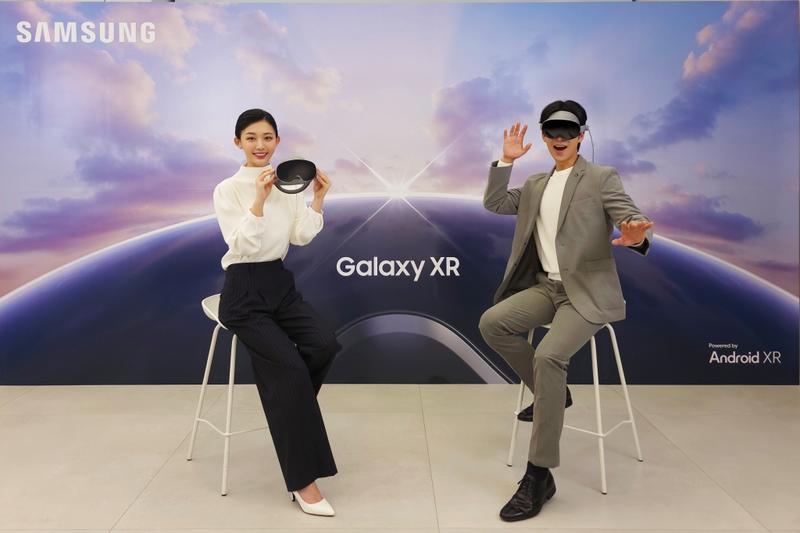
Samsung Electronics has entered the extended reality (XR) device market, unveiling a headset designed to be more affordable and comfortable than Apple’s Vision Pro, whose high cost and heavy design hindered its success. However, industry analysts remain skeptical about Samsung’s ability to secure meaningful market share. Many predict that the device may struggle to attract users, given its limited price competitiveness compared with Meta’s Quest 3.
Samsung Unveils the ‘Galaxy XR’
On October 22, Samsung Electronics launched its new headset-type extended reality (XR) device, the Galaxy XR, simultaneously in South Korea and the United States. The product is a joint effort among Samsung, Google, and Qualcomm: Samsung handled hardware manufacturing, Google developed the operating system (OS) and software, and Qualcomm supplied its high-performance Snapdragon® XR2+ Gen 2 chipset. The device also debuts the Android XR platform, co-developed by the three companies.
Analysts say the Galaxy XR reflects lessons learned from Apple’s Vision Pro failure. Released in the U.S. in February 2024, the Vision Pro generated high expectations before launch but failed to gain traction due to its hefty 3,500-dollar price tag and heavy 600-gram design. For comparison, the iPhone 16 weighs about 170 grams—meaning the Vision Pro feels like wearing four iPhones on one’s head. Including its 353-gram external battery, the total weight approaches one kilogram.
In contrast, the Galaxy XR is priced at 2.69 million won (about 1,950 dollars), making it significantly more affordable, and weighs 545 grams—much lighter and easier to wear. Its display performance also surpasses that of the Vision Pro, featuring a 4K micro-OLED panel, the highest specification among current XR devices. The headset includes 19 sensors in total: two for environmental sensing, six for motion tracking, four for eye tracking, and several for inertial measurement, providing precise real-time spatial interaction.
The Dominance of Meta’s Quest 3
Despite the Galaxy XR’s technical advantages over Apple’s Vision Pro, industry sentiment remains skeptical. Many analysts believe Samsung will struggle to generate meaningful consumer demand, largely because Meta’s Quest 3 continues to dominate the XR market.
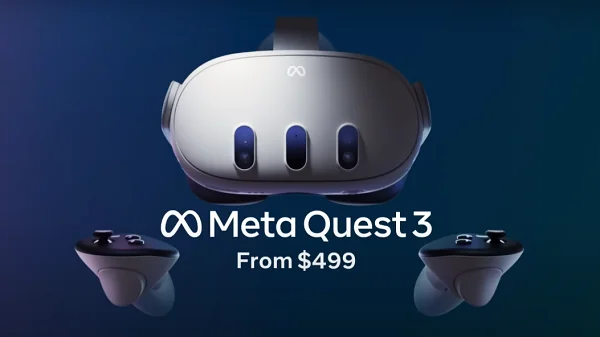
The Quest 3’s biggest strength lies in its pricing. The base model sells for 499 dollars—about one-seventh the cost of the Vision Pro and far cheaper than the Galaxy XR. The Quest 3S, released last year, is priced at just 299.99 dollars (around 440,000 won) for the 128GB version. The devices are also lighter, with the Quest 3 weighing 515 grams and the Quest 3S slightly less at 513 grams, outperforming both the Vision Pro and the Galaxy XR in comfort and portability. By offering affordable, lightweight headsets, Meta has effectively expanded its potential user base and strengthened the foundation of its XR ecosystem.
Performance is another key factor. Meta CEO Mark Zuckerberg even stated publicly that the Quest 3 is a better product than the Vision Pro. In a video posted to Instagram last year, he remarked, “A lot of people assume the Vision Pro must be better because it costs 3,000 dollars more, but honestly, I was surprised to find that the Quest is much better for most uses.” He went on to highlight the Quest 3’s bright display, wide field of view, rich immersive content library, wireless operation, lightweight design, and advanced hand-tracking capabilities—all areas where the device outshines its pricier competitors.
Meta Struggles with Next-Generation Quest Development
Since unveiling the Quest 3 in October 2023, Meta has yet to release a next-generation XR headset. Reality Labs, the Meta subsidiary responsible for the Quest line, has continuously worked on multiple prototype models, but many have reportedly been scrapped before commercialization for various reasons. The much-anticipated Quest 4 series is also believed to have been delayed, as the prototypes likely failed to meet Meta’s internal standards.
Some industry observers expect Meta to shift direction next year, releasing a new type of device rather than continuing the existing Quest lineup. In June, gaming outlet Game Rant reported that Meta plans to launch a successor to the standalone mixed-reality headset Meta Quest Pro, offering higher-end performance and functionality than the consumer-focused Quest series. Earlier, in January, Bloomberg’s technology journalist Mark Gurman also revealed that Meta is developing the Quest 4 as well as a premium model that could serve as the next iteration of the Quest Pro.
Meanwhile, Meta continues to invest in smart-glasses development despite ongoing losses from the segment. The company sees these devices as a strategic bet on the next computing platform beyond smartphones. At its annual “Meta Connect 2025” event in Menlo Park, California, last month, Meta unveiled three new smart-glass models — the Ray-Ban Meta (2nd generation), the Meta Ray-Ban Display, and the Oakley Meta Vanguard.
As one of the youngest members of the team, Tyler Hansbrough is a rising star in financial journalism. His fresh perspective and analytical approach bring a modern edge to business reporting. Whether he’s covering stock market trends or dissecting corporate earnings, his sharp insights resonate with the new generation of investors.
Similar Post