Semiconductor Supercycle Meets All Prerequisites, but China’s Capacity Expansion Looms as a Key Risk

Oliver Griffin is a policy and tech reporter at The Economy, focusing on the intersection of artificial intelligence, government regulation, and macroeconomic strategy. Based in Dublin, Oliver has reported extensively on European Union policy shifts and their ripple effects across global markets. Prior to joining The Economy, he covered technology policy for an international think tank, producing research cited by major institutions, including the OECD and IMF. Oliver studied political economy at Trinity College Dublin and later completed a master’s in data journalism at Columbia University. His reporting blends field interviews with rigorous statistical analysis, offering readers a nuanced understanding of how policy decisions shape industries and everyday lives. Beyond his newsroom work, Oliver contributes op-eds on ethics in AI and has been a guest commentator on BBC World and CNBC Europe.
Authored On
Modified
DRAM Supercycle Conditions in Place
AI-Driven DRAM Demand Robust, Chinese Output Cuts Add Momentum
Rising Risk of Supply Shortages in Commodity DRAM
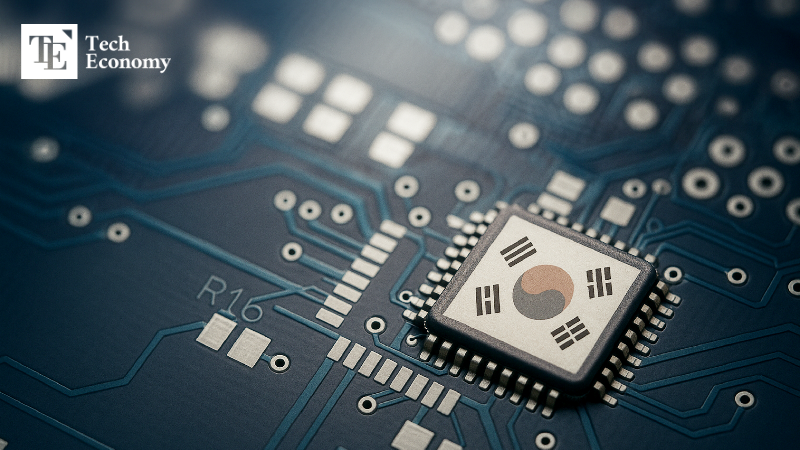
A semiconductor supercycle is taking shape as artificial intelligence (AI) data center demand continues to surge, driving steady increases in memory prices. With supply shortages expected to persist, South Korea’s leading chipmakers, Samsung Electronics and SK Hynix, are poised for a strong fourth quarter. Yet, uncertainty remains over how long the boom can last, as China rapidly scales up its domestic memory production capacity, positioning itself as the fourth major player in the global DRAM market.
Rising DRAM Demand Beyond HBM, Fueled by AI Boom
According to market tracker DRAMeXchange, the spot price of 8Gb DDR4 DRAM reached an average of $8.049 as of October 20, up 1.59% from October 17. DRAM prices have been on a steady upward trajectory, nearing levels last seen during previous semiconductor supercycles.
Contract prices for PC-oriented DDR4 8Gb DRAM stood at $6.30 at the end of September, marking double-digit growth since April. This represents the highest level in nearly six years and eight months, since January 2019. During the 2016–2018 memory supercycle, the same product traded between the high-$6 and low-$8 range.
The primary drivers of the rally are soaring investments in AI data centers, which have pushed up demand for high-bandwidth memory (HBM), alongside persistently strong consumption of general-purpose DRAM. Even Nvidia’s latest product launch opted for conventional DRAM over HBM, underscoring the limited supply base amid expanding demand. Additionally, Chinese manufacturers—encouraged by government initiatives to foster domestic AI and cloud semiconductor ecosystems—are shifting production toward high-end memory, further tightening supply in traditional DRAM segments.
UBS and Citi Forecast Operating Profits of $90B and $80B for Samsung and SK Hynix
Samsung Electronics and SK Hynix are set for strong earnings momentum. According to market research firm FnGuide, their fourth-quarter operating profits are projected at approximately $8.7 billion and $9 billion, respectively—up 86.85% and 54.59% year-on-year. Samsung already surprised markets with third-quarter operating profit of $8.7 billion, buoyed by a rebound in its semiconductor business.
Brokerage forecasts are equally bullish. Citi projected next year’s operating profits at around $53 billion for Samsung and $54 billion for SK Hynix, sharply raising estimates to reflect soaring AI-related demand. Citi lifted Samsung’s outlook by more than $13 billion from its previous forecast of roughly $41 billion.
UBS offered even more aggressive projections. In a report released on October 15, the bank estimated next year’s operating profits at $63 billion for Samsung and $53 billion for SK Hynix—a combined total of $116 billion, nearly matching the combined 2023 operating profits of all listed firms on Korea’s KOSPI exchange.
With signs of a sector-wide upswing, analysts now believe this supercycle could outlast previous ones. Historically, memory booms have lasted one to two years before cooling, but this time, the momentum could extend beyond two years. JP Morgan, in its latest report, predicted the current memory supercycle could run through 2027, describing it as “a long-term expansion phase driven by structural demand rather than traditional inventory-based cyclicality.”
China’s Expanding Capacity Emerges as a Key Variable
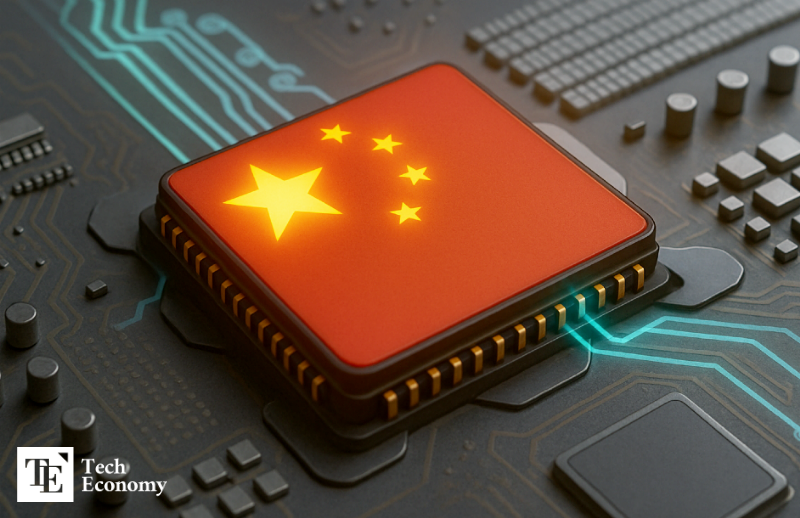
However, doubts persist about whether the boom can sustain its pace. The biggest wild card is China. Unlike the 2010s supercycle—when Chinese players lacked meaningful production capacity—Beijing’s memory makers now wield growing influence over both the DRAM and NAND markets. In DRAM, ChangXin Memory Technologies (CXMT) is ramping up shipments to domestic customers, while Yangtze Memory Technologies (YMTC) is expanding its NAND output.
According to Omdia, CXMT’s DRAM wafer output surged from 300,000 in the first quarter of last year to 600,000 in the same period this year, and is expected to reach around 800,000 next year. Considering Micron’s quarterly DRAM wafer input of 800,000–900,000, the industry may soon need to speak of a “Big Four” rather than a “Big Three.”
YMTC’s NAND output is also accelerating. From 230,000 wafers in early 2023, production exceeded 400,000 this year and is projected to hit 500,000 next year—on par with SK Hynix and Micron.
An industry insider noted, “While it’s true that AI-related memory concentration could cause shortages in mobile and PC segments, the probability of another classic supercycle is low. Chinese firms that once paid hefty premiums for Korean DRAM now have domestic alternatives, and with Beijing offering subsidies to companies using homegrown memory, China is rapidly advancing its self-sufficiency.”
Oliver Griffin is a policy and tech reporter at The Economy, focusing on the intersection of artificial intelligence, government regulation, and macroeconomic strategy. Based in Dublin, Oliver has reported extensively on European Union policy shifts and their ripple effects across global markets. Prior to joining The Economy, he covered technology policy for an international think tank, producing research cited by major institutions, including the OECD and IMF. Oliver studied political economy at Trinity College Dublin and later completed a master’s in data journalism at Columbia University. His reporting blends field interviews with rigorous statistical analysis, offering readers a nuanced understanding of how policy decisions shape industries and everyday lives. Beyond his newsroom work, Oliver contributes op-eds on ethics in AI and has been a guest commentator on BBC World and CNBC Europe.
Similar Post