Meta Shifts to ‘Restructuring Mode’ Just Three Months After Leading the AI Talent War

Oliver Griffin is a policy and tech reporter at The Economy, focusing on the intersection of artificial intelligence, government regulation, and macroeconomic strategy. Based in Dublin, Oliver has reported extensively on European Union policy shifts and their ripple effects across global markets. Prior to joining The Economy, he covered technology policy for an international think tank, producing research cited by major institutions, including the OECD and IMF. Oliver studied political economy at Trinity College Dublin and later completed a master’s in data journalism at Columbia University. His reporting blends field interviews with rigorous statistical analysis, offering readers a nuanced understanding of how policy decisions shape industries and everyday lives. Beyond his newsroom work, Oliver contributes op-eds on ethics in AI and has been a guest commentator on BBC World and CNBC Europe.
Authored On
Modified
Major big tech hires formed ‘AI Dream Team’
External recruitment halted since August for organizational restructuring
20% workforce cut across key AI divisions including MSL
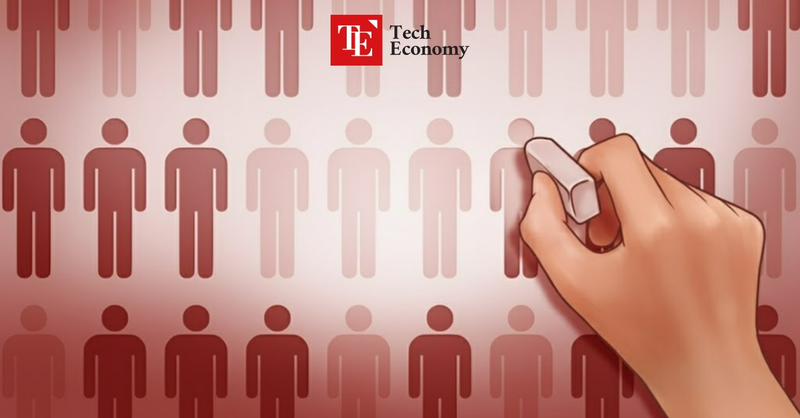
Meta, which led the big tech artificial intelligence (AI) talent war by offering salary packages of up to $100 million, has shifted gears. Since August, the company has suspended hiring and begun restructuring its dedicated AI divisions, and recently decided to carry out large-scale layoffs. According to Meta, however, this move does not signal a retreat from its AI ambitions, but rather a workforce realignment aimed at streamlining operations and advancing its superintelligence project more efficiently.
“A Strategic Move to Maintain Innovation Capability”
According to reports from The New York Times (NYT) and CNBC on the 23rd (local time), Meta officially announced its restructuring plan for the AI division in an internal memo the previous day. The restructuring will affect Meta Superintelligence Labs (MSL), Facebook Artificial Intelligence Research (FAIR), and its AI infrastructure and product development teams. Approximately 600 employees—about 20% of the division’s 3,000-person workforce—will be laid off. However, the newly established TBD Lab, launched in August to spearhead next-generation large language model (LLM) development, will be excluded from the cuts as it remains a core AI research unit.
Alexander Wang, Meta’s Chief AI Officer (CAIO) overseeing the company’s AI operations, stated in an internal message that “the downsizing of the team is not a contraction of our AI business or a step back in research, but a necessary measure to build a faster decision-making structure and strengthen individual accountability and roles.” He added that this was “a strategic choice to preserve innovation capabilities while eliminating unnecessary redundancies.” Meta is offering affected employees opportunities to transfer to other internal departments and will continue limited hiring in areas such as AI ethics, data management, and cloud infrastructure.
Zuckerberg Personally Courted Big Tech Talent
Just three months ago, Meta had been the most aggressive among major tech firms in the race to secure AI talent. After its in-house LLM, LLaMA, fell short of expectations, CEO Mark Zuckerberg personally joined the recruitment drive. He reached out to researchers from OpenAI and Google DeepMind via email and WhatsApp, offering salary packages of up to $100 million. He also employed so-called “reverse acqui-hire” tactics—poaching key startup leaders by acquiring stakes in their companies. One notable example was his $1.5 billion offer to Andrew Tulloch, co-founder of Thinking Machines Lab.
Zuckerberg also utilized direct equity acquisitions to secure top talent. To recruit Alexander Wang, now Meta’s CAIO and co-founder of Scale AI, he acquired approximately $14 billion worth of Scale AI shares. Through similar methods, he brought in Nate Friedman, former CEO of GitHub, and Daniel Gross, co-founder of Safe Superintelligence, to join MSL. As of mid-August, Meta had hired more than 50 new employees: over 20 researchers and engineers from OpenAI, at least 13 from Google, three from Apple, three from xAI, and two from Anthropic.
However, from mid-August, Meta implemented a hiring freeze. It halted external recruitment and began reorganizing its AI divisions, effectively taking a breather. The suspension period was not specified. According to internal sources, “exceptions to the external hiring freeze may be allowed, but only with CAIO Wang’s approval,” adding that “inter-team transfers within the AI division are also suspended during this period.” A Meta spokesperson confirmed this, explaining that “the company is working on annual budgeting and workforce planning to establish a stable organizational foundation for the superintelligence project.”
Internal Turmoil Leads to Talent Exodus
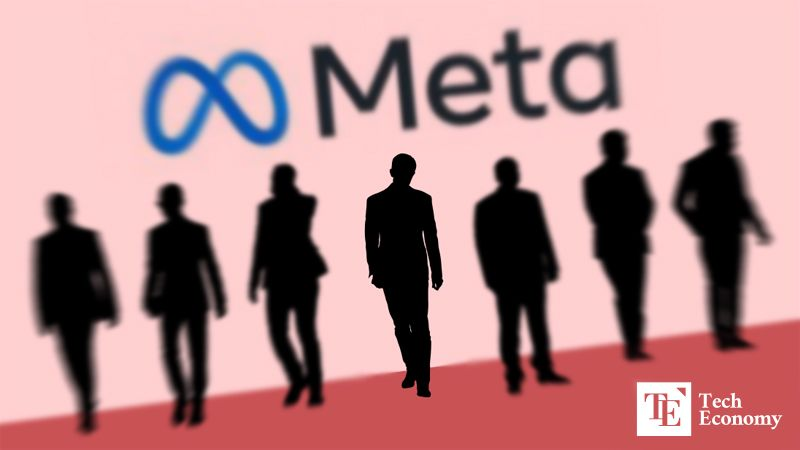
Following the restructuring of MSL and other AI units, several high-profile hires—brought in at immense cost—have begun to leave. Even before the so-called “AI Dream Team” could fully take off, some new recruits departed in protest against internal policies. As of August, more than eight key personnel from MSL had reportedly resigned. Ethan Knight from xAI and Avi Verma from OpenAI returned to their former employer less than a month after joining Meta, while Rishabh Agarwal, who joined in April, left for the startup Periodic Labs.
Industry observers attribute this talent drain to Meta’s internal culture and instability. The timing of these departures coincides with the organizational reshuffle. In August, Meta divided MSL into four branches—TBD Lab, AI Research, AI Product Development, and AI Infrastructure—leading to frequent changes in team structures and reporting lines that heightened internal confusion. Business Insider noted, “Many Meta AI team members feel the organization is changing too quickly,” adding that “as research continuity and stability eroded, some talent left in search of a steadier environment.”
Meanwhile, long-time Meta employees who had remained through years of AI development reportedly felt a sense of alienation due to the lavish treatment offered to new recruits. The vast pay gap between existing staff and those joining with multi-million-dollar compensation packages created underlying internal tensions. Veteran figures such as Chaya Nayak, who worked at Meta for nearly 10 years, and researcher Burt Maher, a 12-year veteran, have both departed—joining OpenAI and Anthropic respectively. Tony Liu, who spent eight years at Meta, and Chihao Wu, a five-year veteran of Meta’s machine learning division, also resigned.
Oliver Griffin is a policy and tech reporter at The Economy, focusing on the intersection of artificial intelligence, government regulation, and macroeconomic strategy. Based in Dublin, Oliver has reported extensively on European Union policy shifts and their ripple effects across global markets. Prior to joining The Economy, he covered technology policy for an international think tank, producing research cited by major institutions, including the OECD and IMF. Oliver studied political economy at Trinity College Dublin and later completed a master’s in data journalism at Columbia University. His reporting blends field interviews with rigorous statistical analysis, offering readers a nuanced understanding of how policy decisions shape industries and everyday lives. Beyond his newsroom work, Oliver contributes op-eds on ethics in AI and has been a guest commentator on BBC World and CNBC Europe.
Similar Post