Will the U.S.–China Rare Earth and Tariff Deal Be Sealed in Busan? What Lies Behind the Two Nations’ Decision to Sidestep the APEC Summit Venue?

Siobhán Delaney is a Dublin-based writer for The Economy, focusing on culture, education, and international affairs. With a background in media and communication from University College Dublin, she contributes to cross-regional coverage and translation-based commentary. Her work emphasizes clarity and balance, especially in contexts shaped by cultural difference and policy translation.
Authored On
Modified
Two-Day High-Level Trade Talks End with ‘Framework Agreement,’ Says U.S. Treasury Secretary Bessent
Talks Covered Agriculture, TikTok, Fentanyl, and Rare Earths
Optimism Rises Ahead of Oct. 30 Summit in Busan — First in Six Years
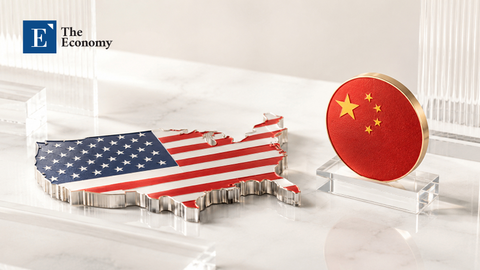
The odds of an acrimonious encounter between U.S. President Donald Trump and Chinese President Xi Jinping at their long-awaited summit have sharply diminished. Ahead of their first meeting in six years, the two sides have reached a provisional agreement to suspend their trade war. Under the deal, China will postpone its rare-earth export controls for one year, while the U.S. will refrain from imposing an additional 100% tariff. Analysts say both governments have chosen compromise over confrontation, recognizing that further escalation of the U.S.–China trade conflict could have catastrophic consequences. Diplomatic sources are now speculating that the summit may yield a substantive trade accord.
U.S. Treasury: ‘Tentative Agreement to Pause the Trade War’
On October 26 (local time), U.S. Treasury Secretary Scott Bessent said in interviews with NBC, CBS, and ABC that Washington and Beijing had agreed on a “substantive framework” to be finalized by their leaders. Bessent, speaking after two days of high-level trade negotiations in Malaysia, revealed that China had agreed to defer its rare-earth export restrictions for a year pending review.
“President Trump gave us maximum leverage in the talks by warning China that he would impose a 100% tariff on rare-earth exports,” Bessent said. “We believe we’ve avoided that outcome—and consequently avoided the tariffs as well.”
The two sides also reached agreement on U.S. agricultural exports, another key sticking point. “China has agreed to purchase a significant volume of agricultural products from American farmers,” Bessent noted. “Once this agreement is announced, U.S. soybean producers will have a positive outlook not just for this year but for years to come.”
According to the American Soybean Association (ASA), China was the largest buyer of U.S. soybeans in 2023 and 2024, accounting for more than 50% of total exports.
Bessent also said the two countries had made progress on fentanyl, the powerful synthetic opioid at the center of the U.S. drug crisis. “China has agreed to help us address the issue of precursor chemicals related to fentanyl production,” he said. Fentanyl, produced from chemical precursors often originating in China, has become a leading cause of fatal overdoses in the United States.
The long-disputed question of TikTok’s operations in the U.S. also reached a conclusion. “We wrapped up our discussions on TikTok today,” Bessent stated. However, he declined to elaborate on the transfer of TikTok’s algorithm, saying only that he “persuaded China to approve the deal” but was “not involved in the sale details.”
Beijing Also Signals Optimism
Beijing offered a positive assessment of the talks. According to Xinhua News Agency, “Both sides held candid, in-depth, and constructive discussions on key economic and trade issues of mutual concern—including the U.S. Section 301 measures on China’s maritime, logistics, and shipbuilding sectors, extension of mutual tariff suspensions, fentanyl-related enforcement cooperation, agricultural trade, and export controls—and reached a basic consensus on plans to address each other’s concerns.”
After the meeting, Chinese Vice Premier He Lifeng said, “The essence of the U.S.–China economic and trade relationship is mutual benefit and win-win cooperation. Cooperation brings gains, confrontation brings losses.” He added, “Stable development of bilateral trade ties serves the common interests of both nations and meets the expectations of the international community. In addressing economic and trade disputes, both sides should uphold mutual respect, peaceful coexistence, and cooperative principles, resolving concerns through dialogue on an equal footing.”
He urged both governments to “jointly safeguard the achievements of economic and trade consultations,” and called on Washington to “work in the same direction to implement the key agreements reached during the presidential phone call, build on the results of this year’s negotiations, strengthen mutual trust, manage differences, and expand cooperation to elevate bilateral relations.”
Li Chenggang, China’s Vice Minister of Commerce and chief international trade negotiator, echoed the sentiment, saying the two sides had “conducted constructive exchanges on key trade and economic issues of shared concern” and “reached basic agreement on plans to address each side’s concerns.” He added that “details have been further confirmed and both parties will now begin their respective domestic approval procedures.”
Summit Venue Moved from Gyeongju to Busan for Security and Logistics
The Malaysia meeting was the final round of high-level talks before the November 10 tariff truce deadline and served as preparatory coordination for the October 30 summit. Since April, the U.S. and China have engaged in a series of high-level negotiations in Geneva, London, Stockholm, and Madrid. Washington has demanded the withdrawal of rare-earth export restrictions, resumption of soybean imports, and tighter fentanyl precursor enforcement. Beijing, in turn, has sought tariff relief, eased access to advanced U.S. technologies such as semiconductors, and relaxation of investment restrictions on Chinese firms.
Even as the summit approached, tensions remained high. On October 9, China announced new export controls on rare-earth materials, prompting President Trump to threaten a 100% retaliatory tariff. The U.S. later revealed plans to restrict exports of software-based products to China and launched a review of Beijing’s compliance with the Phase One trade deal from Trump’s first term. Observers see these moves as strategic brinkmanship to gain leverage ahead of the leaders’ meeting.
The summit will reportedly take place at Naraemaru, a reception hall within the South Korean Air Force’s 5th Air Mobility Wing at Gimhae Air Base in Busan, rather than in Gyeongju. Naraemaru was originally built for the 2005 APEC Summit and used again during the 2019 Korea–ASEAN summit for bilateral meetings.
Located within a military compound with restricted access, Naraemaru offers tighter security than civilian venues in Gyeongju—a likely factor for both delegations given the global attention on the meeting. Logistical considerations also played a role, as President Trump’s visit will last from October 29–30 and President Xi’s from October 30–November 1. The proximity of Gimhae Airport makes it the most practical site for both leaders’ arrivals and departures.
Diplomatic experts say hosting the U.S.–China summit enhances South Korea’s geopolitical stature, but warn that it could also heighten Seoul’s “middle-power risk.” While both Washington and Beijing have expressed confidence in “productive discussions,” the outlook for a comprehensive breakthrough remains uncertain.
Political timing in the U.S.—with presidential and midterm elections ahead—and China’s domestic headwinds, including economic slowdown and rising unemployment, could complicate the path to a deal. Still, with both sides eager to ease economic uncertainty and stabilize global supply chains, expectations are building for at least a “partial agreement” or an extension of the tariff truce.
Siobhán Delaney is a Dublin-based writer for The Economy, focusing on culture, education, and international affairs. With a background in media and communication from University College Dublin, she contributes to cross-regional coverage and translation-based commentary. Her work emphasizes clarity and balance, especially in contexts shaped by cultural difference and policy translation.
Similar Post