LG Chem Faces Dual Pressure from Activist Fund and NPS: Structural Overhaul, Not Short-Term Boost, Seen as the Solution

Authored On
Modified
Stock Downturn After LG Energy Solution Spin-Off
Sluggish Petrochemical Sector and Loss of Growth Drivers
Two-Front Battle to Restore Shareholder Value
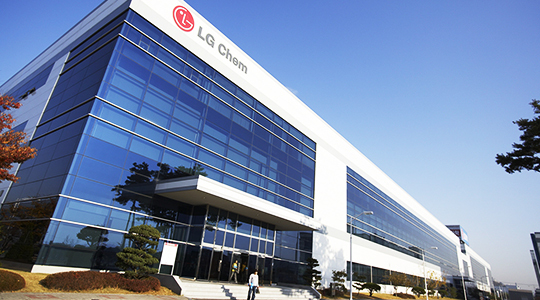
LG Chem, one of the key pillars of the LG Group, has come under growing pressure from both domestic and international investors. The National Pension Service (NPS) has placed the company on its confidential “intensive management list,” while the UK-based activist fund Palliser Capital has launched an offensive, citing “severe undervaluation.” Investors have taken issue with the company’s prolonged decline in corporate value and its inability to present a clear strategic breakthrough.
NPS Places LG Chem Under Intensive Oversight
According to the investment banking industry on October 27, the NPS recently listed LG Chem as a company subject to non-public intensive management. Under its stewardship responsibility guidelines, the NPS conducts a series of activities—including private dialogues, classification as private or public intensive management targets, open letters, and shareholder proposals—depending on the level of corporate engagement required.
Before designating a firm for intensive management, the NPS convenes its Stewardship Responsibility Committee to select companies for private dialogue. If key issues remain unresolved after roughly a year, the firm may be publicly listed as an “intensive management company,” prompting more active engagement such as shareholder proposals.
The move is widely seen as stemming from LG Chem’s inability to restore corporate value following the spin-off of LG Energy Solution. Both LG Chem and LG Energy Solution have long been cited as emblematic cases of “Korean discount” driven by spin-off listings. When LG Chem spun off LG Energy Solution in January 2022, existing LG Chem shareholders received no new shares in the split entity, sparking a sharp drop in LG Chem’s share price and investor backlash. Once trading at over $750, LG Chem’s shares fell to around $350 by March 2022 and have remained under pressure ever since.
While part of this decline reflects the downturn in the petrochemical industry, investors note that LG Chem’s valuation has failed to improve despite its roughly 80% ownership of LG Energy Solution, whose market performance has been strong. Even taking into account the usual “holding company discount” prevalent in the domestic market, LG Chem’s current market capitalization of about $20 billion is significantly below the roughly $65 billion value of its stake in LG Energy Solution, which is valued at around $80 billion in total. The gap represents a discount exceeding 70%—far deeper than the average 50% level applied to most Korean conglomerate holding companies.
UK Activist Fund Flags “Severe Undervaluation”
Amid this persistent undervaluation, activist investors have moved quickly. Palliser Capital, a UK-based hedge fund known for its campaigns against major conglomerates such as Samsung C&T and SK Square, has disclosed a roughly 1% stake in LG Chem and urged management to present a clear plan to unlock shareholder value.
Palliser pointed out that LG Chem shares trade at a 74% discount to their net asset value (NAV), reflecting a $50 billion valuation gap—one of the widest among major Korean corporations. The fund attributed this to LG Chem’s valuation being benchmarked against its sluggish petrochemical peers and to the market’s failure to properly reflect the value of its LG Energy Solution stake.
As a corrective measure, Palliser has called for an aggressive share buyback program. The firm argues that a strategic repurchase of undervalued shares could significantly boost shareholder returns while signaling management’s commitment to value creation. Longer term, Palliser suggested that LG Chem could consider partially monetizing its LG Energy Solution stake to finance the buyback, adding that maintaining daily repurchases within 5–10% of trading volume could minimize market disruption.

Need for Portfolio Streamlining Around Core Businesses
Palliser’s share buyback proposal is seen by some analysts as reasonable in principle. Historically, LG Chem has enjoyed a differentiated valuation compared to other chemical companies due to its diversified portfolio, which included high-value-added products such as ABS and engineering plastics, as well as growth momentum from battery materials. However, the spin-off of LG Energy Solution disrupted this balance. The growth premium associated with the battery business was lost, while exposure to volatile petrochemical feedstock prices increased. Although LG Energy Solution’s results are still consolidated in LG Chem’s financial statements, the parent company is now viewed by investors primarily as a traditional chemical stock rather than a battery-driven growth player.
Nevertheless, the market consensus is that LG Chem is unlikely to embrace Palliser’s proposals. Given its financial position and industry headwinds, the company is seen as prioritizing liquidity over shareholder returns. Indeed, its recent decision to enter a $1.4 billion price return swap (PRS) deal using part of its LG Energy Solution stake as collateral underscores its tight liquidity position. Analysts note that such constraints make it unrealistic for LG Chem to deploy that stake for share buybacks or other shareholder rewards.
Another key obstacle lies in management’s defensive stance toward aggressive capital restructuring. LG Chem’s leadership has maintained only a formal position that it “listens to shareholder opinions and strives to enhance corporate value,” but internally views Palliser’s proposals for board restructuring and buybacks as potential threats to management control. In particular, a buyback funded by LG Energy Solution shares could weaken the parent company’s hold over its crown jewel subsidiary—something the current management is highly unlikely to accept.
Against this backdrop, market observers argue that LG Chem should focus on divesting non-core businesses and strengthening profitability in high-value segments rather than resorting to financial maneuvers. Share buybacks may offer a temporary lift to liquidity and sentiment, but they are unlikely to deliver sustainable value creation. With petrochemical margins under prolonged pressure and raw material volatility expected to persist, LG Chem’s strategic focus should shift from aggressive capital tactics to operational efficiency and cash flow resilience. The true path to restoring shareholder confidence, analysts conclude, lies not in short-term market interventions but in a fundamental overhaul of the company’s business structure.
- Previous Shaheen Project Emerges as a New Variable in Petrochemical Restructuring — NCC-Centered Industry Faces Inevitable Blow upon Completion Next Year
- Next Amid the Sale of the Market Leader, Government Pushes for a New SME Home Shopping Channel — Mounting Risks of Weak Content and Capital Competitiveness
Similar Post