America’s Cosmetic Surgery Boom: From Gen Z to Middle-Aged Men, Everyone’s Joining In

Authored On
Modified
Beauty Boom Sweeps the US as Demand for Botox and Fillers Soars
Self-Care Culture Spreads Among Gen Z via Social Media
Even Middle-Aged Men in Silicon Valley Turn to Procedures to Stay Youthful

The US cosmetic surgery market is entering a boom period. Gen Z — born in the late 1990s to early 2000s — has embraced self-care trends popularized on social media, while middle-aged men, once hesitant to spend on aesthetics, are now visiting cosmetic clinics without reservation.
Cosmetic Procedures Go Mainstream in the US
On October 25, Axios reported that America’s obsession with youthfulness and slimness has become a mainstream phenomenon. According to 2024 data from the American Society of Plastic Surgeons (ASPS), roughly 142,000 Americans in their 20s received neuromodulator injections such as Botox, while nearly 141,000 underwent hyaluronic acid filler treatments.
Multiple factors have fueled this boom in the US cosmetic surgery market. One major driver is the rise of GLP-1 weight-loss drugs such as Ozempic. Rapid weight loss has created soaring demand for procedures that correct sagging skin and volume loss. The American Academy of Facial Plastic and Reconstructive Surgery (AAFPRS) reported a 50% increase in facial fat grafting cases in 2024 alone. “These drugs are highly effective for quick weight reduction but often lead to facial volume loss and skin laxity,” explained AAFPRS President Dr. Patrick Byrne. “As a result, more patients are seeking facial cosmetic procedures to address these issues.”
The explosive growth of medical spas, or “med spas,” has also accelerated the mainstreaming of aesthetic treatments. Botox and fillers have become routine self-care options that can be financed with “buy now, pay later” plans, spreading med spa culture from major cities to suburban areas. A med spa combines a medical clinic with a traditional spa, offering professional procedures and relaxation services under the same roof. Meanwhile, advances in technology have shortened recovery times and made results more natural-looking, further lowering the barriers to cosmetic treatment.
Gen Z Turns Self-Care Into a Social Media Trend
Social media platforms like TikTok have played a major role in driving the surge of cosmetic and skincare demand among younger generations. Many Gen Z users in the US have been sharing their self-care routines online for years — applying pricey serums and retinol creams marketed for anti-aging, or even using facial tape to prevent wrinkles. It’s now common to see teenagers posting videos of themselves using skincare products meant to slow aging.
Simpler cosmetic treatments, such as “baby Botox,” have also gone viral on social media. Baby Botox involves injecting small amounts of Botox into the dermal layer rather than specific muscles, helping prevent fine lines and wrinkles. The treatment has become especially popular among young adults as a form of early-age anti-aging care. According to the American Society of Plastic Surgeons (ASPS), Gen Z accounted for about 20% of all laser-based minimally invasive skin procedures performed in the US last year.
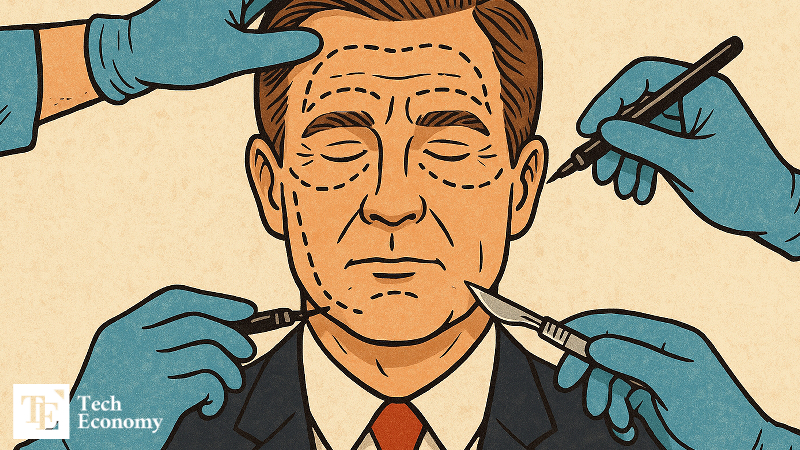
Middle-Aged Men in Tech Turn to Cosmetic Procedures to Stay ‘Young’
A growing number of middle-aged men—particularly those in the tech industry—are fueling a new wave of demand in the US cosmetic market. According to a Wall Street Journal report on October 24, a Beverly Hills plastic surgeon said that requests from male clients working in tech have increased fivefold over the past five years. In San Francisco, where major tech firms are concentrated, another surgeon reported a 25% rise in male facelift consultations and a 50% jump in eyelid surgery inquiries compared to pre-pandemic levels.
“Our society has traditionally pressured women to look younger, but now both men and women feel it,” said Dr. Timothy Marten, a San Francisco-based plastic surgeon. “In Silicon Valley, where appearing old can make you seem ‘irrelevant,’ the pressure is especially strong.” He noted that men in their 30s often opt for non-surgical treatments like Botox and fillers, while those in their 40s begin seeking quick-recovery surgical options such as mini facelifts.
High salaries in the tech sector have also helped drive the trend. Surgeons interviewed by WSJ said full face and neck lifts typically cost around $150,000, while mini facelifts start at $15,000 and eyelid surgeries range from $5,000 to $10,000. These prices may be out of reach for the average household—but for Silicon Valley’s well-paid professionals, they’ve become just another form of career investment.
Similar Post